The Compact Ghana Refused
Medical records, pathogen data and a $109m health deal
President Mahama's government turned down a US health compact over data and drug-inspection terms; now Washington wants to revisit the clauses.
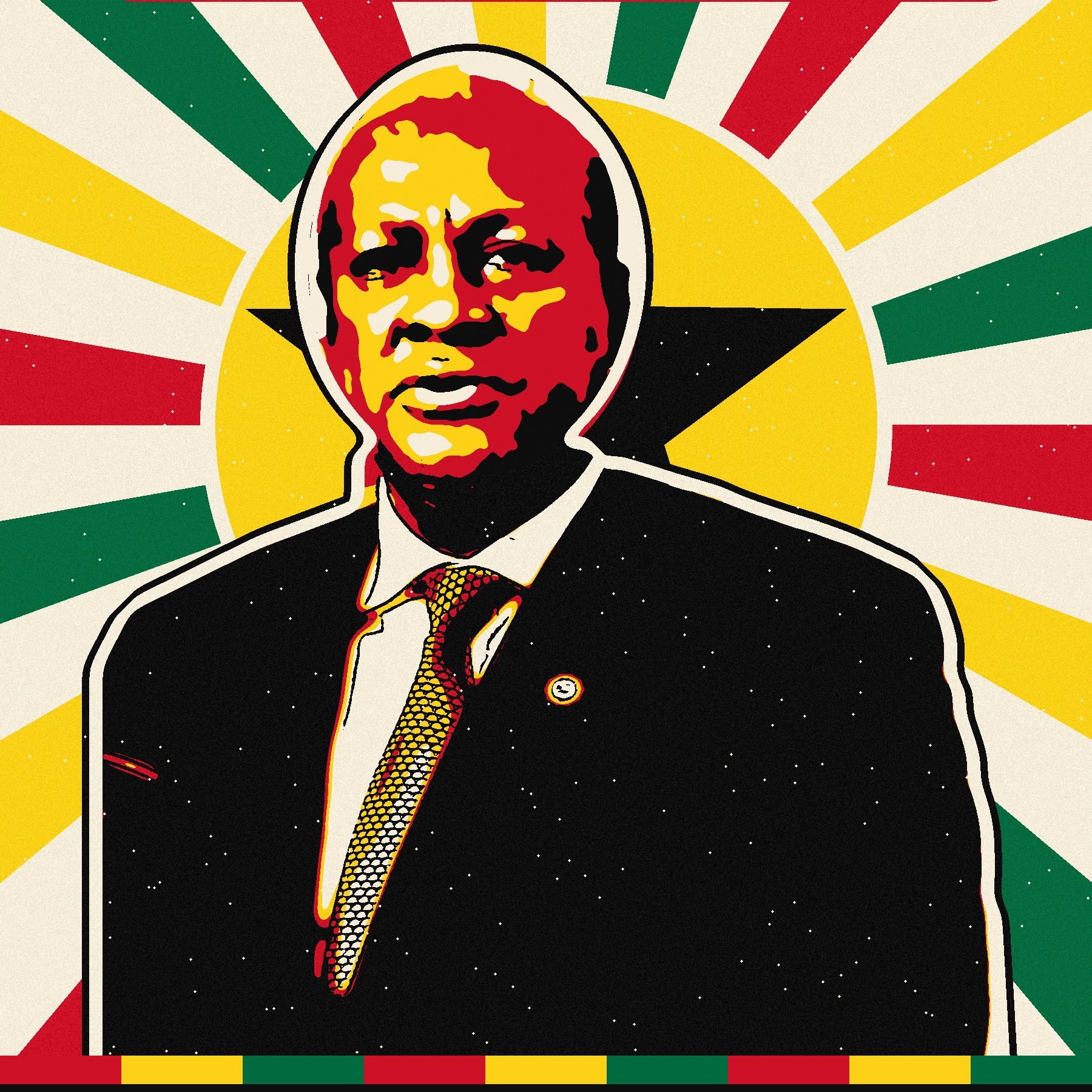
Ghana's Cabinet turned down a proposed health compact from the United States over data and inspection terms. According to President John Dramani Mahama, the compact would have required Ghana to give Washington its pathogen profile and its medical records. He said medicines and other medical products supplied under the programme would not have been subject to inspection by Ghana's Food and Drugs Authority (FDA).
The money was real. According to MyJoyOnline, the compact was intended to provide approximately $109 million in US health assistance over five years, replacing some funding Ghana previously received through the United States Agency for International Development (USAID). It came with obligations on Ghana's side as well. Mahama said the proposed compact also required Ghana to commit a specified amount of counterpart funding.
The United States has since asked to reopen the text. The reasoning Accra has given and the case Washington has made are both on the record, and so are the answers other African governments have given to similar offers.
The timeline runs across most of the year. The BBC reported on 7 July 2026 that Ghana rejected the proposed $109m health deal with the US in April over data protection concerns. The president's own public account came later. He gave it at the Council on Foreign Relations in New York on Friday, 25 September 2026, and MyJoyOnline carried his remarks.
Mahama put the core objection in plain words, according to MyJoyOnline: "It states that we shall give the United States our pathogen profile. It also says we should give our medical records. I mean, who takes another country's medical records?" MyJoyOnline explains the pathogen profile as information about disease-causing organisms circulating in the country. Graphic Online, carrying a Ghana News Agency report, describes one of Ghana's major concerns the same way: a requirement to share national pathogen profiles and citizens' private medical records with the United States.
MyJoyOnline reports that Mahama called the conditions humiliating. He also described how quickly Cabinet acted: "It was the compact that was thrown out in record time in our Cabinet. I've never seen anything thrown out as fast as that."
He said the decision followed procedure. According to MyJoyOnline, Mahama said Ghana had followed its established procedures, with the Ministry of Health reviewing the document and submitting an information paper to Cabinet. The Minister of Health was then directed to inform the US Ambassador of Ghana's decision.
The data-protection argument has a named official behind it. Arnold Kavaarpuo, executive director of Ghana's Data Protection Commission, told the BBC: "We had concerns around the scope and breadth of data that was being required." He also put the concern in terms of control: "once the data left the Ghanaian borders, we had no control over what becomes of it."
Washington defends the deals. A State Department spokesperson told the BBC: "US foreign assistance is not charity - rather it is strategic capital to be wisely invested to advance US interests." On data, the spokesperson told the BBC that the material requested was the same aggregated and de-identified data that has been used for years in the fight against infectious diseases. On counterpart funding, the BBC reports that the State Department's global health strategy requires recipient governments to share responsibility by increasing their own health spending, with the goal of building durable systems that can eventually be self-reliant.
Ghana was not alone, though it was in the minority. According to the BBC, 32 countries had accepted the US health Memorandums of Understanding by mid-May, in Latin America, the Caribbean and at least 20 in Africa. The BBC also reports that some countries, such as Ghana, Zimbabwe and Zambia, have resisted signing up, citing different reasons. Zimbabwe cited concerns about requests for medical data as the reason it rejected a deal. Zambia's Foreign Minister Mulambo Haimbe criticised what he described as an American effort to link health funding to US economic interests by tying the deal to a separate agreement giving Washington access to critical minerals. In South Africa, Health Minister Aaron Motsoaledi told the BBC: "Frankly speaking, no nation on Earth that respects itself should accede to [two requests]". MyJoyOnline reports that Ghana was among several African countries that raised concerns over aspects of the new arrangements.
Some researchers read the episode as a change in how aid is bargained over. Nelson Aghogho Evaborhene, who works on global health governance at Roskilde University, told the BBC that the old aid relationship had its own imbalance: "It was an unequal relationship, but it was quite tolerable politically." He argues the terms have moved: "But now it has changed significantly, because it's more about very transactional leverage." Dr Kevin DeCock, a former director at the US Centers for Disease Control and Prevention, offered a broader caution about country-by-country deals, as the BBC reports: "Global health problems require global approaches, and no country can go it alone."
MyJoyOnline reports that Mahama said the goal was not to isolate Ghana from international partners but to establish relationships based on what he described as more equal and sustainable partnerships. He said Ghana would instead pursue measures to strengthen its own health financing and production capacity while continuing to engage international partners. At a separate Accra Reset event in New York, he launched a report, A Sovereign Future for Health, which MyJoyOnline describes as containing recommendations aimed at strengthening health systems in the Global South.
Then the United States came back. According to MyJoyOnline, the United States is seeking to revise the proposed $109 million compact, including amending or removing clauses that led to its rejection by Cabinet. Graphic Online, carrying the Ghana News Agency report, says Mahama made the disclosure at a Citizens' Engagement on the final day of his two-day Resetting Ghana Tour of the Ahafo Region.
He described the request this way, as MyJoyOnline reports: "they came back and said they wanted us to sit down and discuss the clauses we object to in the compact, with a view to either amending or removing them".
“I mean, who takes another country's medical records?”
- MyJoyOnline: Mahama explains Ghana's rejection of US health compact over medical records, FDA concerns
- MyJoyOnline: Why demand another country's medical records? - Mahama
- MyJoyOnline: US seeks changes to rejected $109m health compact with Ghana
- Graphic Online (GNA): US engaging Ghana to review rejected health compact agreement
- BBC: Why some African nations are turning down Trump aid money