The Fifty-Dollar Question
Why fraud keeps recruiting young people in Ghana and Nigeria
From Accra's Sakawa boys to Lagos's 'Hustle Kingdoms', young men explain the pull of online fraud, and officials, writers and investigators give competing reasons for it.
In Accra, a young man who goes by the nickname Starflex put his reasoning as a question. "What work in Ghana will pay me $50 a day?" he said, grinning, to Context, the Thomson Reuters Foundation's news site. Context describes him as a 22-year-old who abandoned his studies and football for scamming.
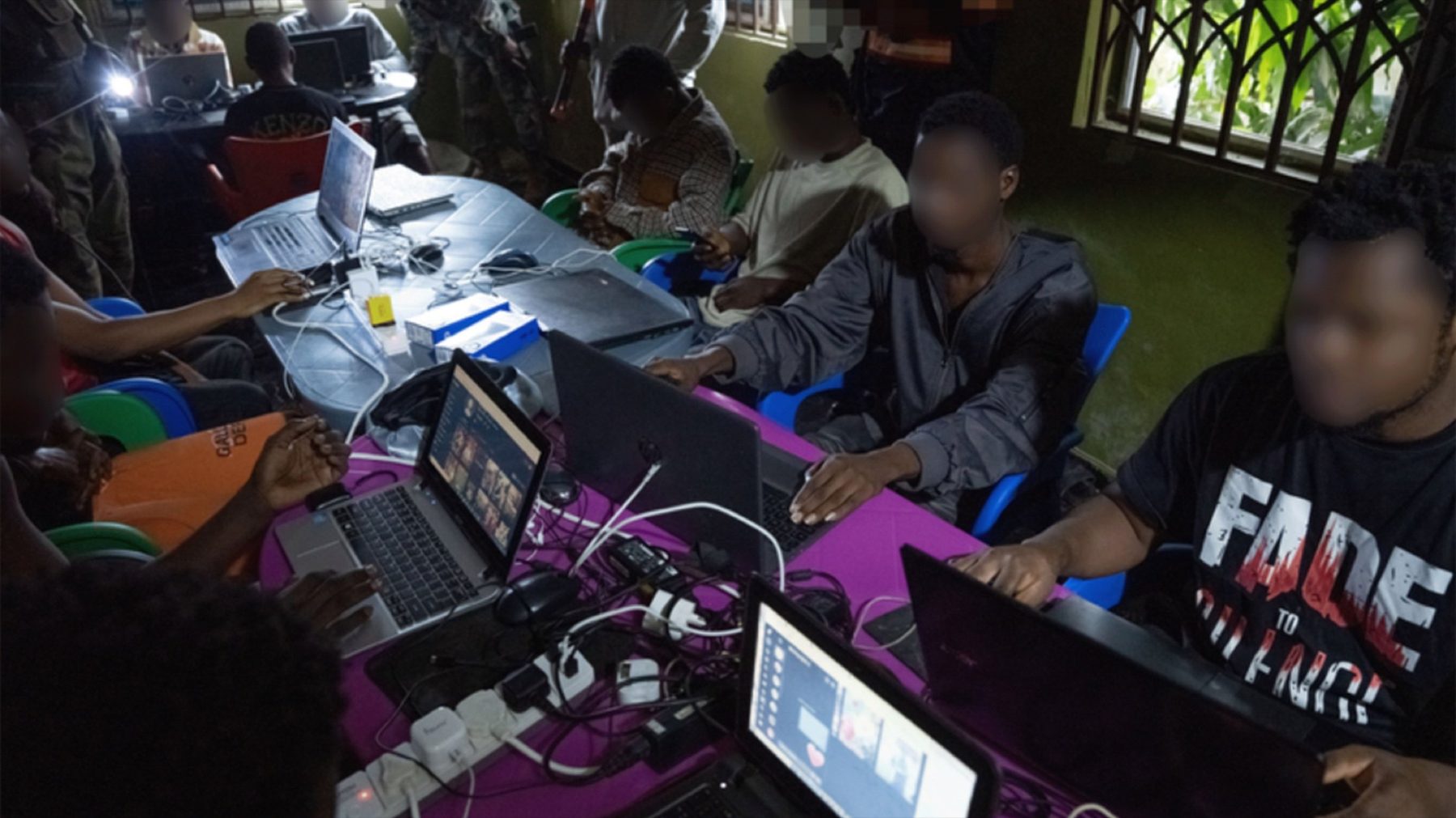
Context counts him among the young men it calls the "Sakawa boys". It describes them as school drop-outs who dabble in identity theft and romance scams on social media, and it traces their methods to the Yahoo boys, the fraudsters in Nigeria. In one bedroom in Accra, Context found Starflex with two friends, one of them 19. The 19-year-old comes from New Town, an impoverished area of Greater Accra, and told the outlet school was hard because "there was no money for breakfast or lunch".
Their answers sit at one end of a long chain. At the other end is a bank account in the United States or a teenager's phone in Europe. Why so many young men in Ghana and Nigeria are drawn into it has more than one answer, and the people who police it, study it and practise it do not agree on which matters most.
The scale comes first, from the people who count it. Context reported that Ghana's Cyber Security Authority estimated victims had lost GH¢49.5 million ($4.5 million) to identity theft schemes since the beginning of the year it reported on. In Nigeria, Punch reported the Economic and Financial Crimes Commission's own figures for 2024: 4,111 convictions and recoveries of over N365.4 billion. The BBC reported that sextortion reports to the FBI more than doubled in three years, reaching 55,000 in 2024.
The fraud takes several forms. In romance scams, a stranger online becomes a partner who always needs money. Context reported that a 57-year-old New York state woman it calls Tina lost $200,000 over two years to an online boyfriend who asked for plane tickets, rent and upkeep. Investigator Mike Roberts' team traced her scammers to criminal networks in Ghana.
Sextortion is harsher. A BBC Three investigation reported that victims, often teenagers in the US and Europe, are tricked into sending intimate photos or videos, which scammers then threaten to share unless they are paid. A 16-year-old in Missouri took his own life 90 minutes after the first message in January 2024. His parents' search for the person behind it stopped when a Nigerian service provider turned out not to have kept user data it was supposed to hold for two years, the BBC reported.
Then there is the training. The EFCC raided what was described as a "Yahoo Yahoo training school" in Lagos and arrested the proprietor and eight students allegedly being taught cyber fraud, the BBC reported. In another report, a BBC reporter described filming a "Hustle Kingdom" in Makoko, Lagos, a room with the atmosphere of a call centre: a dozen young men with laptops who swapped fake profiles, traded scripts and passed around the names of new victims.
So why do young men walk into those rooms? Five explanations come up, and none settles it.
One explanation is money and work. Context linked the spread of scams in Ghana to persistent poverty and a youth unemployment rate above 30 per cent. Writing for the BBC in 2019, Adaobi Tricia Nwaubani described an earlier generation of scammers as young, educated men frustrated by the lack of formal jobs in an economy ruined by military dictatorships and years of mismanagement.
A second explanation is about values. EFCC chairman Ola Olukoyede, speaking at an Abuja briefing reported by Vanguard in June 2025, put young Nigerians' involvement down to a lack of belief in hard work and the allure of quick wealth. He also named unemployment among the root causes. The BBC described the young men it met in Lagos as often in their 20s, living in poor areas and dreaming of fast cars and quick money.
Example is a third. Ms Nwaubani wrote that newer scammers had watched older ones turn fraudulent funds into legitimate businesses and become respected philanthropists or politicians. Many young Nigerians, she wrote, consider scamming "a career path and a valid source of income".
Recruitment is the fourth. The BBC reported that boys as young as their early teens had been effectively groomed into crime in the Hustle Kingdoms, and that older mentors impose debts or take a cut of every scam, creating a cycle that is difficult to escape.
A fifth reason comes from the scammers themselves. "I don't feel bad because I need the money," a scammer the BBC calls Ola said in Lagos.
The methods also travel. Sean Gallagher, a researcher at Sophos X-Ops, told Context that West African criminals are borrowing techniques from Chinese romance scams, including using crypto accounts to send money.
And the money may not only flow out. Mr Olukoyede said that politically exposed persons hand stolen public money to internet fraudsters, who open crypto wallets so "the money goes abroad". Punch quoted him describing the arrest of a 22-year-old with a turnover of over N5 billion in 18 months.
The cost lands on people who never sent a fake message. Mr Olukoyede said Nigerians travelling abroad face heightened scrutiny from immigration officers because of the cybercriminals' notoriety, and called it "a national shame". In 2019 presidential spokesman Garba Shehu called it "a big scar on all of us who go out of this country".
Responses exist, and so do their critics. The EFCC's chairman has commended the commission's conviction record. In July of the year Context reported, Ghana's government launched a national school programme to teach students about social media use and cyber risks. Meta said it took down 63,000 sextortion accounts linked to Nigeria in one sweep in 2024. Critics told the BBC such numbers only highlight the scale of the problem. Mr Roberts told Context that Ghana and Nigeria both have cyber laws and regularly investigate offences, but prosecutions are rare.
What would change a young man's arithmetic is the question none of these accounts answers.
The 19-year-old from New Town has given his own answer, for now. He has decided to quit scamming within a year, Context reported, and is putting aside $200 a month to pay his way through college.
If you have been targeted: in Ghana the Cyber Security Authority takes reports by phone or SMS on 292, by email at report@csa.gov.gh and on WhatsApp at 0501603111; in the United States the FBI's Internet Crime Complaint Center, ic3.gov, is the central hub for reporting cyber-enabled crime.
“What work in Ghana will pay me $50 a day?”
- Context (Thomson Reuters Foundation): Sakawa boys: meet Ghana's online romance scammers
- Vanguard: Politicians now launder billions through yahoo boys, EFCC
- Punch: Yahoo yahoo boys bringing national shame to Nigeria, EFCC boss
- BBC News: Letter from Africa, Adaobi Tricia Nwaubani (2019)
- BBC News: BBC Three investigation into sextortion and Nigeria's 'Hustle Kingdoms'
- official reporting page
- official reporting page