Twice, by Hand
Rachel Scott takes the top CFDA womenswear prize again
Diotima's designer won American Womenswear Designer of the Year for the second time in three years, with a signature still crocheted by hand in the Caribbean.
Yarn, but not black yarn. Vogue reported that the women who crochet for Diotima prefer to avoid it because it is harder to work with at night, and many of them work other jobs during the day. One of the groups is a collective of farmers who are also craftspeople. That is the working clock behind the label that took the top prize in American womenswear on Monday night.
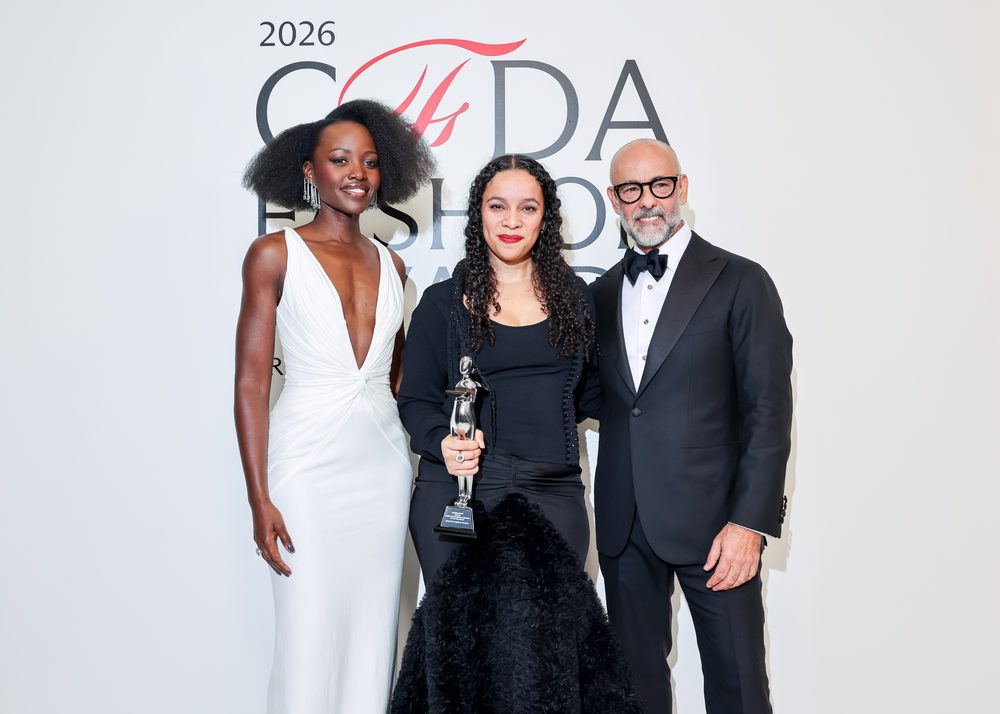
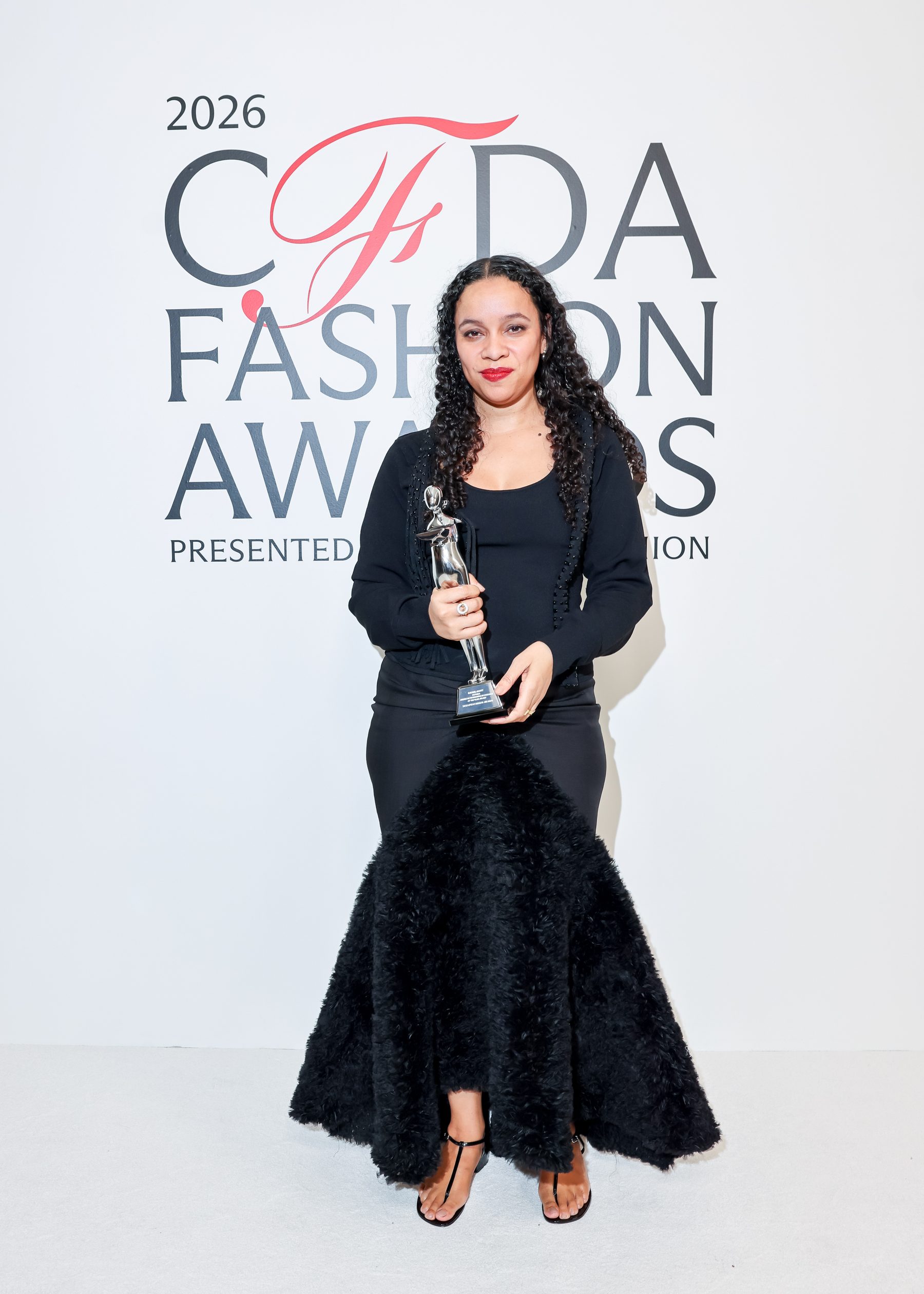
Here is what happened. Rachel Scott, the Jamaican-born designer behind Diotima, was named American Womenswear Designer of the Year at the CFDA Fashion Awards on Nov. 2, at the American Museum of Natural History in New York. Lupita Nyong'o and Francisco Costa presented the award. The other nominees were Catherine Holstein for Khaite, Michael Kors, Tory Burch and Wes Gordon for Carolina Herrera. Scott also won the prize in 2024. WWD noted that Ralph Lauren won it in 2025, his second time after a first win in 1995. Over three years the list reads Scott, Lauren, Scott.
The rest of the night spread the awards widely. Lauren took menswear, presented by Matt Damon and Tremaine Emory. Ana Khouri won accessories. Colleen Allen won Emerging Designer. Anthony Vaccarello was named International Designer of the Year. Anna Wintour gave Tory Burch the Positive Change Award, Eva Chen received the Media Award from Laufey, and Demi Moore announced Gap Inc. as the Innovation Award recipient. Holding a fashion ceremony in a building devoted to slow processes is a choice the industry made, and probably did not intend as commentary.
Scott's second win raises questions that a trophy does not settle. Who makes the clothes? What does the result mean to the people reading it from beyond New York? And how does one designer carry a small label alongside a large one?
Start with the makers. Crochet is the Diotima signature. AnOther Magazine reported that it is still made in the Caribbean, by hand, and overseen by Scott's mother. Vogue reported that Scott found a group of women on Jamaica's north coast after reading a newspaper article. The label grew from that collaboration, and Scott works with that original group, with several independent artists in Kingston, and with another north-coast group. The knowledge travels down generations. One maker, Scott told Vogue, learned from her mother, who learned from her grandmother.
Vogue also reported that Scott treats these artisans almost as co-designers and shapes collections around what they like to make. So a lighting problem becomes, at least in part, a palette decision. Fashion attaches the word "artisanal" to almost anything with a visible stitch. At Diotima the word comes with a coastline and an evening schedule.
The proportion is larger than the label's size suggests. Scott told AnOther that she had realized almost 60 percent of her work contains handcraft. "Which is wild," she said, laughing. WWD describes the method as traditional Jamaican artisanal techniques combined with sharp New York and European tailoring. Neither the coverage of the awards nor the label's interviews say whether a second prize will change orders, volume or pay for the makers. That has not been made public.
The business began without much padding. AnOther reported that Scott founded Diotima in 2021 with her own life savings. When Vogue covered the launch, it described her as vice president of design at Rachel Comey. She runs the label from a small studio in New York's Chinatown. Everything had to sell, she told AnOther, and she now feels less of that pressure.
How the diaspora reads the result is not something a winners' release can measure. The public record does show how Scott frames her own work. Her Spring 2026 runway debut drew on Carnival characters. "Carnival is a moment of resistance," she told AnOther, and of her sources more broadly: "Everything is a manifestation of what is around me." In an interview with W, she described Diotima as a personal, political brand, rooted in the Caribbean and anti-imperialist. For a reader who shares those roots, the prize lands on a label that said what it was before anyone handed it an award.
The Caribbean she names in interviews is on the runway too. Her Diotima Spring 2027 show, reviewed by WWD, looked to the sea and to a Wifredo Lam painting of an "island walker," which WWD described as a mystical woman traversing the Caribbean archipelago. The hip, an area Scott has explored across many collections, became a recurring focus, and WWD wrote that she is building a vocabulary of silhouette alongside her craftsmanship. Crystal mesh appeared sparingly, combined with her tubular chenille technique. The hand stayed at the center, which brings the story back to time.
The makers are not the only ones working against a clock. AnOther reported that Scott had been announced as creative director of Proenza Schouler. W reported that the house's founders, Jack McCollough and Lazaro Hernandez, had left for Loewe, and that Scott's predecessor, Kay Hong, is also her mentor from the CFDA Vogue Fashion Fund. Scott told W that she would not pause or give up Diotima because it is too important to her, and that the two brands are mostly kept separate. W asked whether crochet would appear at Proenza. Her answer was not yet, maybe later. So two labels now share one designer's hours.
Hours are one weight. She has been plain about the other. Scott told W that she feels a lot of responsibility and does not like to disappoint. She said that being a Black woman leading a major luxury women's brand is terrifying, and that the fact itself points to the state of the world.
The prize carries one name. Many hands work the crochet, often after the day job ends. Seldom in black.
“So a lighting problem becomes, at least in part, a palette decision.”