Angel,the West CoastEllis IslandConcierge
For musicians and artists
A Boyle Heights musician, artist and curator on the neighborhood that welcomed the world, the family that stayed, and the community he is building around The Eclectic.
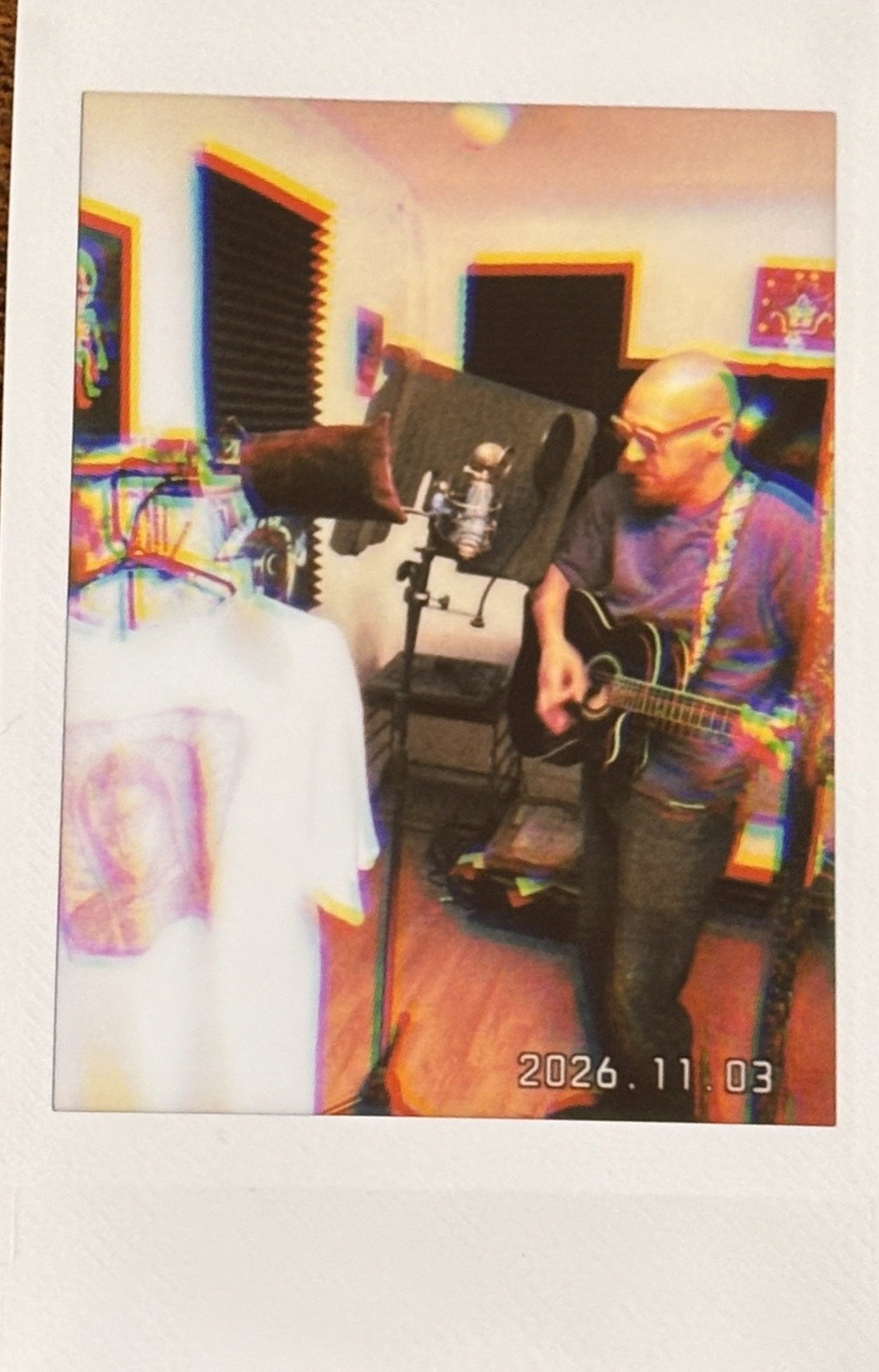
I met Angel in 2013 at a rehearsal studio in Boyle Heights. In the years since, he has held onto the drive of someone who wants to cultivate a movement, and he has been doing exactly that.
To understand him, you have to start with where he stands: Boyle Heights, a neighborhood east of the Los Angeles River that was a gateway for newcomers for almost a hundred years.
Angel's family roots run to Jerez, Zacatecas, a high-altitude town in Mexico. He was born in the United States, and his family came to Boyle Heights in the early 1970s, joining a long line of newcomers who had arrived before them.
Boyle Heights earned the nickname "Ellis Island of the West" for good reason. In the early 20th century, Jewish, Japanese, Mexican, Armenian, Russian, Italian and African American families all built lives here, side by side. It was once home to one of the largest residential communities of Japanese immigrants.
Part of the reason was not kind. In an era of restrictive housing covenants, Boyle Heights was one of the few places where people of color could buy a home. When federal appraisers mapped Los Angeles in 1939, they marked the neighborhood's diversity itself as a risk and gave it the lowest rating, which made it much harder for anyone buying a home there to get a loan.
Angel describes the neighborhood as a first stop. Many Mexican migrants who came to the country landed in this part of Los Angeles first. They settled, got things in order, and then many moved on to other parts of the country, the Carolinas, Florida. His family stayed.
It was in Boyle Heights, at the age of 12, that Angel fell in love with music and art.
His family could have pointed him another way. They are upper-middle-class professionals: attorneys, building contractors, developers, academics. Angel chose art, because that is what was calling him.
His sound is hard to pin down, and that is the point. It is a hybrid of jazz, funk, hip-hop and Latin music, an authentic blend of eclectic expression. That is exactly what his organization is called: The Eclectic. Based at Mariachi Plaza, in the heart of Boyle Heights, it welcomes a variety of musicians, artists and painters, anyone looking to express themselves in a neutral environment.
Angel is one of the artists who believe the musical art form has reached a point of digital saturation. As he sees it, AI-generated music is flooding in, while at the same time vinyl is making a comeback and live musicians are expressing themselves more and more. Angel belongs to that community.
Our conversation moved the way his music does. From history to genres, and from there to my own corner of music, and at one point the guitar came out and we traded an impromptu freestyle. It was less an interview than a jam session with notes.
Boyle Heights has been fighting to stay Boyle Heights. In the postwar decades, freeways cut through the neighborhood and displaced thousands of residents. Today, as Angel sees it, the fight is against gentrification, against the forces that would sand down a community's authentic roots.
Angel is part of that fight.
Angel records as Ese and AOD, and his music is on Spotify as Ese EP1. The Eclectic is on Instagram at @eclecticboyleheights.
This is an account from Max Luger, who met Angel in 2013 at a rehearsal studio in Boyle Heights.
Listen to Angel and follow The Eclectic
Ese EP1 on SpotifyAngel's music, as Ese"At It Again" on SpotifyEse, AOD@eclecticboyleheights on InstagramThe Eclectic, Mariachi Plaza