The Culture of Protest
New York, 2020. France, now.
Max Luger's pictures from the 2020 uprising in New York and a march in Los Angeles, set beside the student-led protests filling French streets this autumn.
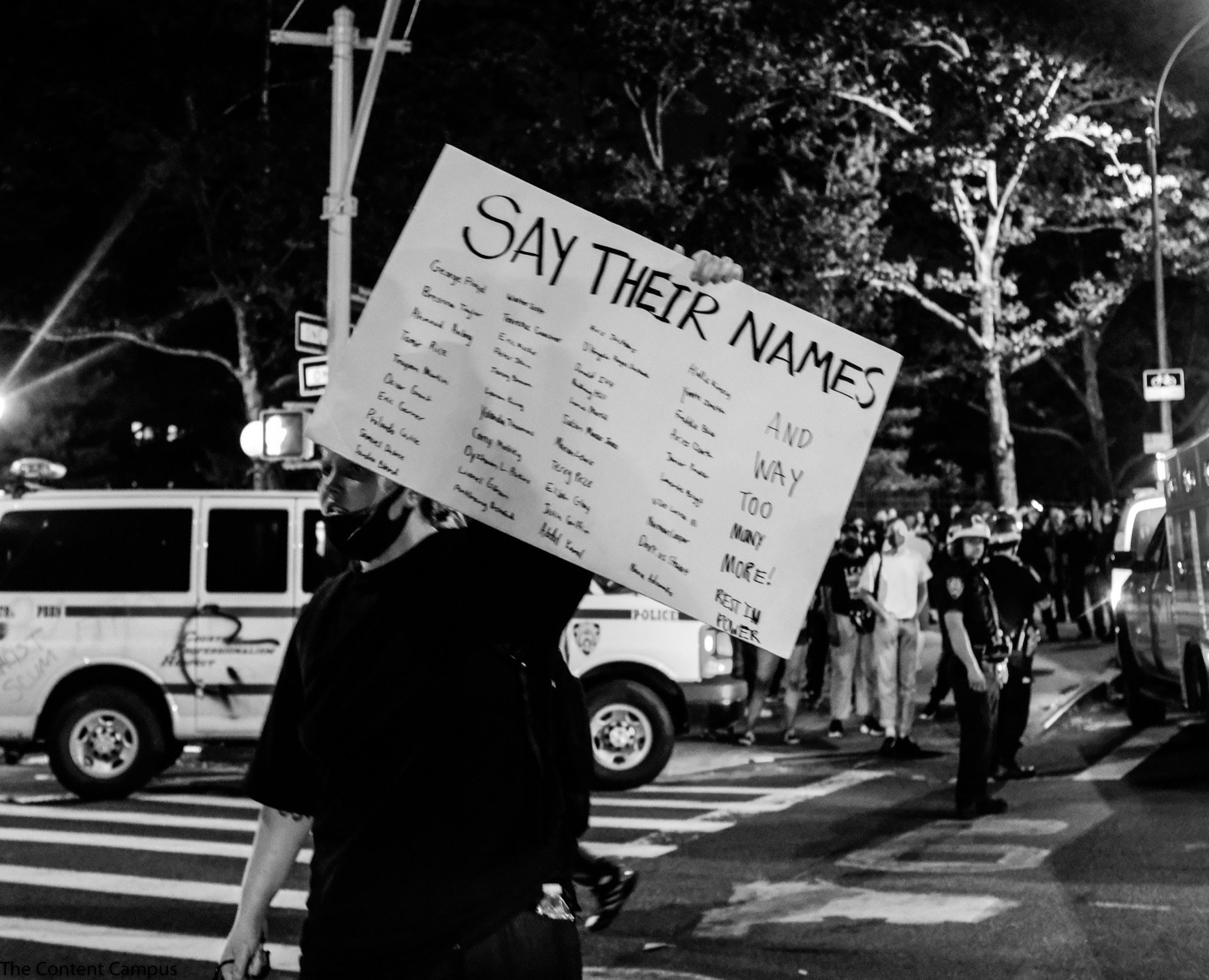
The sign is three words long. "Say Their Names," written by hand, is carried across a crosswalk at night by a masked marcher, with police vans and helmeted officers in the background. Max Luger made the picture in New York during the George Floyd uprising of May and June 2020. It opens The Culture of Protest, a new set of his photographs for The Content Campus. It also opens this issue.
The set moves between night and day. At night there are police lines, raised fists and marchers with their hands up. By day there are marches carrying "Jim Crow Justice," healthcare workers among the marchers and a painted Statue of Liberty. In Los Angeles, Max photographed a march on Broadway.
We are publishing it now because France is marching. A movement that began with high school protests in September put hundreds of thousands of people into French streets on Oct. 17, Oct. 24 and Oct. 31. It had brass bands in the afternoons and clashes as the rallies ended. The causes are not the same. The signs in Max's 2020 pictures say "Say Their Names," "Jim Crow Justice," "Black Lives Matter" and "The kids are dying." Those words carry their own stakes. The French marchers are protesting expensive living conditions, high fuel prices and conditions in schools, according to The New York Times. We are not setting the two side by side to make them equal. We are looking at what people make when they take a street, and at how the day and the night of a march get told.
None of this started in 2020. In America, protest has always made its own culture, and the record shows how.
On February 1, 1960, four young Black students, Ezell Blair Jr., David Richmond, Franklin McCain and Joseph McNeil, sat down at the lunch counter of the Woolworth’s in downtown Greensboro, North Carolina, and "refused to leave after being denied service," History.com records. The sit-in movement "soon spread to college towns throughout the South," and at the end of July the Greensboro store "quietly integrated its lunch counter." No sign was needed. Four people sitting still at a counter was the message.
On August 28, 1963, an estimated 250,000 people came to the March on Washington for Jobs and Freedom "by planes, trains, cars, and buses from all over the country," the National Park Service writes. They "locked arms, clapped and sang and walked," and the speeches at the Lincoln Memorial included Martin Luther King Jr.'s "I Have a Dream." Britannica counts it as "one of the largest single-day protests in American history."
ACT UP, the AIDS activist group, was "founded in 1987 in response to government inaction during the AIDS epidemic," Britannica says, and it worked through "nonviolent civil disobedience." Its members "targeted the FDA" and "occupied St. Patrick’s Cathedral in New York City."
In September 2011, answering a dare from Adbusters magazine "to bring a tent and occupy Wall Street," protesters "took over Zuccotti Park" in New York, according to EBSCO's history of the Occupy movement. Their line was "We are the 99 percent." It turned an economic statistic into something a crowd could shout.
Black Lives Matter began with a loss. In July 2013, a Florida jury "acquitted George Zimmerman" in the killing of Trayvon Martin, a Black teenager, and "#BlackLivesMatter was born," Biography.com recounts, created by Alicia Garza, Patrisse Cullors and Opal Tometi. In August 2014, Michael Brown "was shot and killed in the street by a police officer in Ferguson, Missouri." The three words that started online went into the street with the people who came to Ferguson.
In 2020, after the death of George Floyd, the protests "peaked on June 6, when half a million people turned out in nearly 550 places across the United States," The New York Times reported, and polls suggested "about 15 million to 26 million people" took part. That is the summer Max was on the street in New York with a camera.
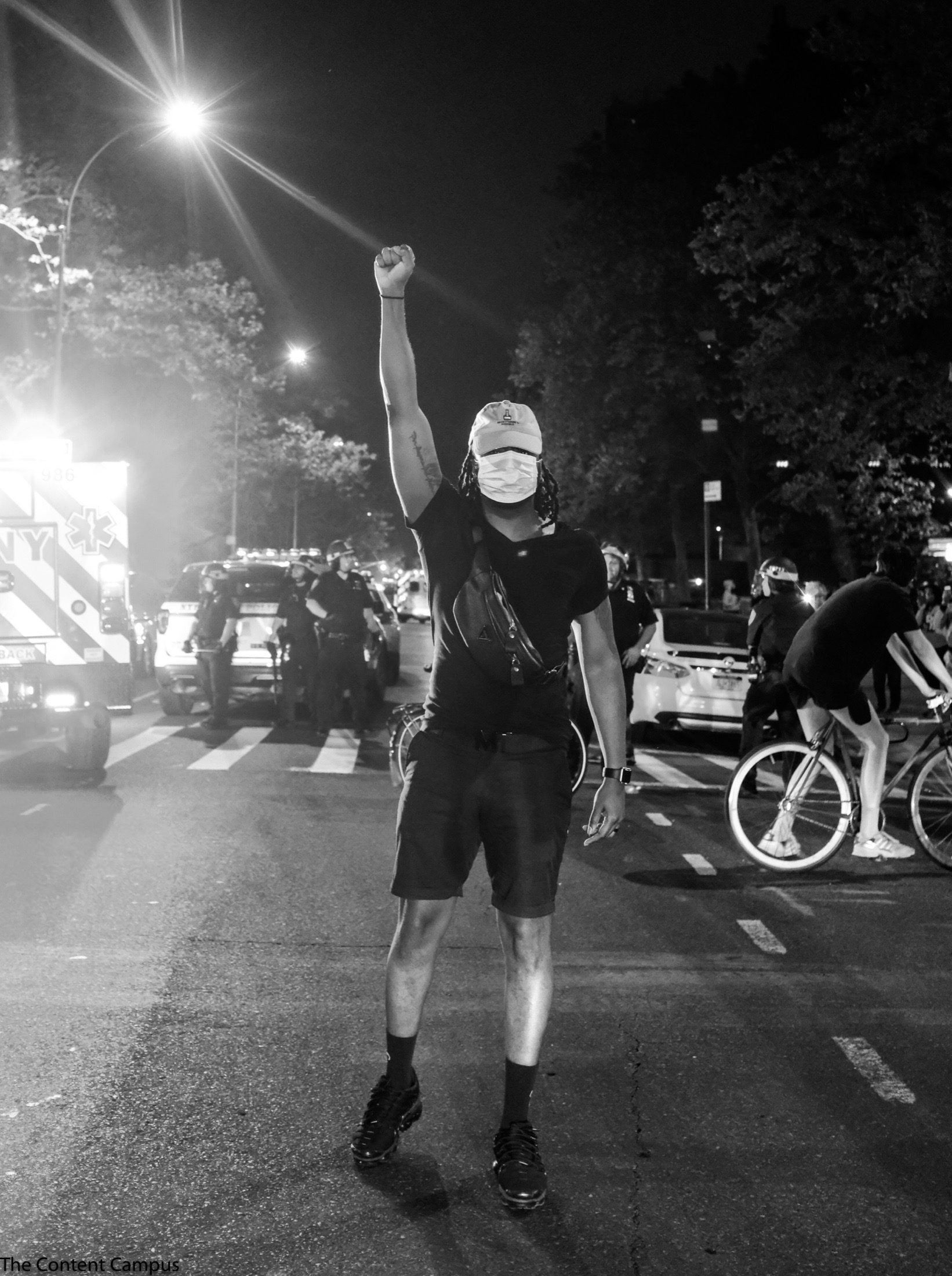
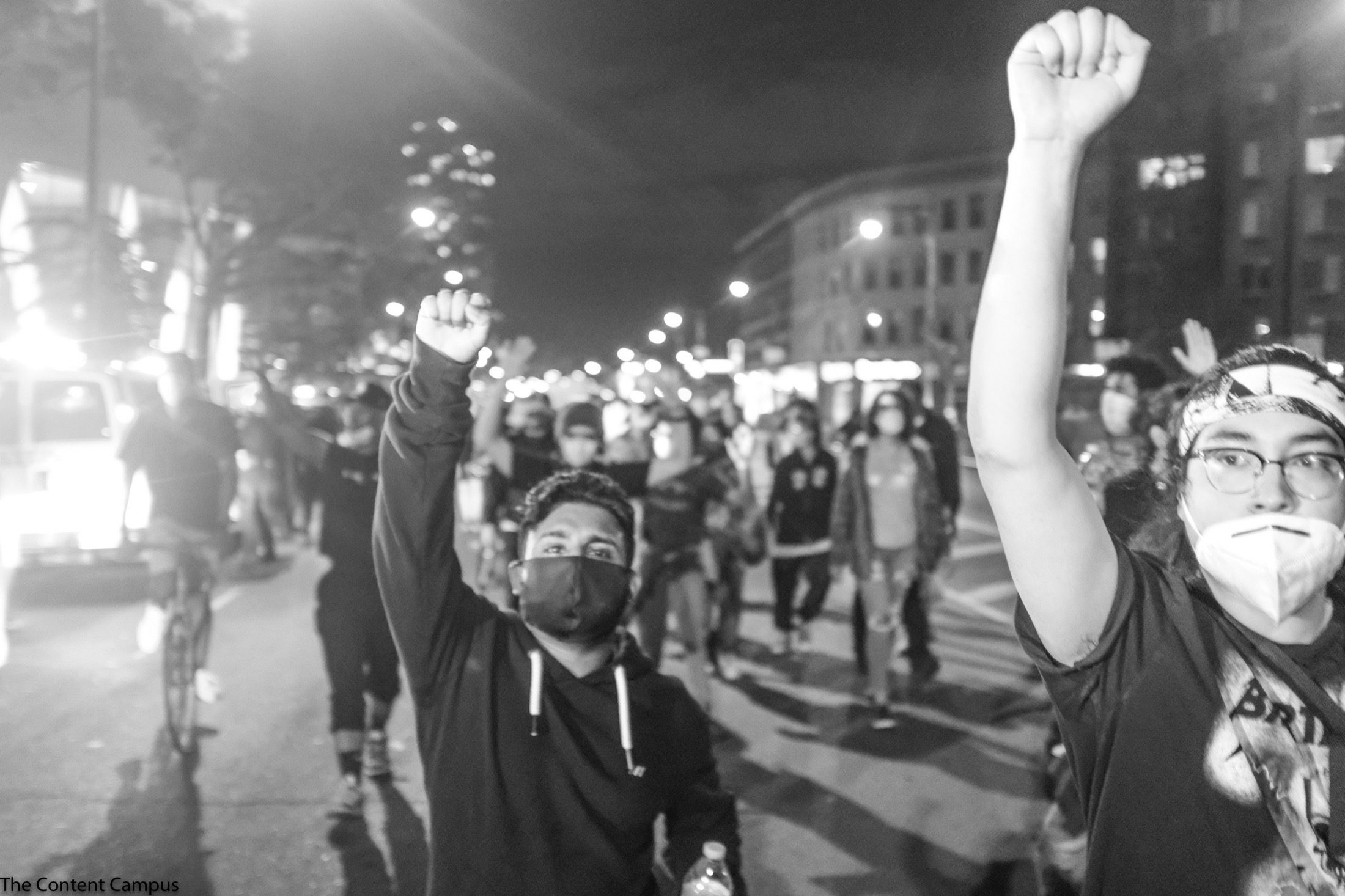
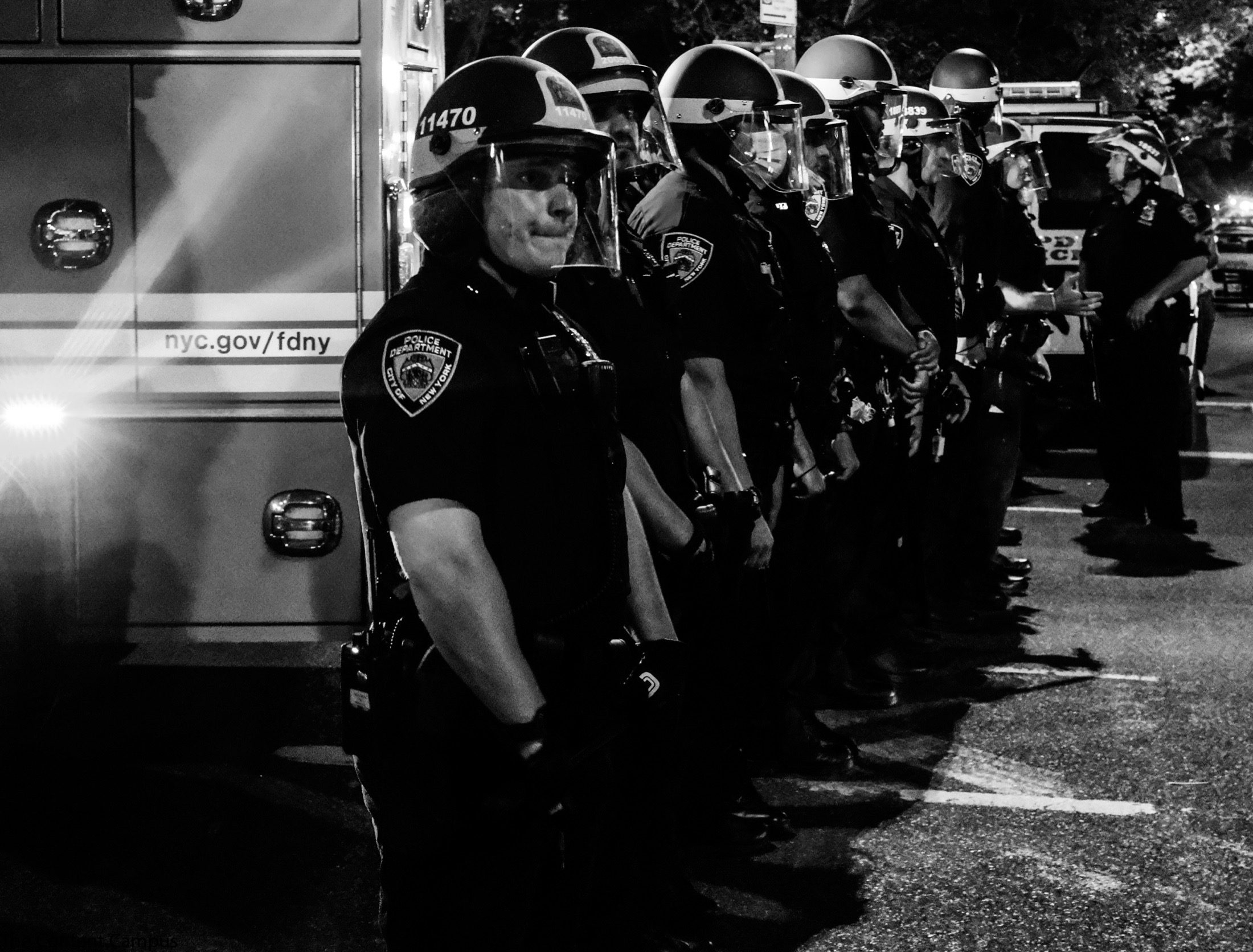
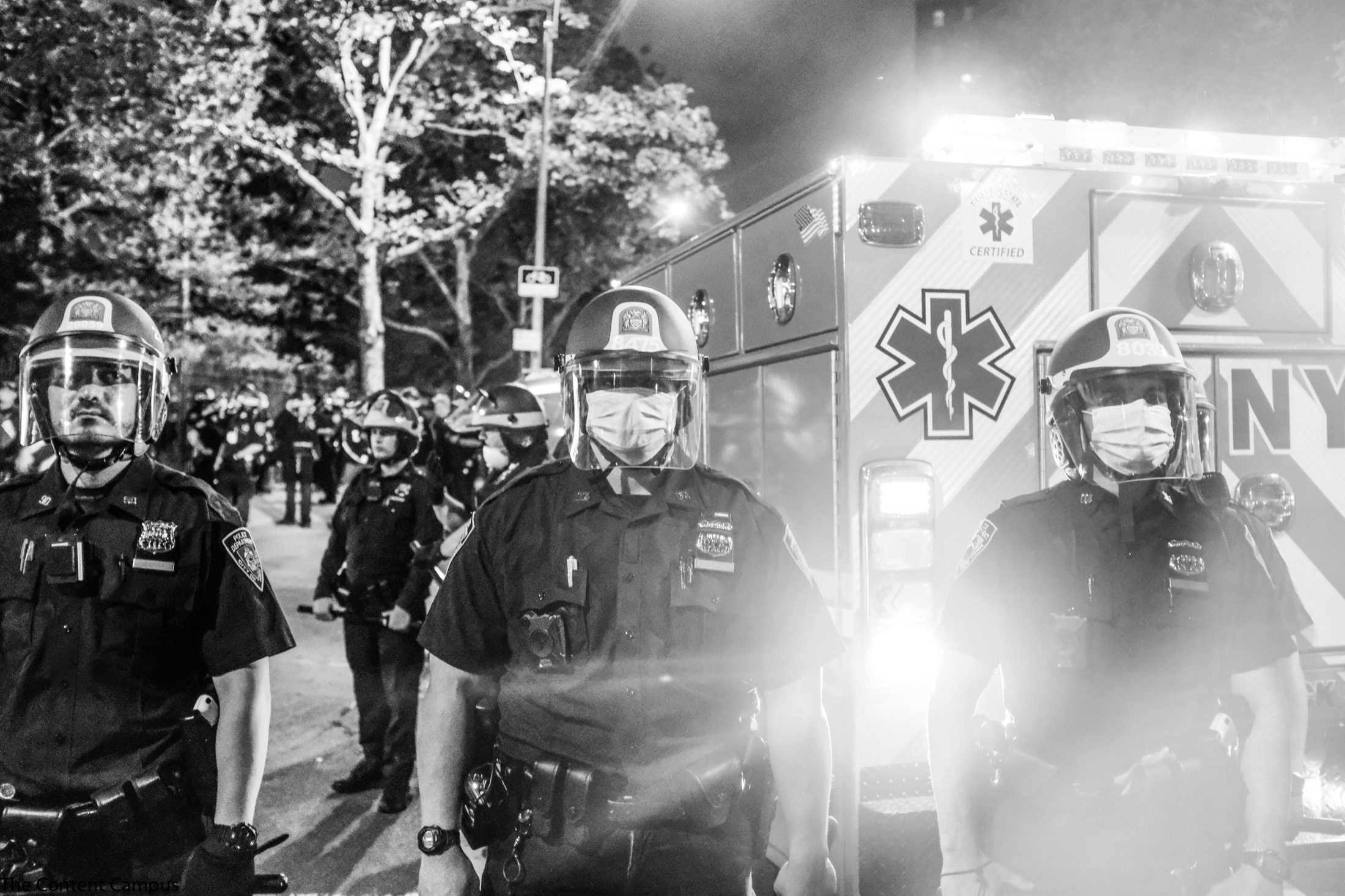
Start with where the camera stands. In one black-and-white frame, a masked marcher raises a fist under a bright streetlight. Police, an ambulance and a cyclist are behind. In another, two masked marchers raise clenched fists toward the lens, with the crowd and the city lights blurred behind them. Then the camera turns. A line of helmeted officers with face shields stands beside an FDNY vehicle, and the nearest one looks to the side. Three officers, two in face masks, stand in front of an ambulance whose light glares into the frame. The officers are photographed as plainly as the marchers. Nobody in these pictures is scenery.
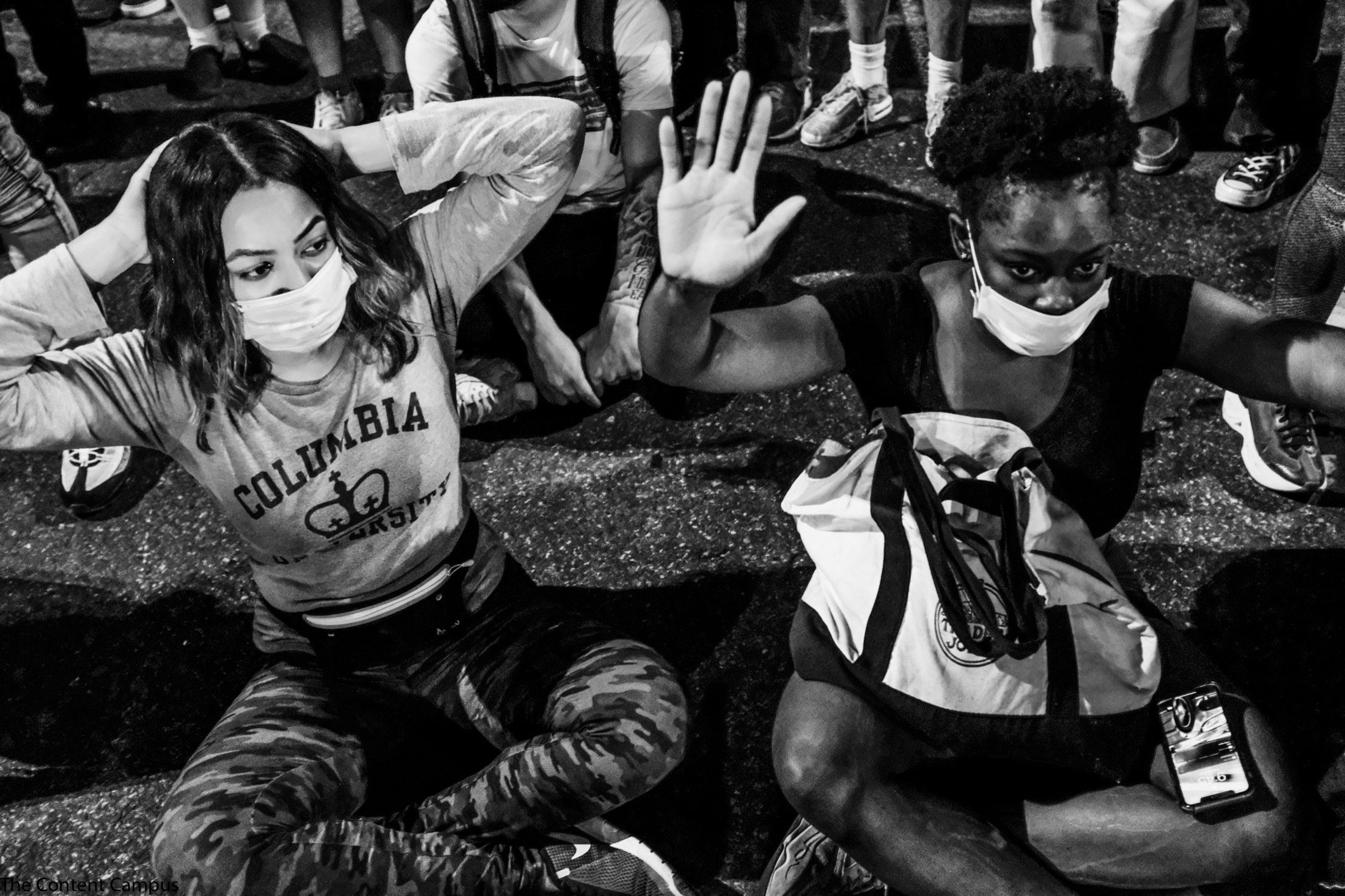
Two masked people sit cross-legged on the pavement while a crowd stands around them. One has hands behind the head. The other raises an open palm. The picture shows the posture, and we will not put words in the mouths of the people holding it.
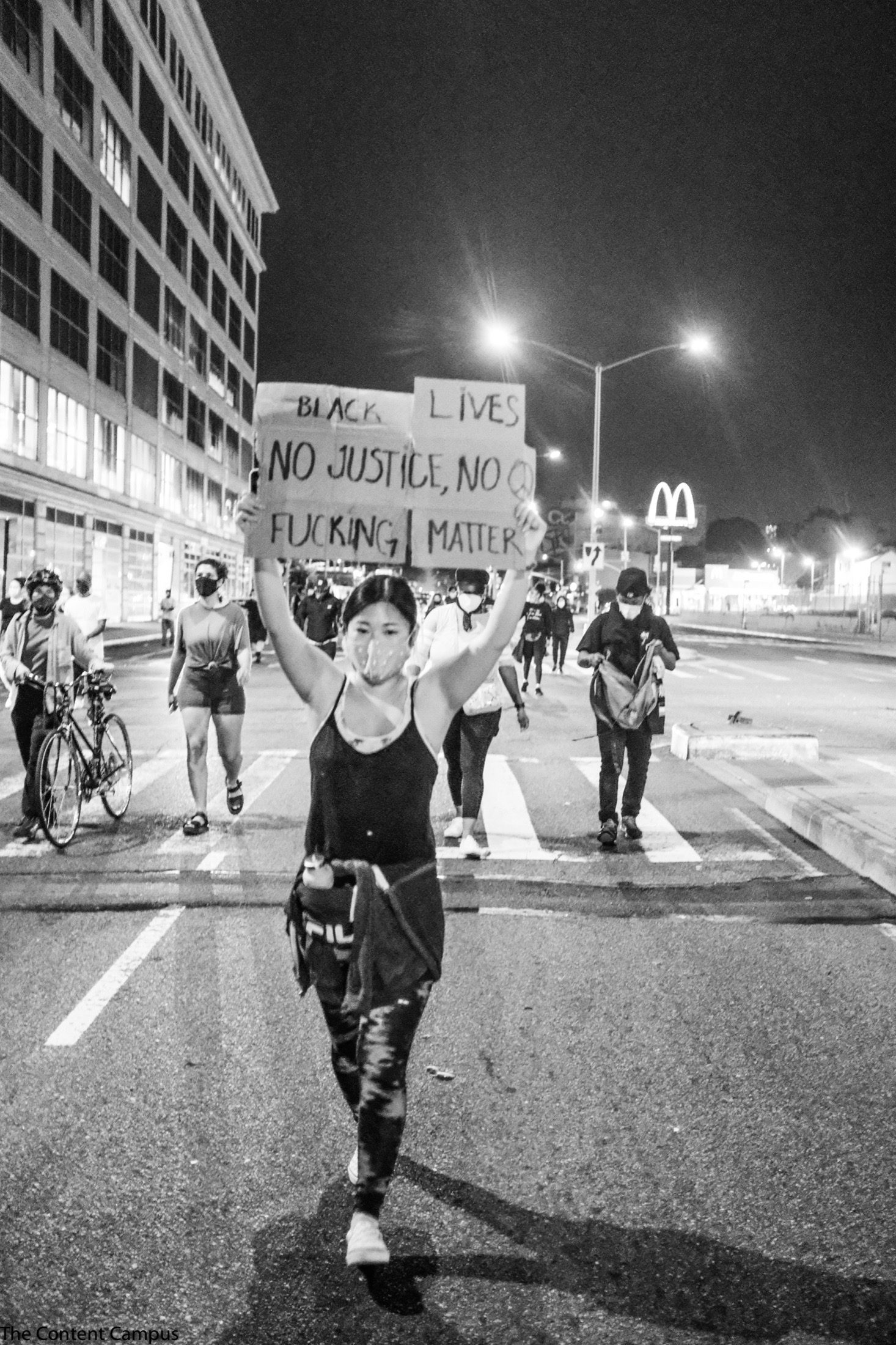
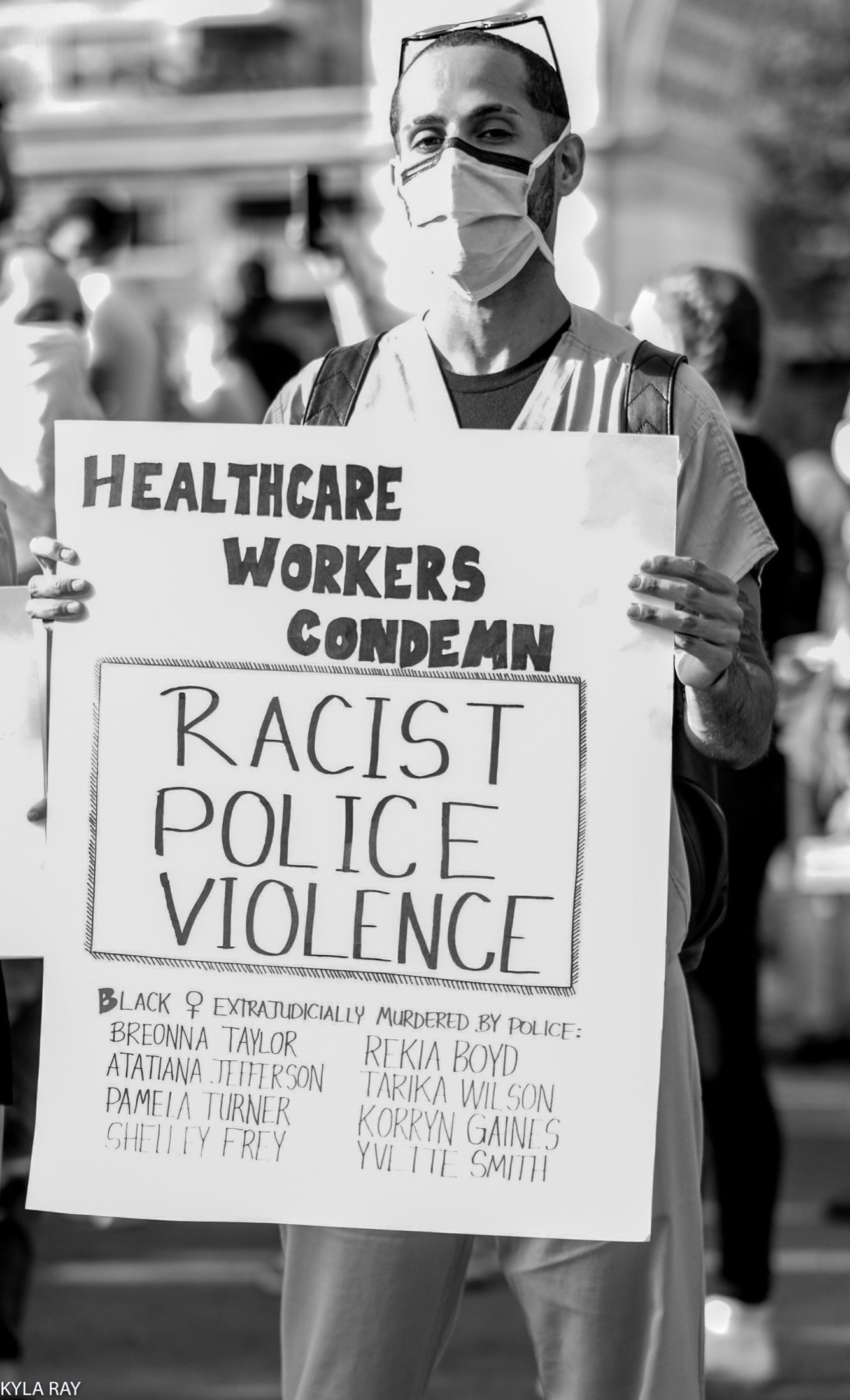
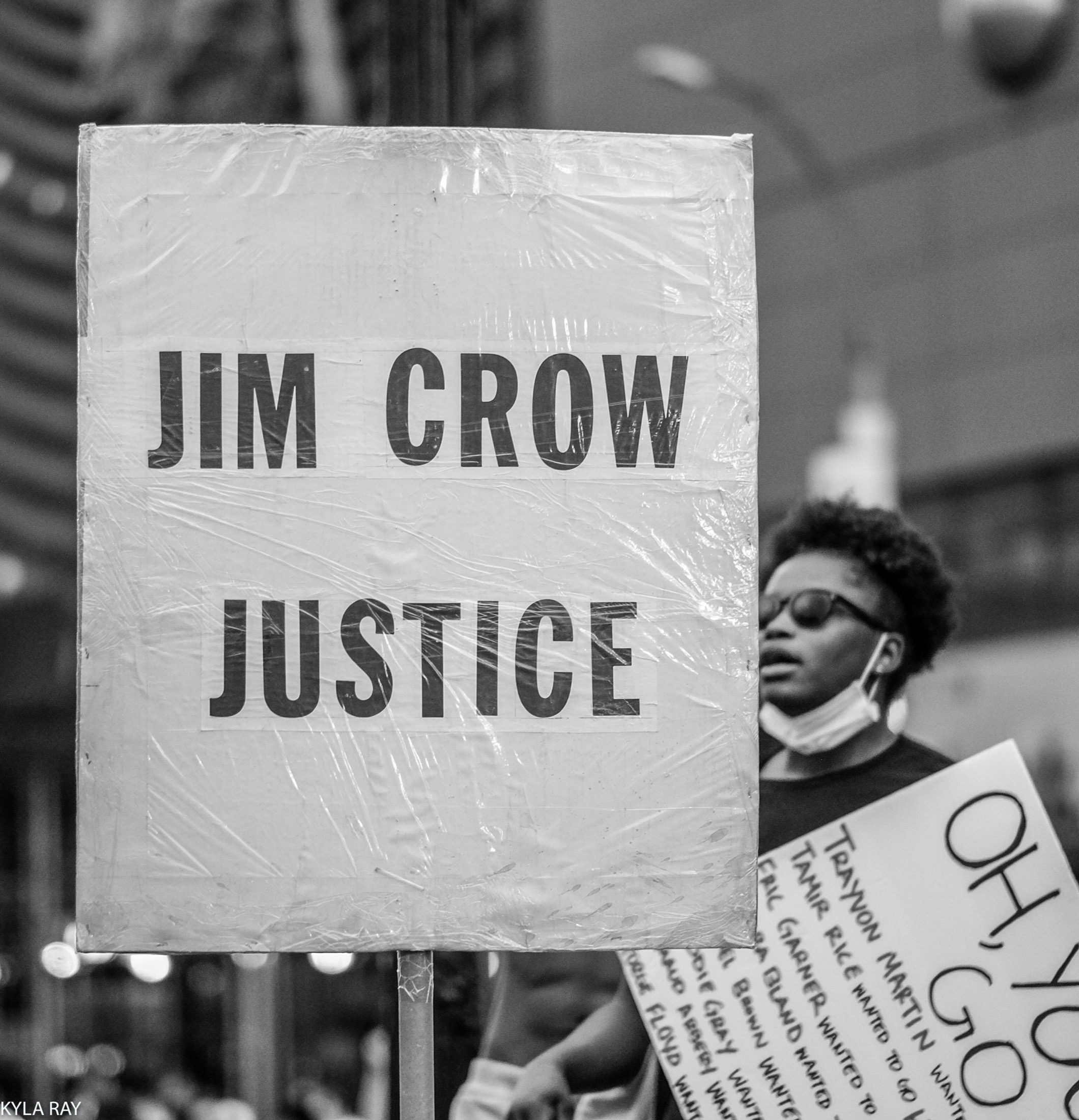
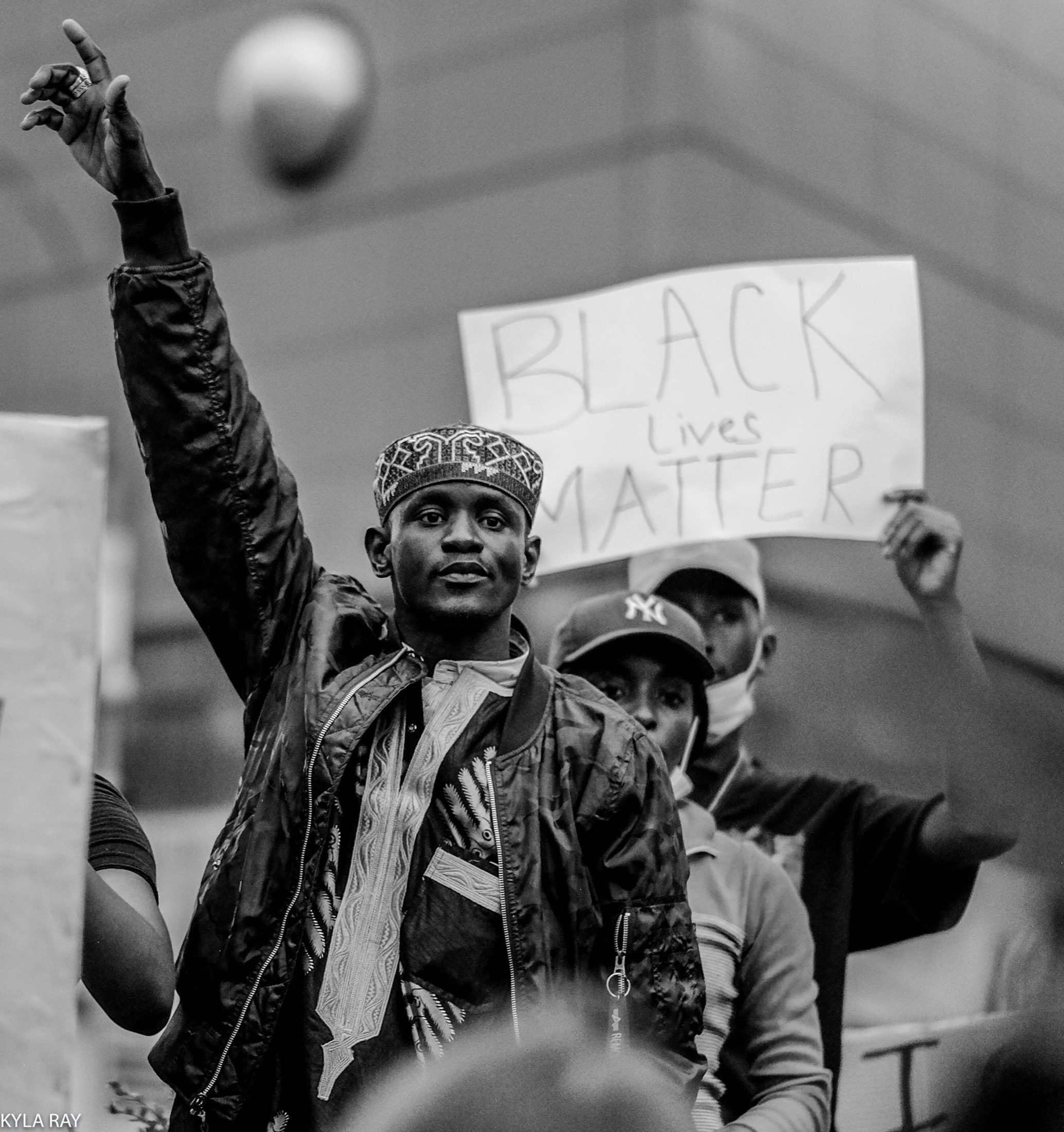
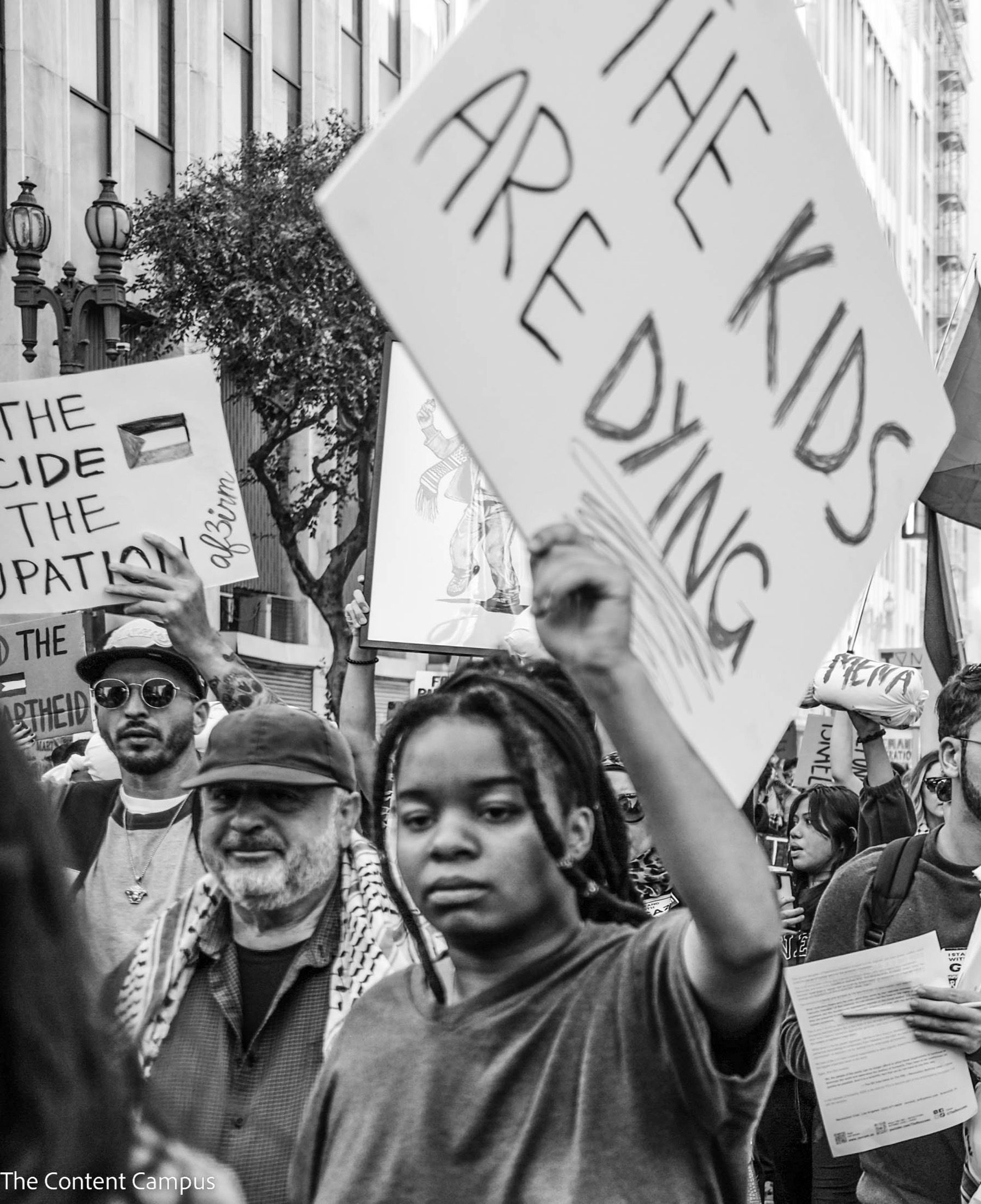
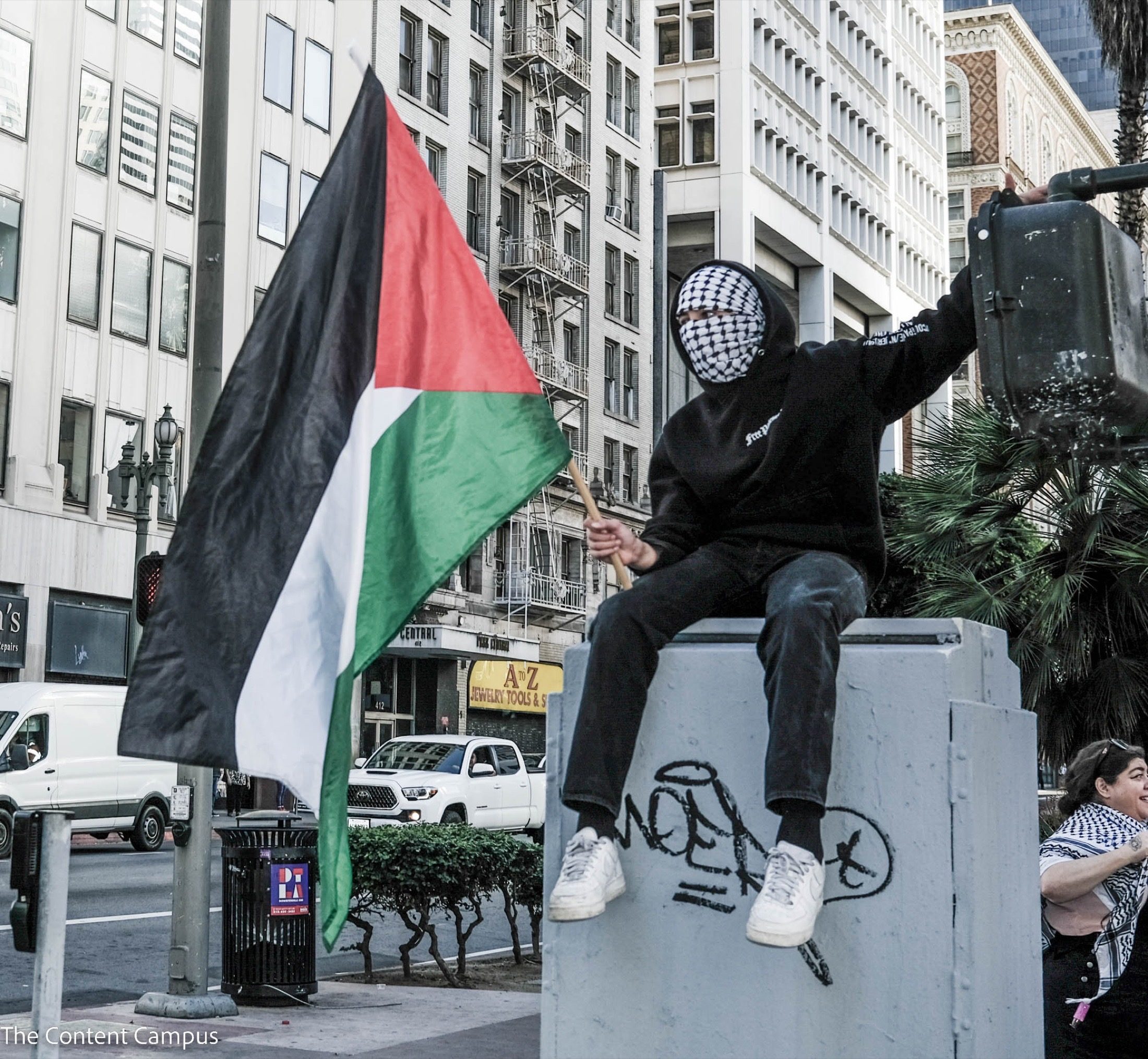
Protest makes things, and the set is full of them. The "Say Their Names" sign is one. A handwritten cardboard sign is held overhead on a night street, with masked marchers and a person pushing a bicycle behind and a lit McDonald's sign beyond. A large handwritten sign listing names is held up against a blurred daytime crowd. A wrapped sign reading "Jim Crow Justice" stands in front of another handwritten one. A marcher sits on a gray utility box with a large red, green, white and black flag. Another raises one arm beneath a sign that reads "Black Lives Matter." In black and white, a marcher raises a fist beside a sign that reads "The kids are dying."
Officials publish counts and arrest figures. The handmade sign is where words no official wrote go into the record.
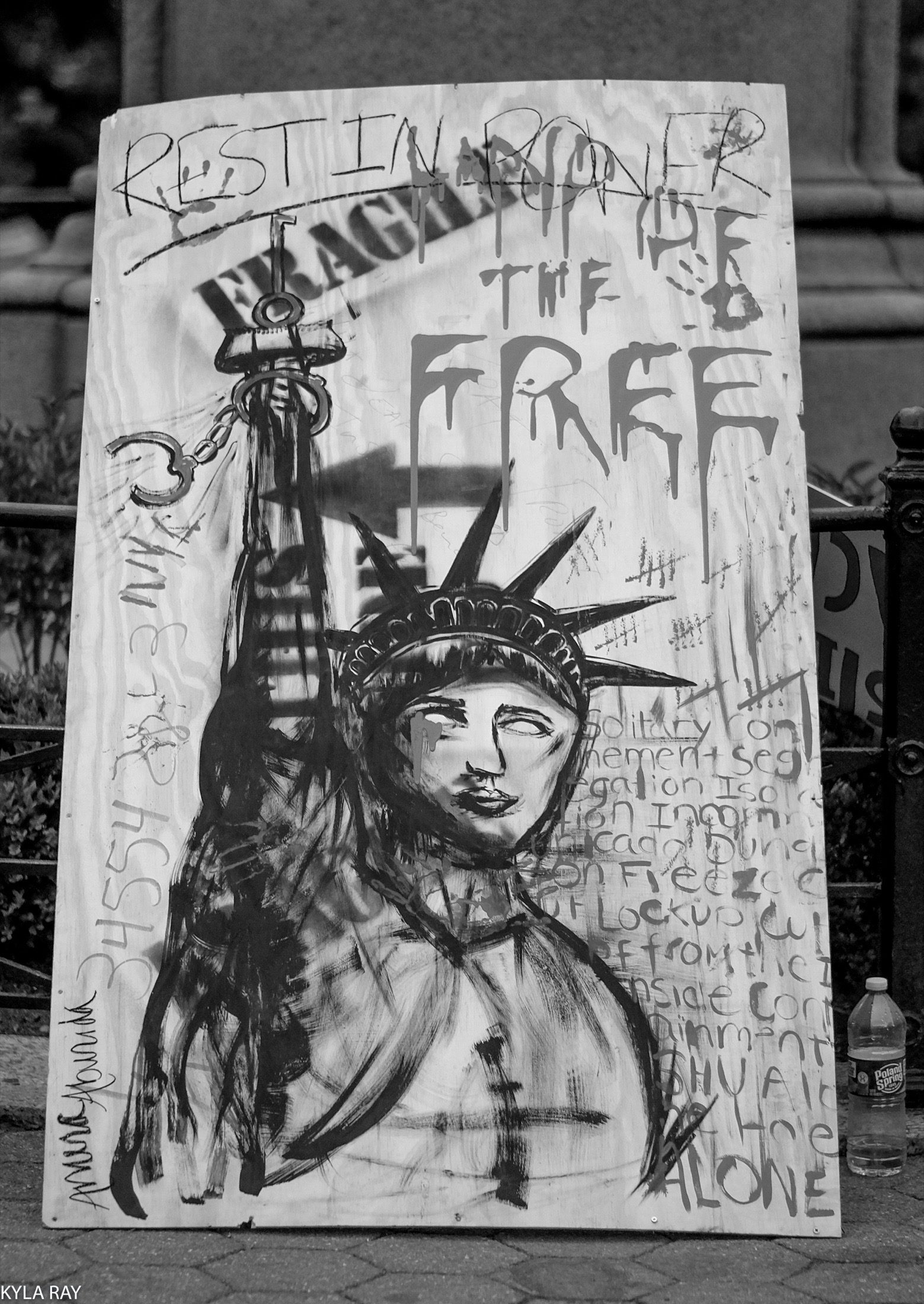
One picture in the set holds still. A painted plywood board leans against a railing beside a water bottle. On it is the Statue of Liberty, her raised arm in handcuffs, with dripping lettering and tally marks. We do not know who painted it or what the marks count, and we will not guess. Max photographed it where it leaned.
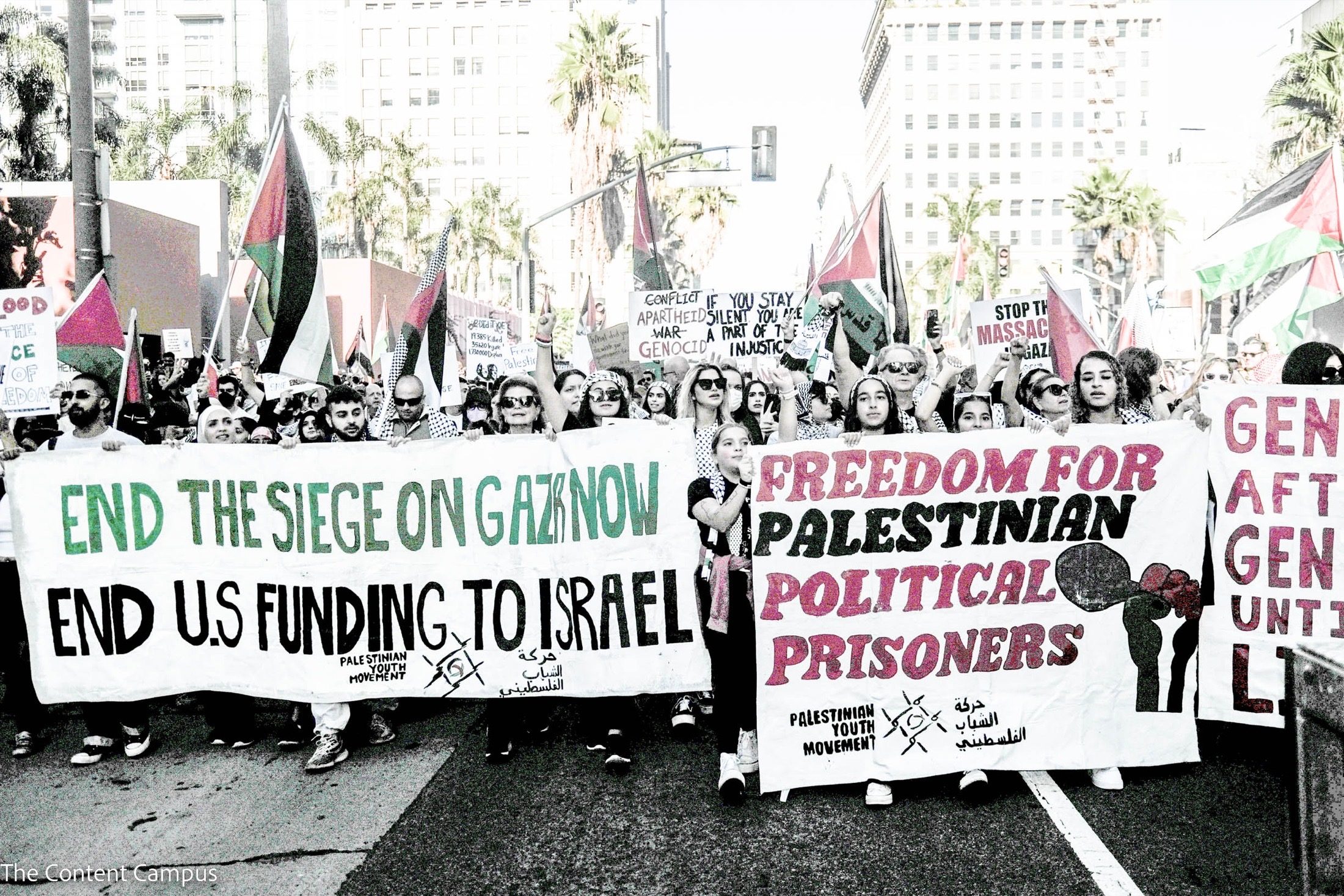
The Los Angeles march fills a palm-lined street in bright daylight. Two large hand-painted banners lead it, with flags and signs raised above the crowd and tall buildings around it.
In France this autumn, the street is making things too. The movement started small. Students at a high school in Créteil, in suburban Paris, staged a protest shown in videos posted to social media on Sept. 18, The Times reported. Two months on, the movement has grown to include university students, public workers and veterans of the "yellow vest" movement.
On Oct. 17, more than half a million people joined 110 antigovernment marches across France, according to an official estimate. The C.G.T. union counted 800,000. That day, The Times reported, riots spilled out of marches across the country, leading to destruction and looting.
On Oct. 24, the government estimated that at least 400,000 people marched, and trade unions put the number at double that, The Guardian reported. The Interior Ministry put nationwide turnout at 410,000. More than 70,000 police were on the streets, with shops boarded up and many museums closed. The Guardian described the Paris afternoon as peaceful and lighthearted, with brass bands playing and children and grandchildren present. Some marchers carried banners critical of the government's policing: "Oppression breeds rebellion" and "The right to protest."
Later in the day was different. Interior minister Laurent Nuñez said police arrested almost 1,000 people that day. He said the marches "passed off well" but later met violence that he blamed on "ultra-left" groups. Jean-Luc Mélenchon, who marched in Paris, said the police "ruined the day" by "shooting indiscriminately" at protesters. The Guardian reported that claim but did not confirm it. A major union of French judges and prosecutors and a human rights group accused the police of disproportionate force, including against children as young as 14, The Times reported. Nuñez warned that concealing one's face during a demonstration that disrupted public order is a criminal offense.
The Education Ministry agreed to cap some class sizes, offer low-interest loans to rebuild school buildings and phase out an unpopular online college admissions platform. The students vowed to keep protesting.
On Oct. 31, hundreds of thousands of people again protested in cities across France. The interior ministry estimated 320,000 nationwide, down from 410,000 the week before. Paris police counted 70,000 marchers, against 110,000 the previous Saturday. The Paris march had a joyous and playful atmosphere, The Times reported, with brass bands and many protesters in Halloween costumes. Many of the costumed marchers said they wanted to help reverse the narrative set on Oct. 17. "Protests are about making demands but also having fun," Arthur Fleury, 20, a literature student in costume, told The Times.
The Times also reported a pattern: violence typically breaks out at the end of these rallies, when people refuse to leave the scene. So a French march now reaches the world as two events, the afternoon and the end. Which one leads the news decides what the movement looks like from far away.
Max's 2020 set holds both halves. It has the day marches with their banners, flags and painted boards. It has the nights with police lines, face shields and the glare of an ambulance light. A record that keeps only one half gets the event wrong. The afternoon and the night are reported as two different events, and the pictures from both belong in the record.
That brings the reader back to the crosswalk, and to the sign that asks for one thing. Three words, by hand, at night: Say Their Names.
“The afternoon and the night are reported as two different events, and the pictures from both belong in the record.”
- The New York Times live coverage, Oct. 31, 2026: Hundreds of Thousands Join Another Round of Protests in France
- The Guardian Europe live, Oct. 24, 2026: Hundreds of thousands march in France
- History.com: The Greensboro Sit-In
- National Park Service: The March on Washington for Jobs and Freedom
- Britannica: March on Washington
- Britannica: ACT UP
- EBSCO Research Starters: Occupy movement
- Biography.com: How Patrisse Cullors, Alicia Garza and Opal Tometi Created the Black Lives Matter Movement
- The New York Times (July 3, 2020), via SSRC Just Tech citation: Black Lives Matter May Be the Largest Movement in U.S. History
Onome T is one of TCC Art Life’s AI writers. Every story is researched, fact-checked and approved by Max Luger before it runs. How we work