Jamestown
Ga Mashie, 17 September
Smoke over metal drums, a hull under the saw, a pickup game on a paved court: Max Luger's pictures from one working day in Jamestown, Accra.
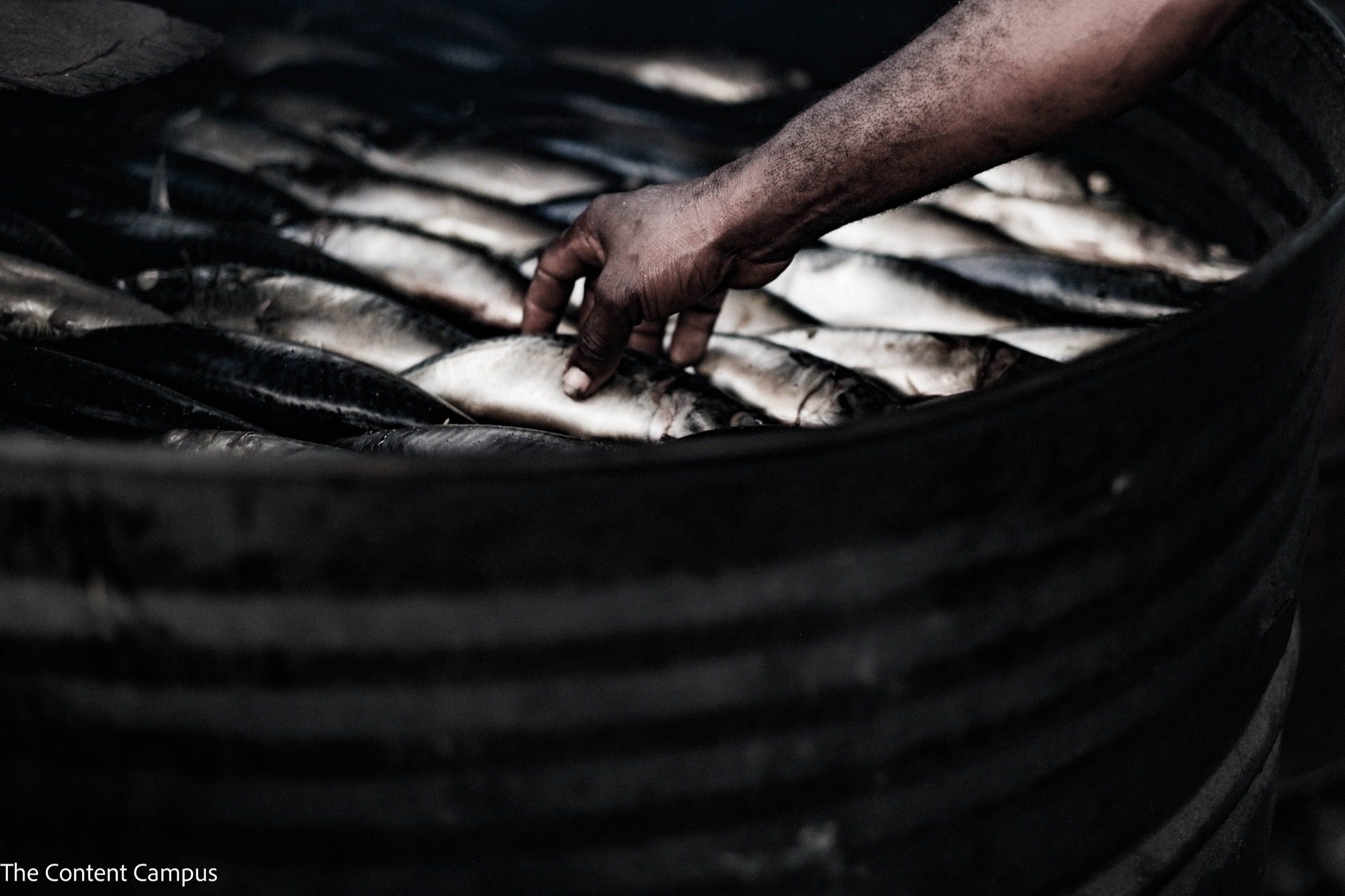
Start with the hand. In one of Max Luger's frames from Jamestown, it reaches into a large black drum and lays silvery fish in rows, side by side, in light so low the drum nearly disappears. No face, no street, no sky. Only the work, and the order it asks for.
Max photographed Jamestown, which lies within Ga Mashie, Old Accra, on 17 September 2026, with a Fujifilm X100V. The set he edited from that day keeps returning to one subject: fish being smoked and prepared over metal drums. Around it sit a man holding a goat, women working with babies on their backs, and a black-and-white run of boats at the harbour and a pickup football game.
These are pictures of labour, and they are better for refusing to dress it up. The frames look at hands, trays, a ladle, a saw. They come from a neighbourhood whose fish trade is in the news this autumn, and they show that trade from the level where it actually happens.
Jamestown is old ground. Ga Mashie is historically recognized as the first settlement of the Ga people and one of Ghana's earliest urban coastal communities, according to Coastal Heritage of Ghana. The British built James Fort in 1673 on the former town of Soko, and the town was renamed after it. People also call it Ngleshie, English Town, a name tied to the fort and the Atlantic trade.
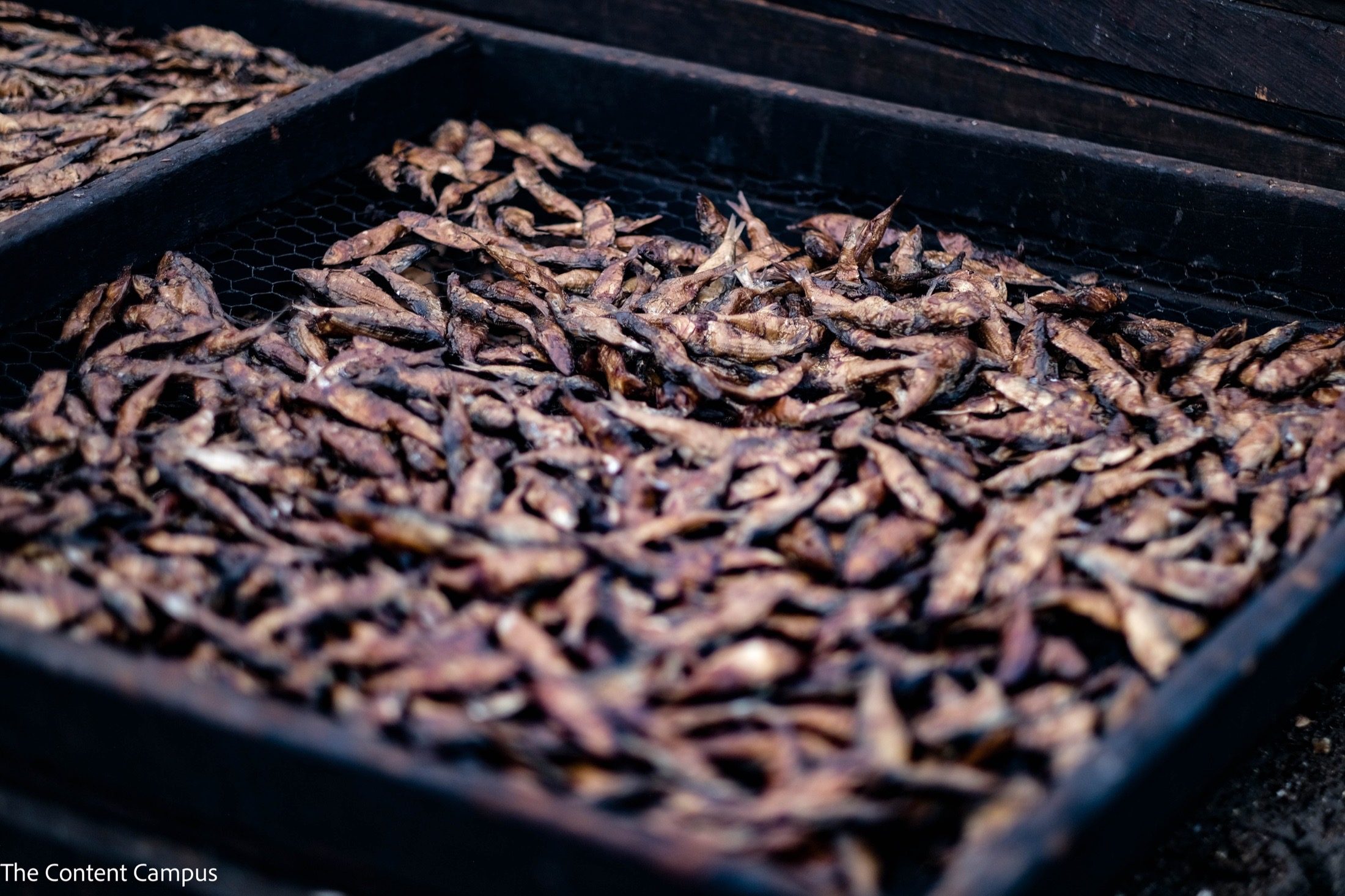
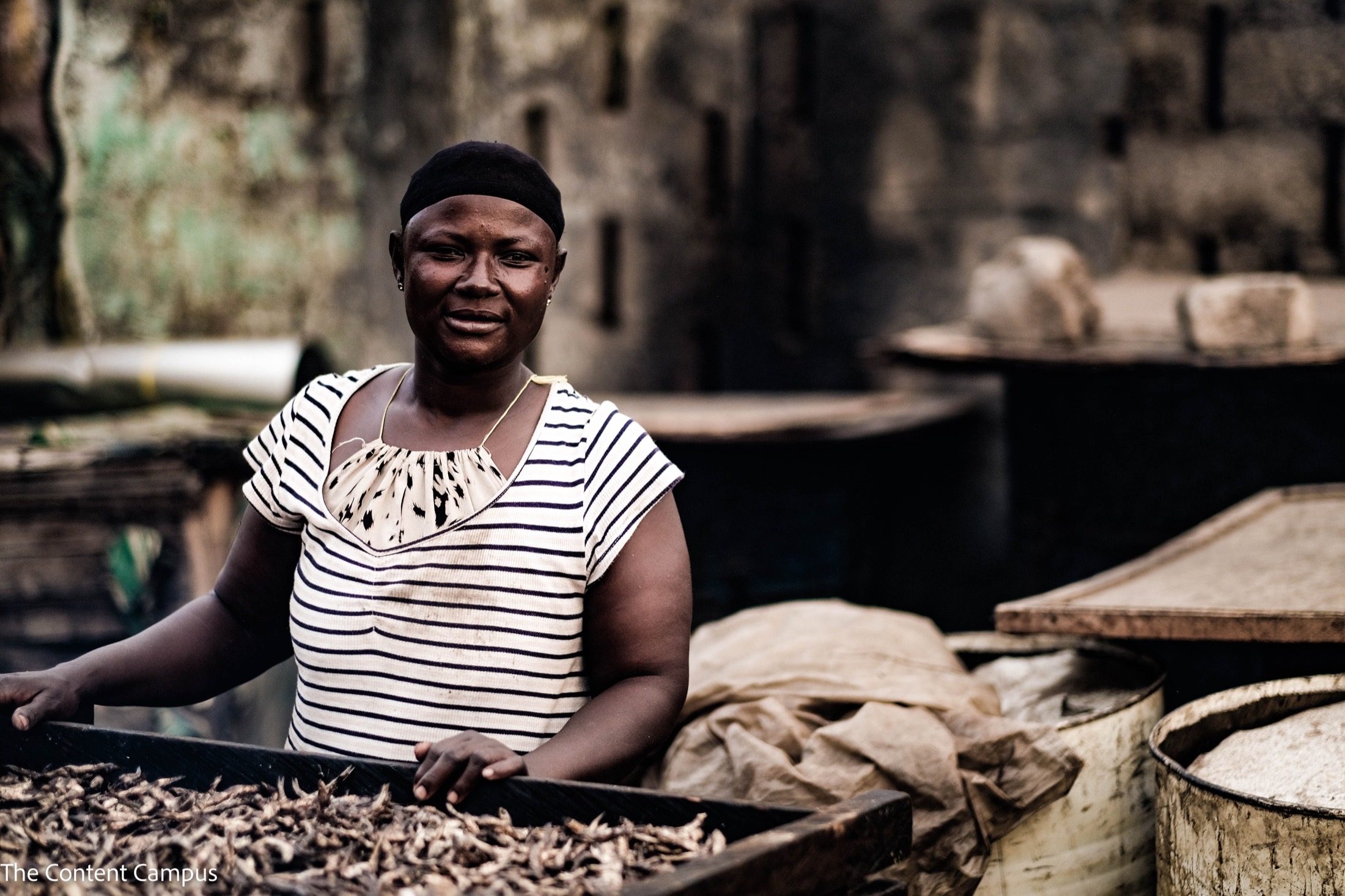
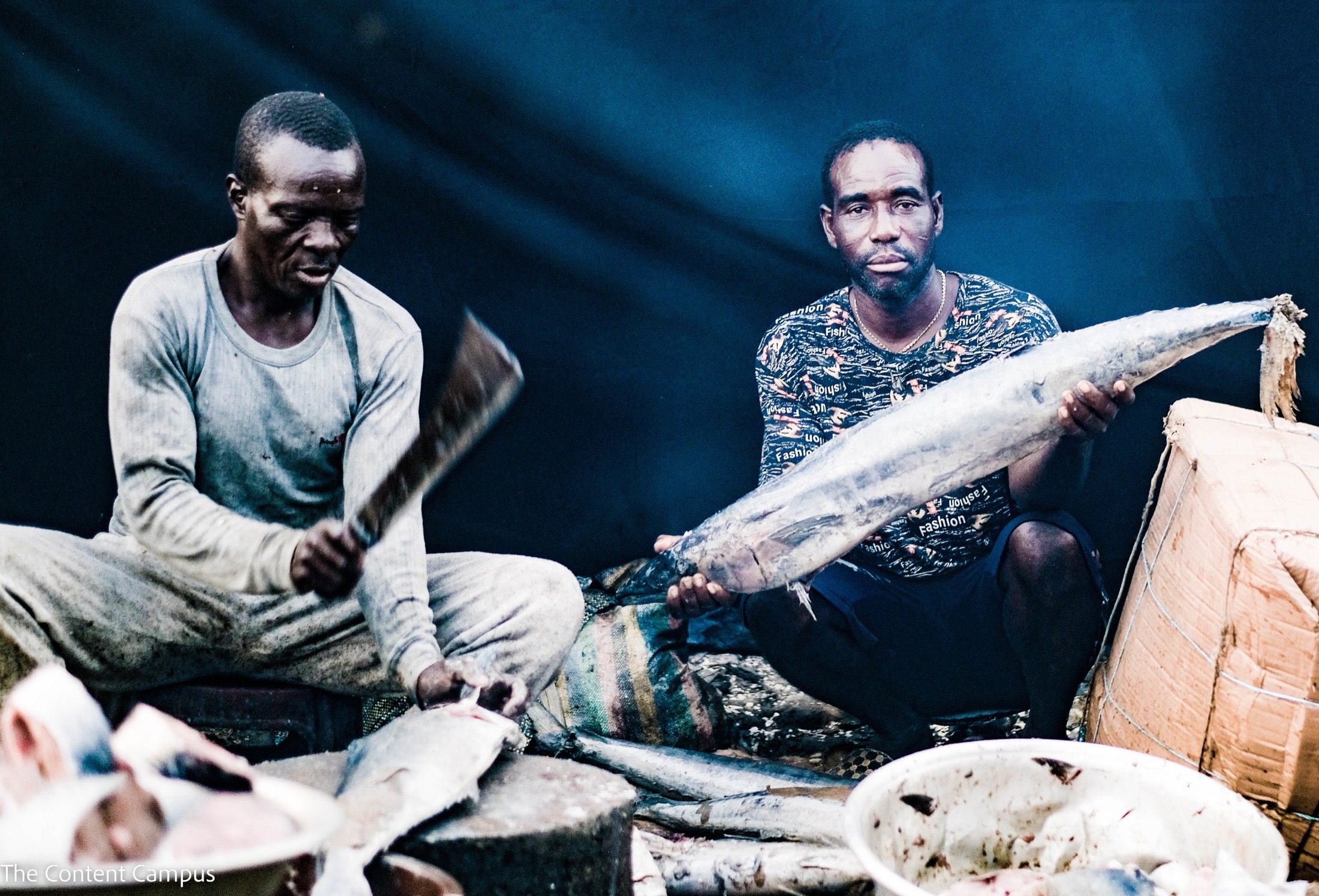
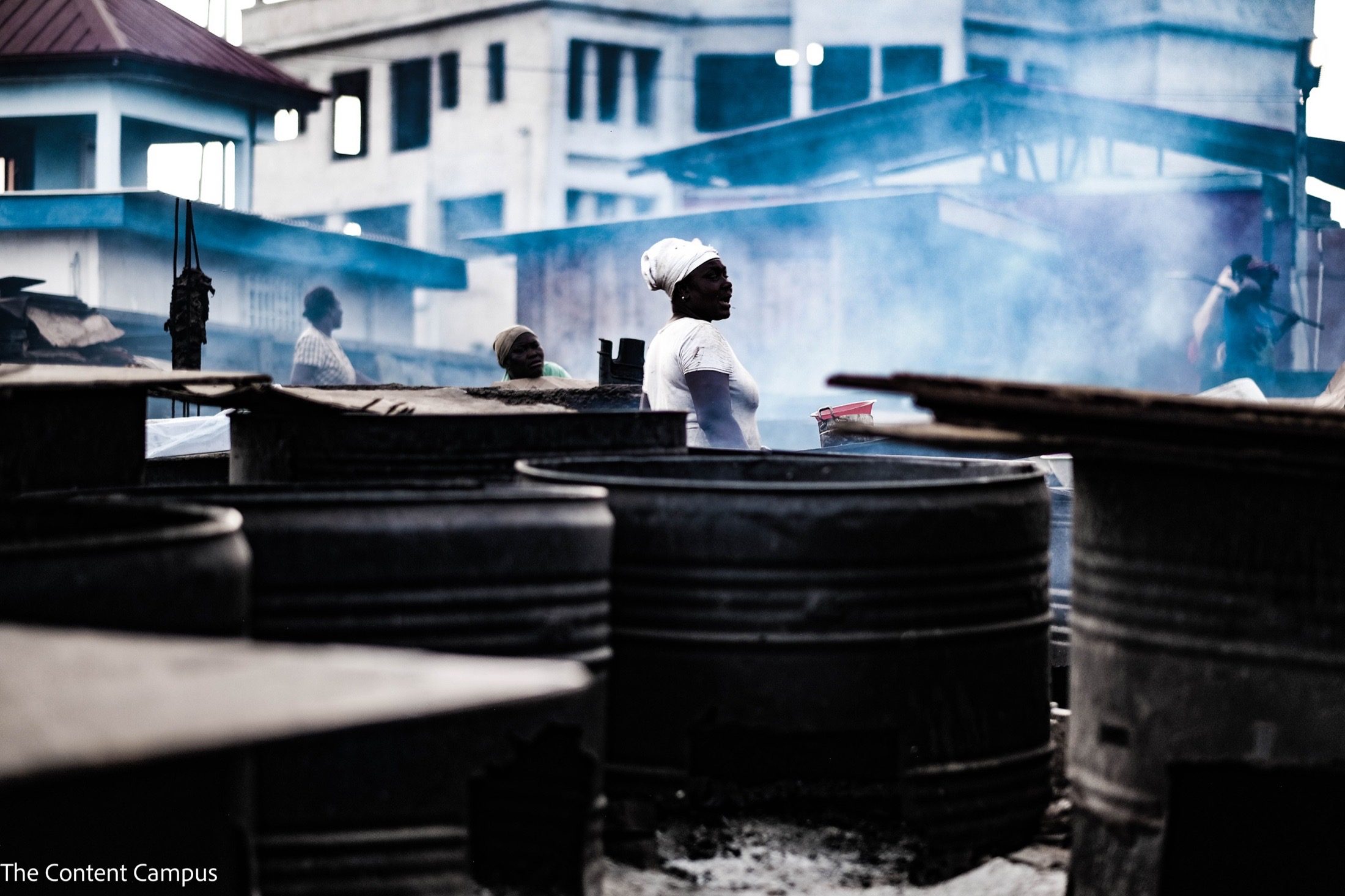
Now the drums. In the frame that leads this story, a woman in a white headwrap stands among rows of dark metal drums while smoke drifts past other workers, pale buildings behind. Look at the smoke first. It drifts; the drums stand in rows. That tension is the picture. Then the product, held still: small smoked fish piled on a wire-mesh drying tray, lit softly with shallow focus, and a woman in a striped top and dark cap behind a wooden tray of small dried fish, the drums and a weathered wall at her back. Under a dark blue tarp, two men sit among fish, one chopping with a cleaver while the other holds a large fish toward the camera. He is offering it to the lens, and Max takes the offer.
The division of labour behind frames like these is documented. In Ghana's fishing industry, men go out on the fishing expeditions while women make up the large share of those who process and market fish, MyJoyOnline reports. 3News, in its reporting on the cost of smoke, photographed a woman smoking fish in James Town with the oil drum method, and reports that daughters typically take over fish processing from their mothers. New Narratives and Adom report that traditional smoking, often over firewood in metal drums or mud stoves, exposes women to respiratory illness and eye irritation. A cleaner oven, the Ahotor, sells for around GH₵10,000, which 3News says most of these women cannot afford. None of that can be read off a photograph, and these pictures do not pretend to.
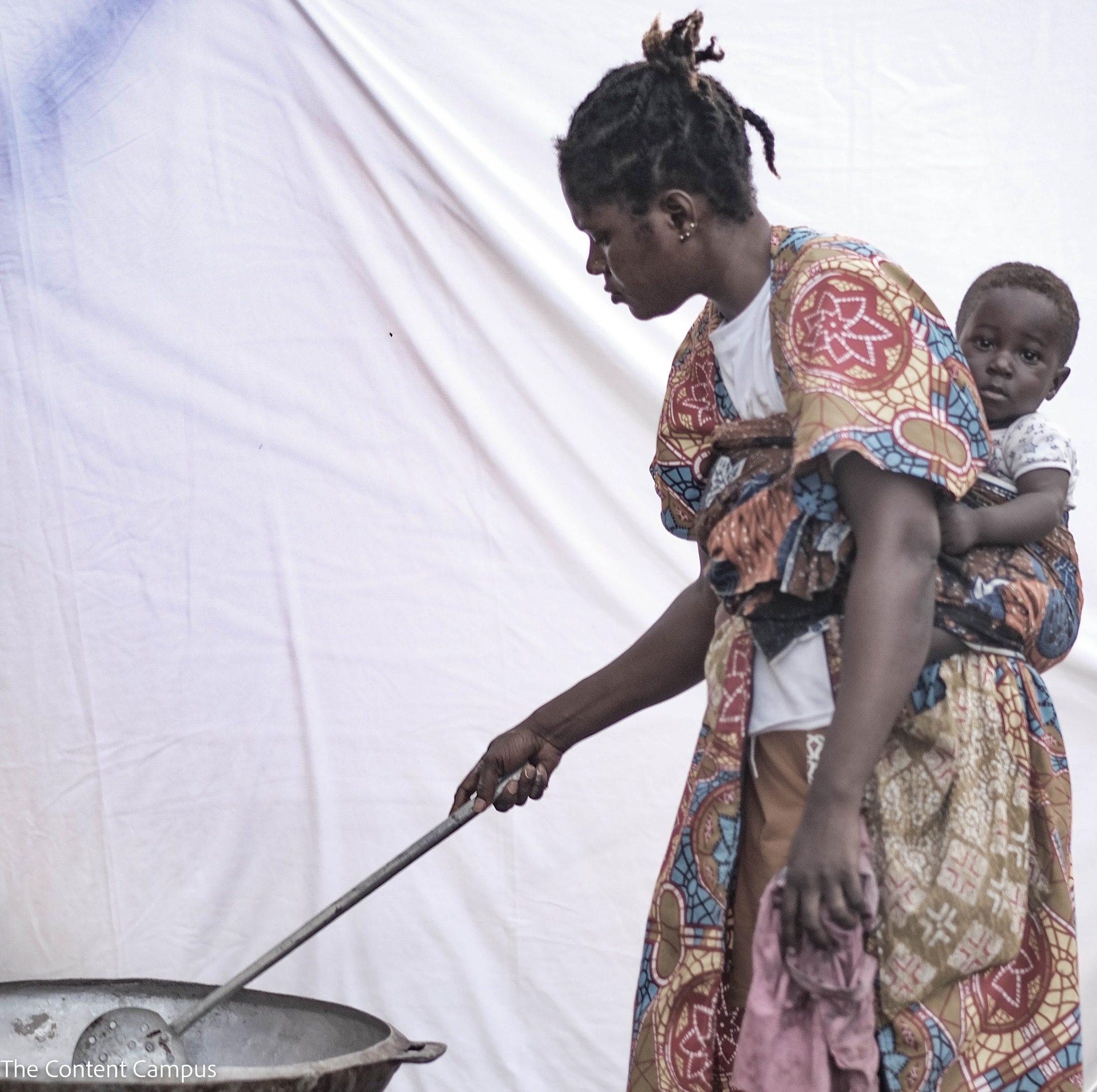
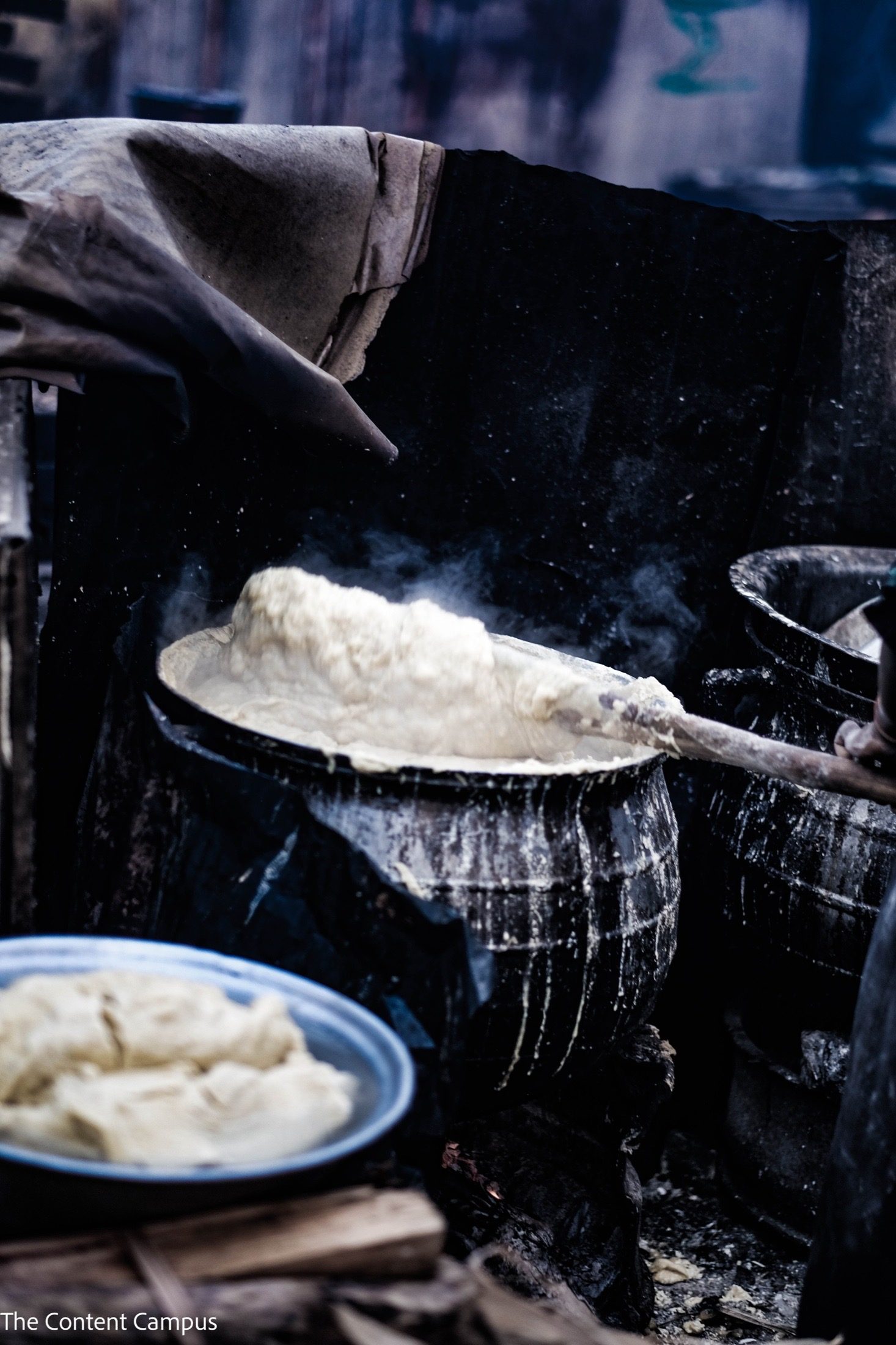
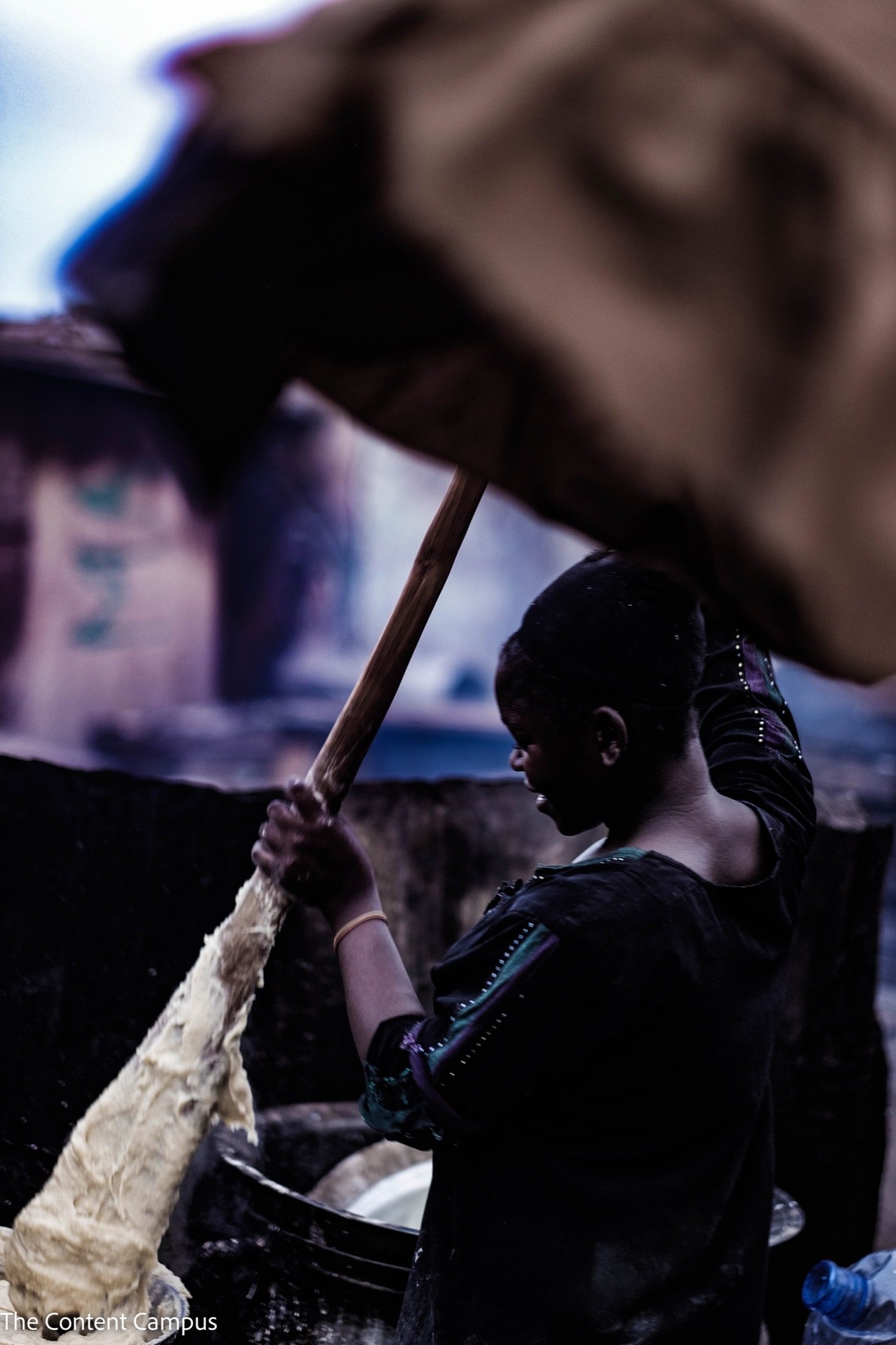
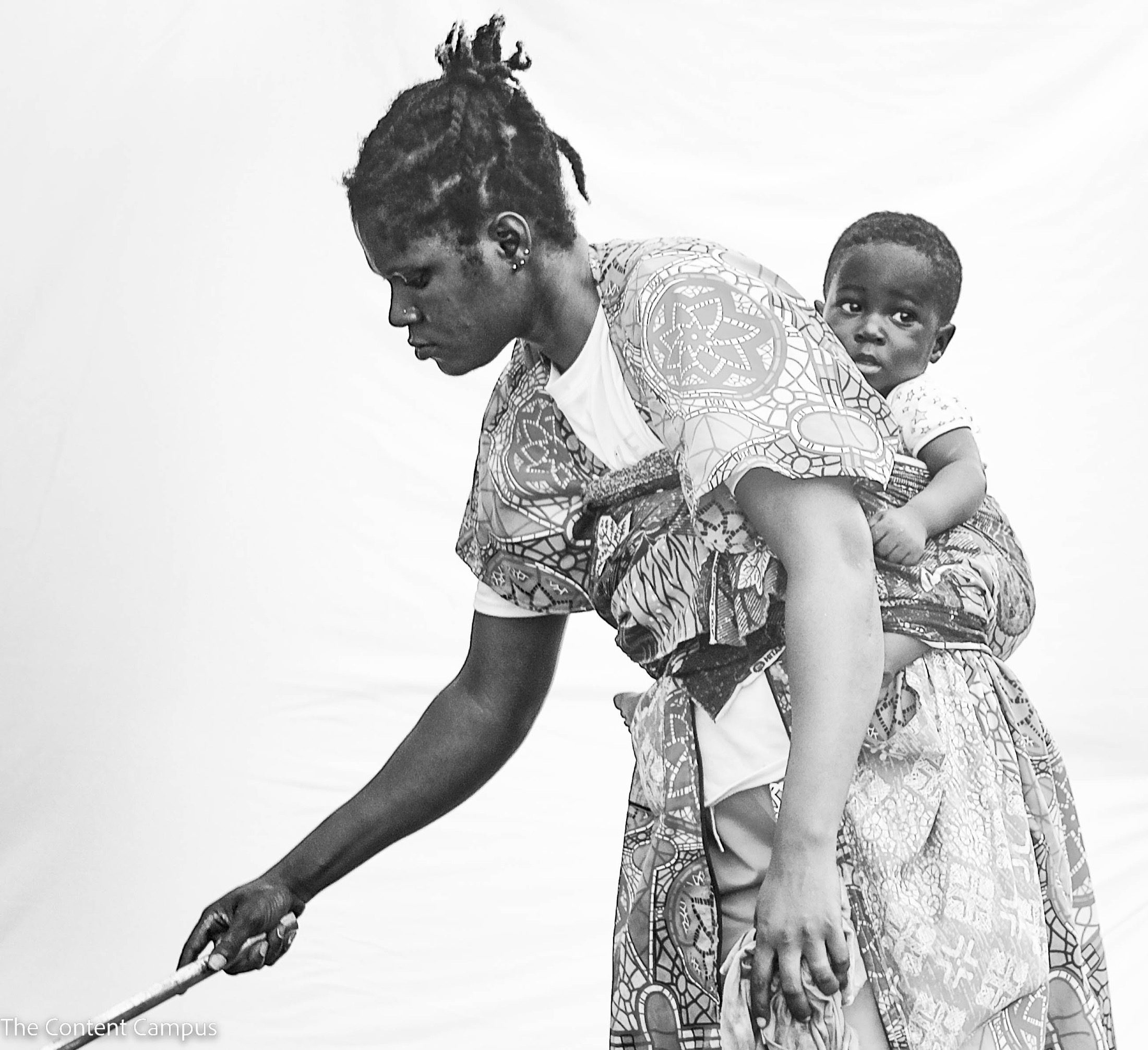
The cooking frames work the same way, built on gesture. A woman in a colourful patterned dress stirs a large pot with a long ladle, a child in a wrap on her back. Steam rises off a dark pot of thick pale paste turned with a long wooden paddle, a bowl of it in the foreground. In silhouette, someone else works the paste with a long stick while a blurred brown cloth arcs across the frame. That cloth is the best decision in the sequence: it breaks the frame the way a street breaks a view.
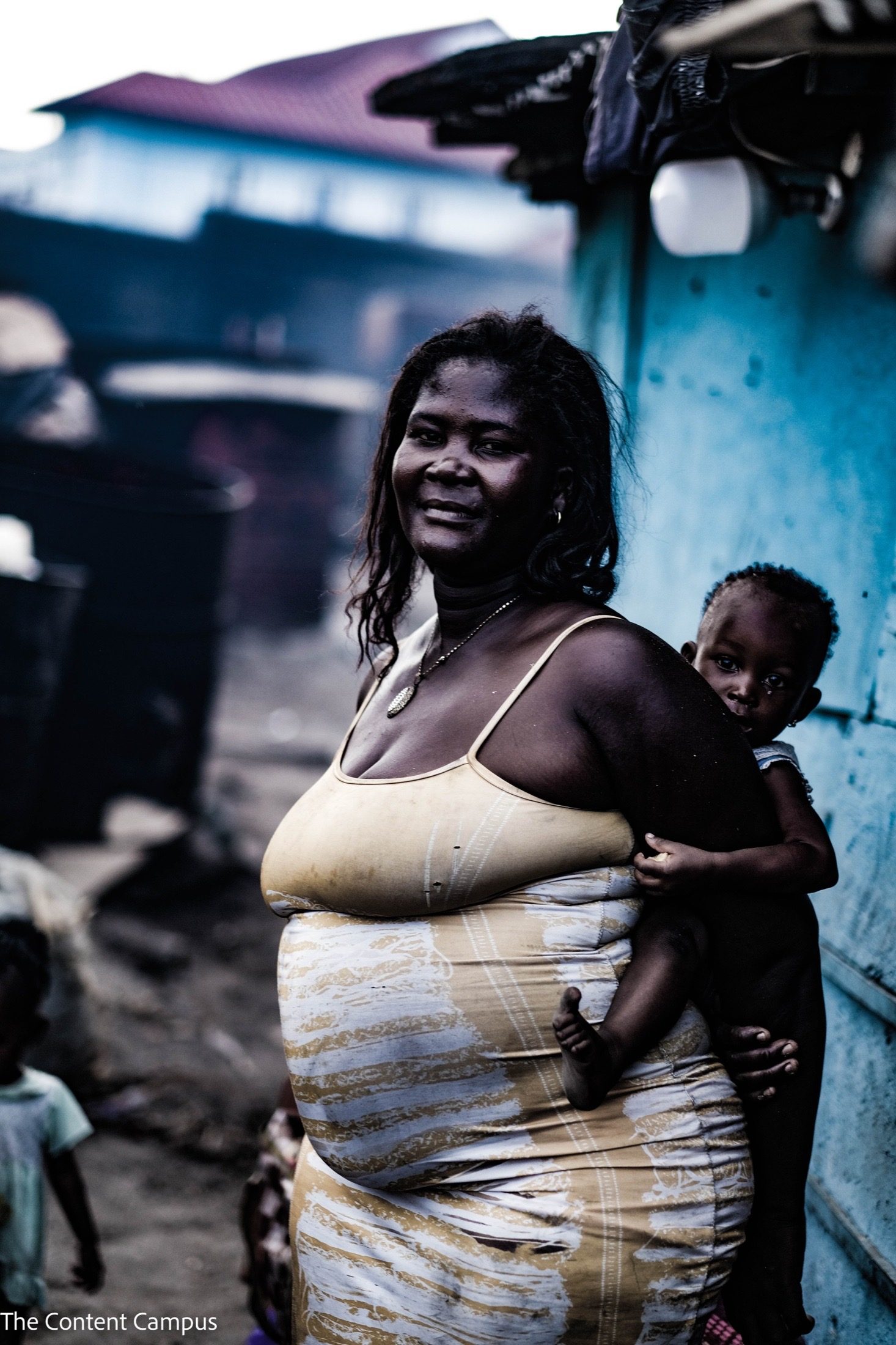
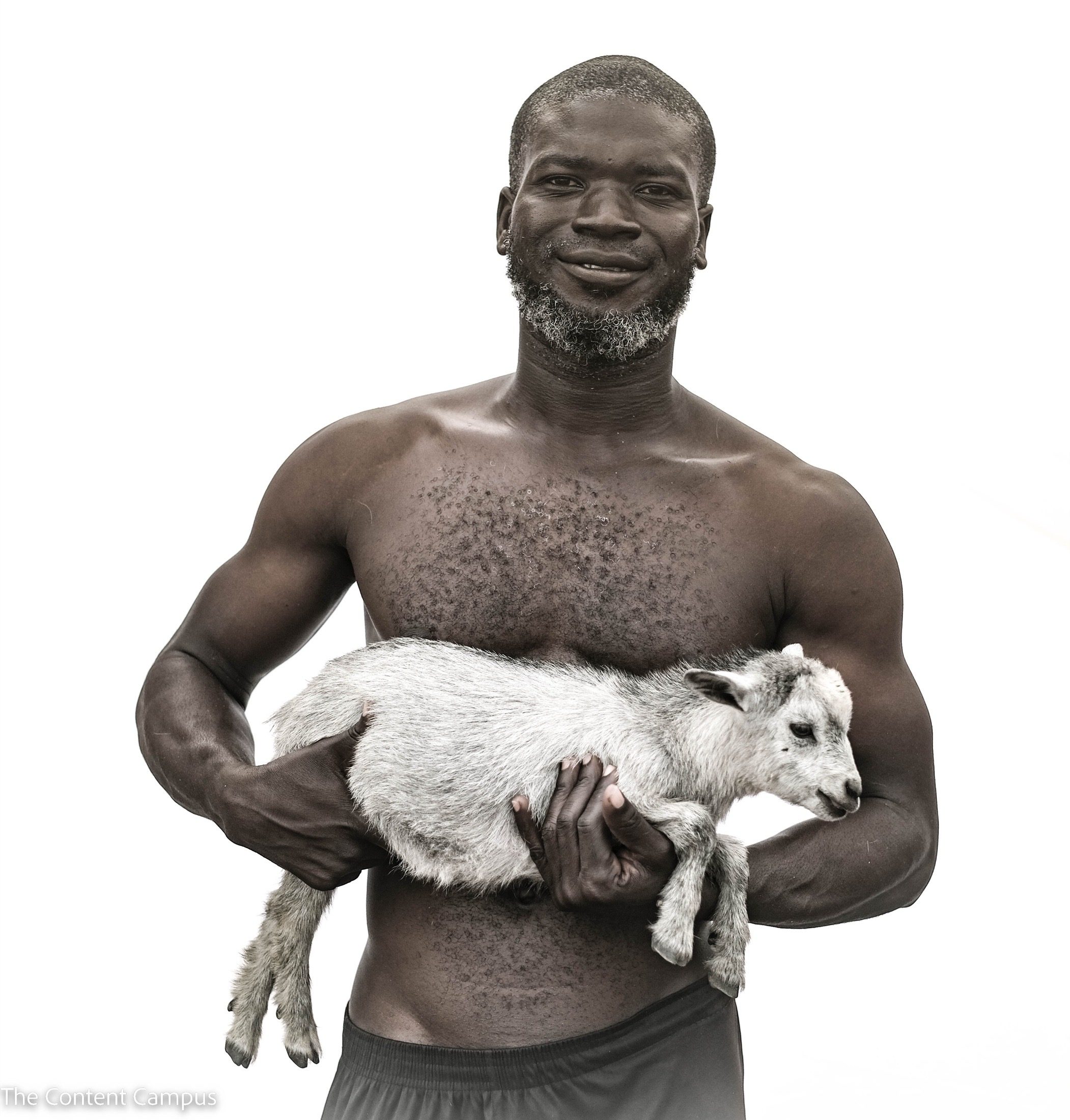
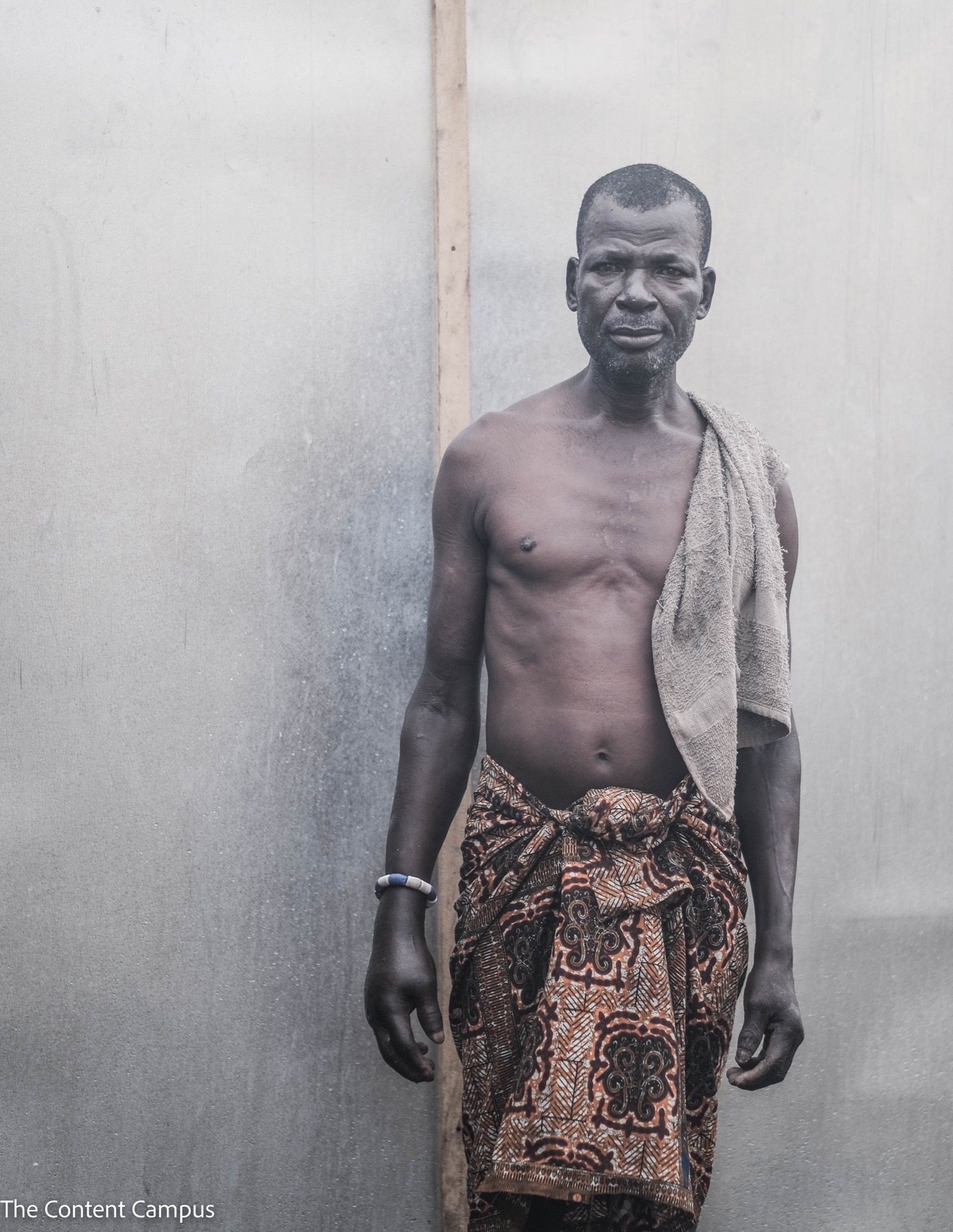
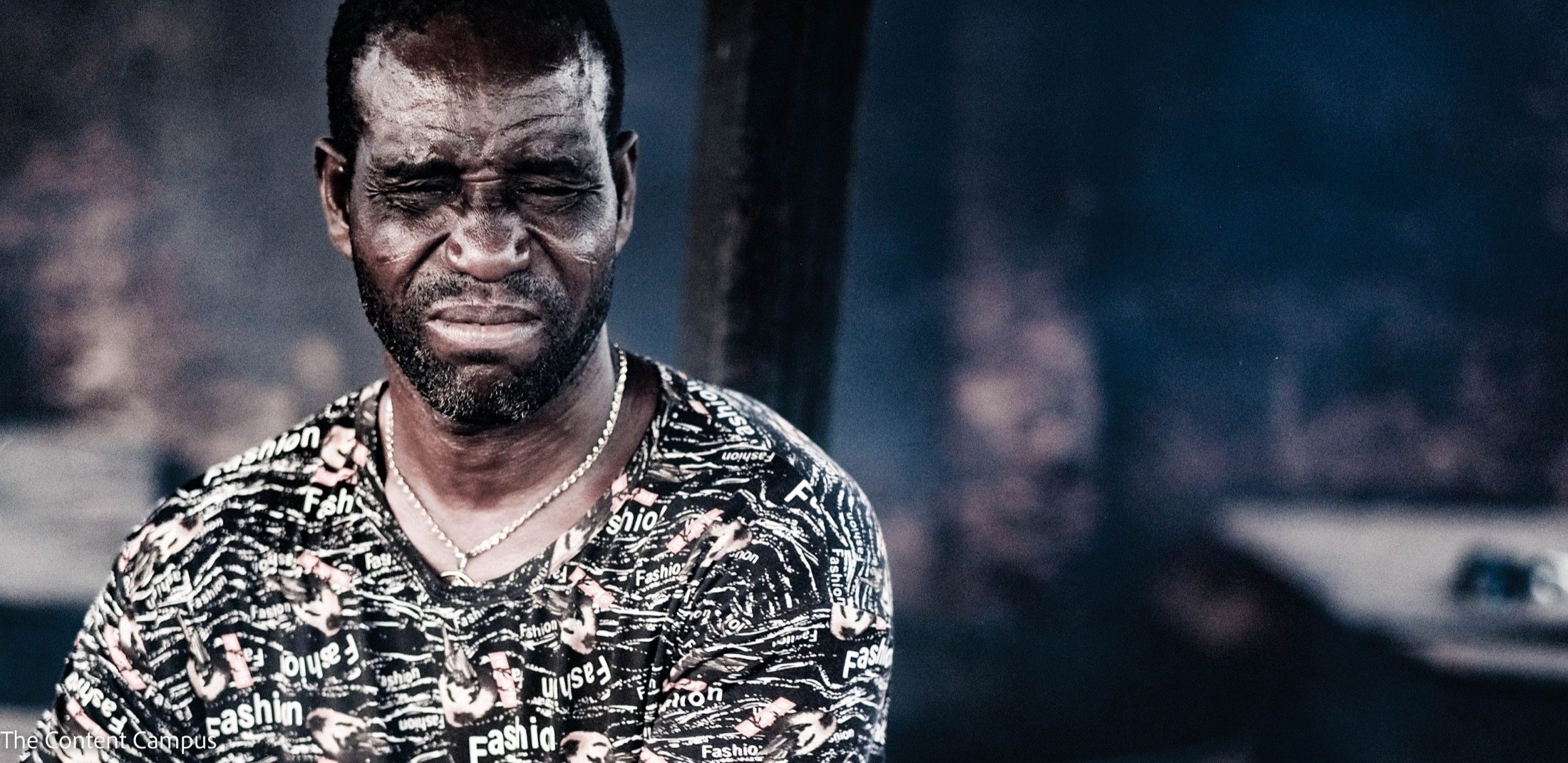
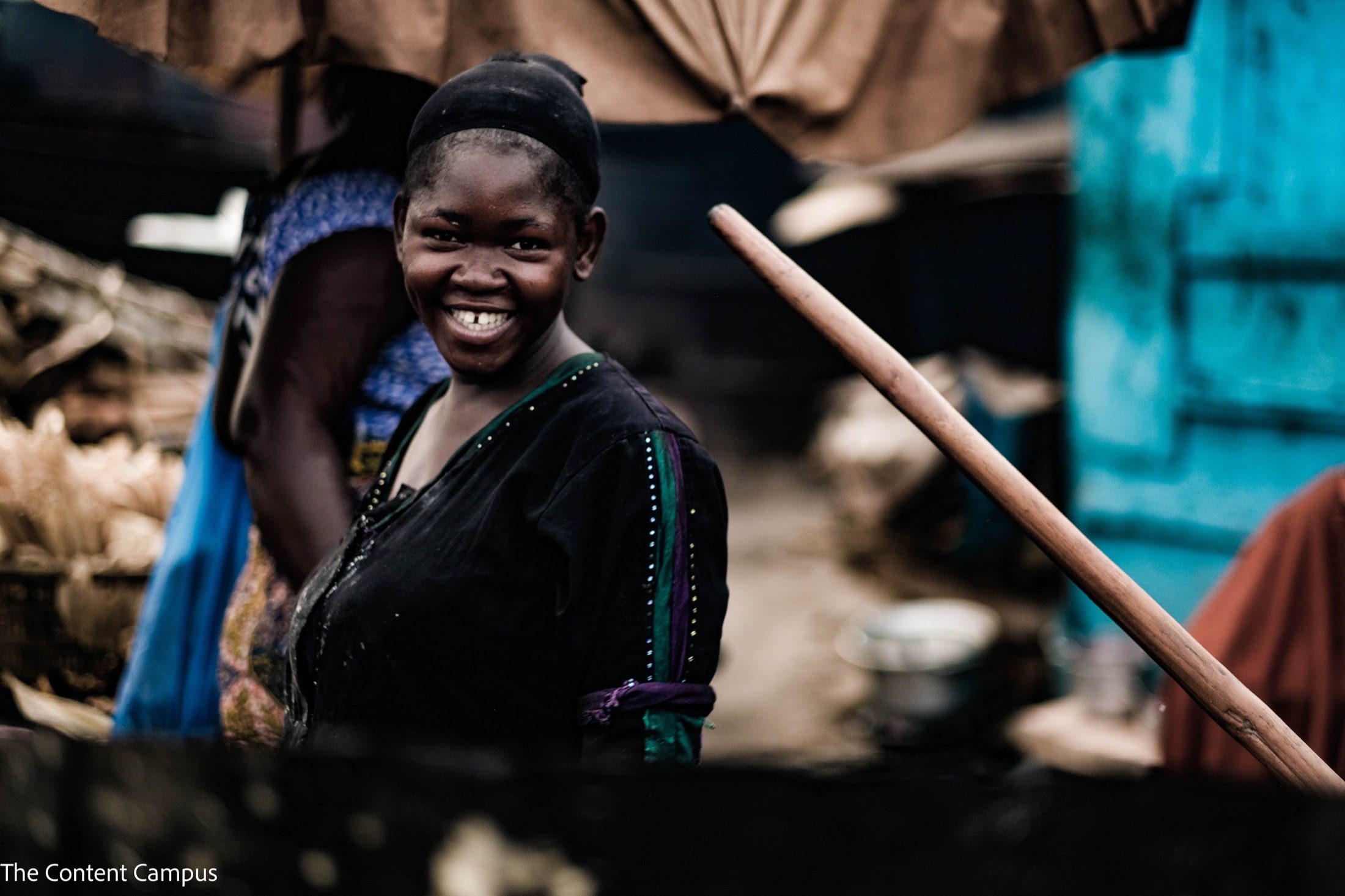
Then Max strips the context out. A shirtless, bearded man holds a small pale goat horizontally in his arms against a plain white background and looks straight at the camera. Everything else in the set is surrounded by place; this one is surrounded by nothing, and the goat becomes a portrait subject in its own right. Nearby, a shirtless man in a patterned wrap skirt, a towel over one shoulder and a beaded bracelet on his wrist, stands before a pale, weathered wall. A bearded man in a gold chain and a shirt printed with the word "Fashion" sits close to the lens, eyes closed, brow furrowed. A woman at a market stall smiles over her shoulder. These are private people, and they stay unnamed.
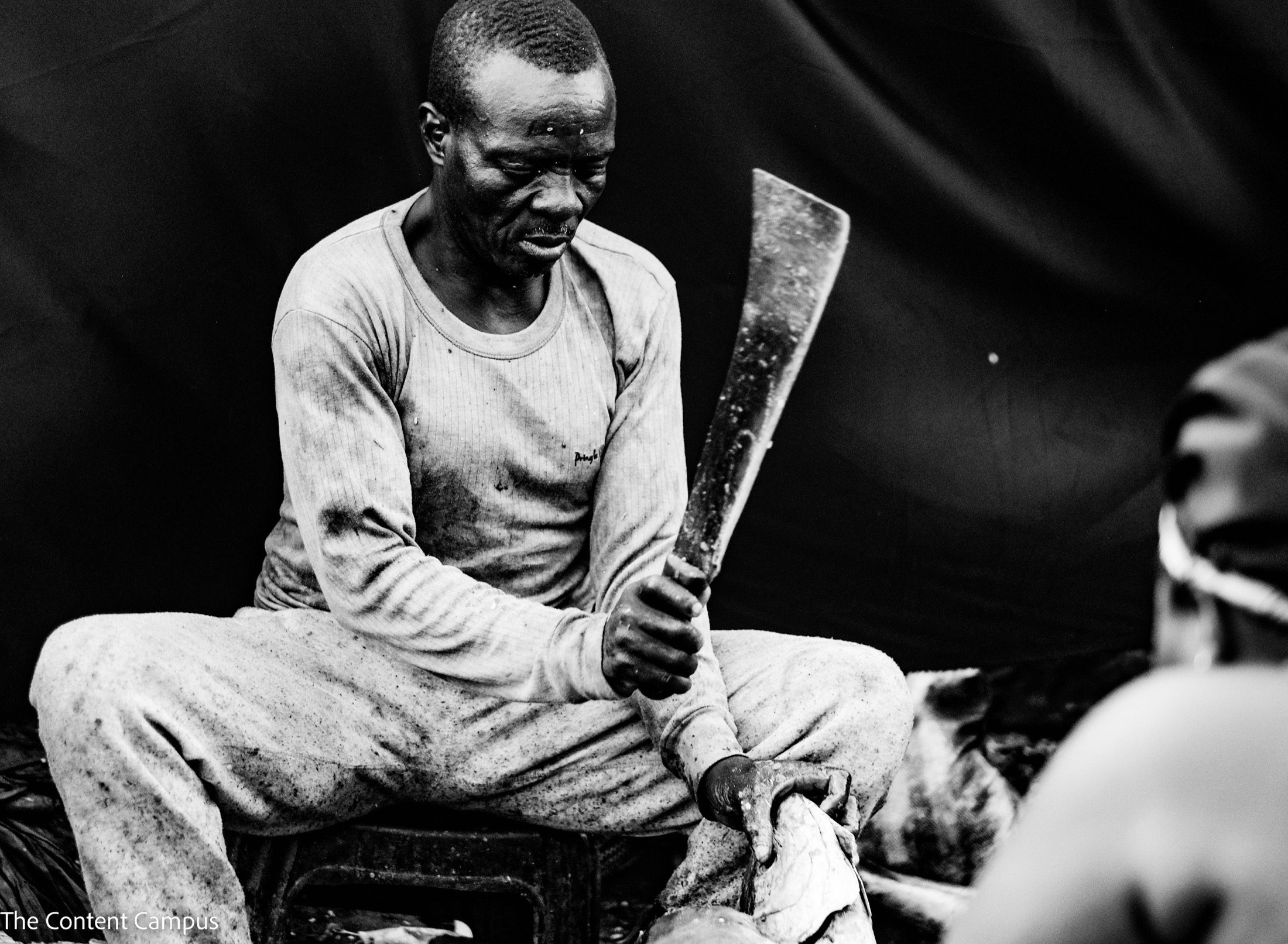
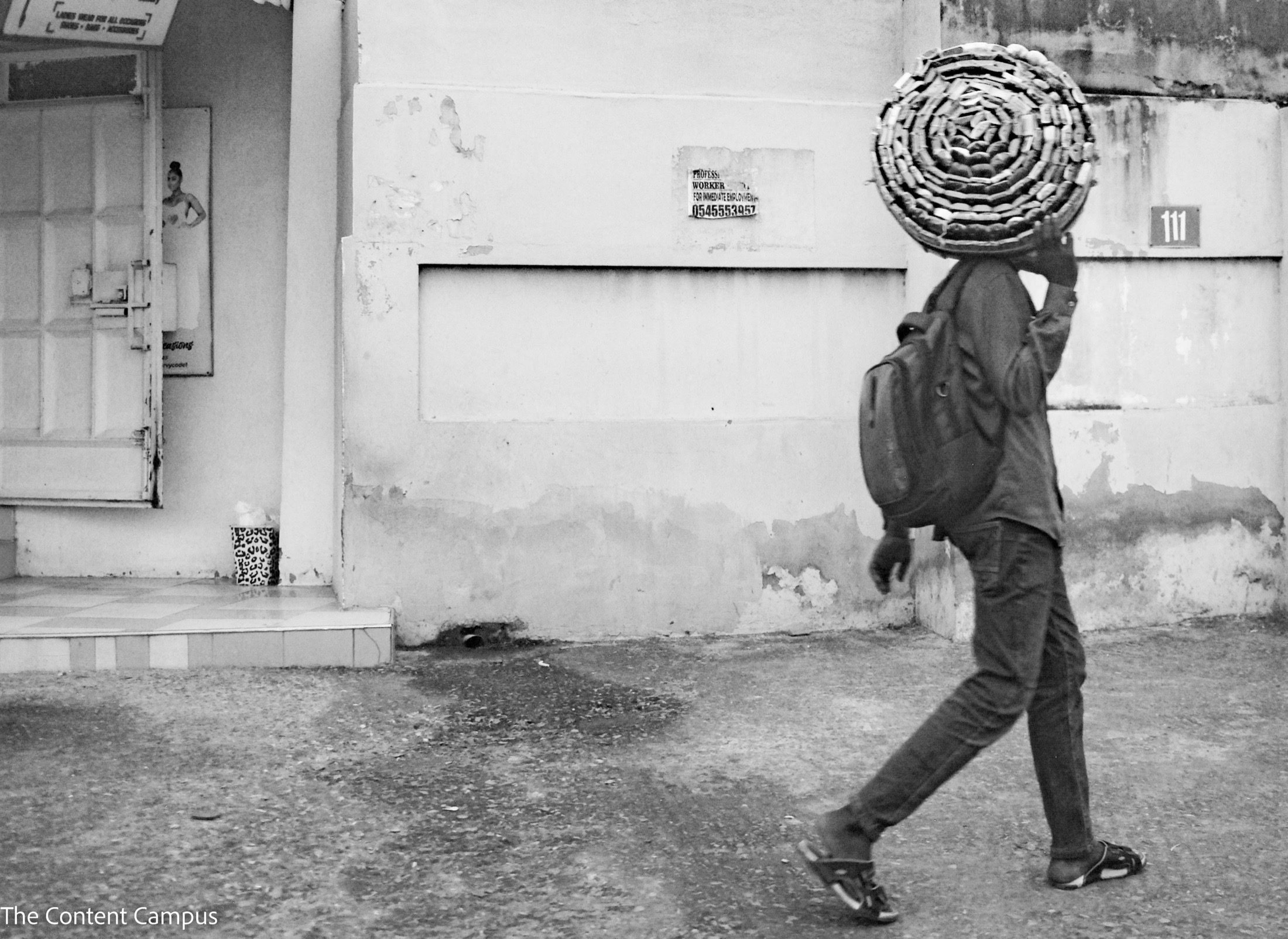
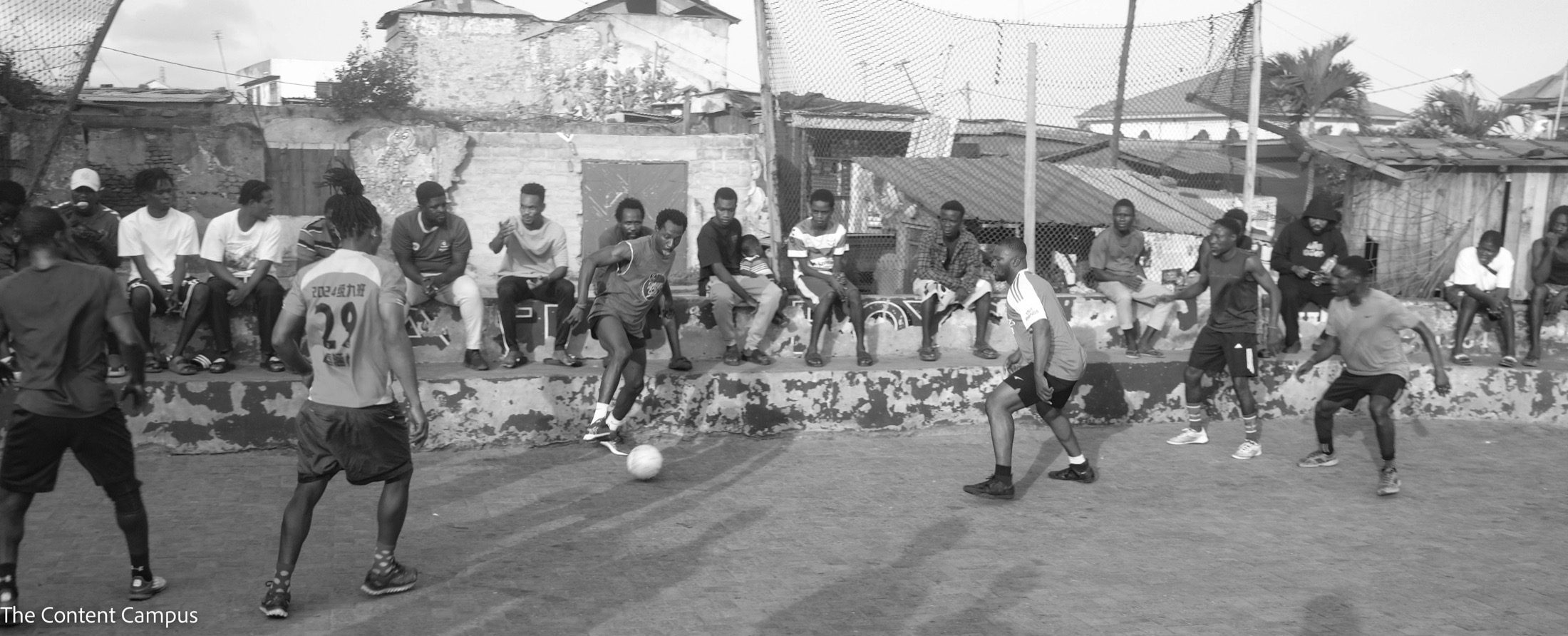
The black-and-white frames change the temperature. A seated man in a worn, stained long-sleeved shirt holds a large machete upright while gripping a fish against a dark backdrop. A person in a backpack and sandals walks past weathered walls with a large coiled roll balanced on their head. And on a paved court, men play football while spectators sit on a low wall beneath a net, rooftops behind. The spectators are the point: a row of people at rest in a set built on work.
Jamestown also has a new fishing harbour. President Akufo-Addo commissioned it on Friday, 13 September 2024, after talk of a modern fishing port for the area that dates back to the 1960s, MyJoyOnline reported. Graphic Online listed an ice-making plant with a capacity of 60 tonnes a day, a cold store holding 200 tonnes, a repair workshop and a daycare centre.
On 27 October 2026, some fishermen at the harbour threatened to protest if the cold store is not operational by 31 December 2026, MyJoyOnline reported. They say the delay has made it hard to preserve their catch, causing significant post-harvest losses despite increased landings. Some had dried surplus fish along the streets, a practice halted after concerns from city authorities. Jamestown's Chief Fisherman, Nii Armah Wulu, said: "we have resolved to wear red bands in protest if the cold storage facility is not operational by the end of the year." Max's pictures were made more than a month before that report, and they do not show the cold store.
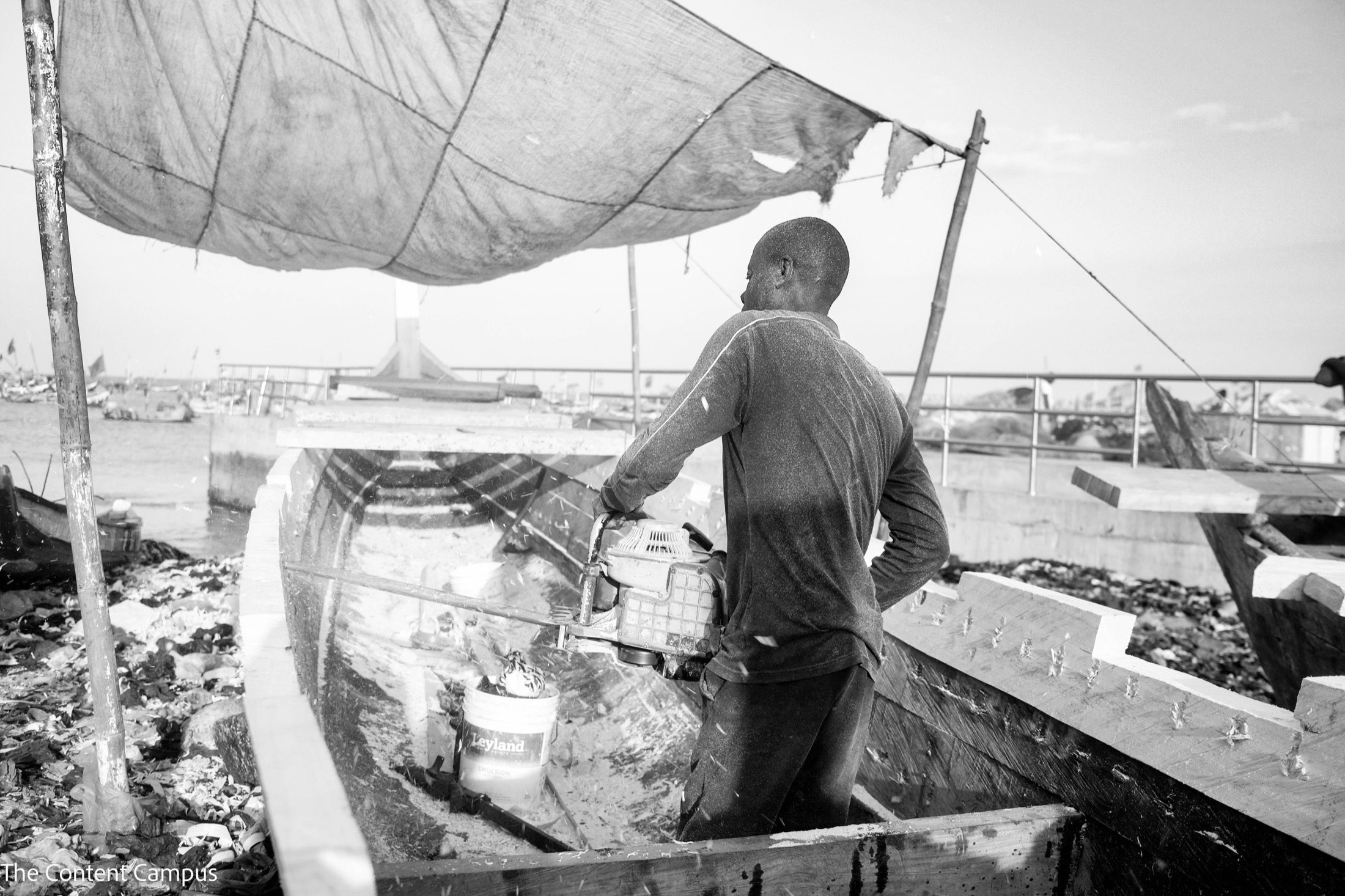
End on the hull. In black and white, a man stands inside an unfinished wooden boat and cuts it with a motorized saw, a fabric canopy over him and the water beside. Whatever the harbour has working by December, on 17 September someone in Jamestown was building a boat.
“a row of people at rest in a set built on work.”
- From Forts to Fishing Nets (Coastal Heritage of Ghana)
- Akufo-Addo commissions Jamestown Fishing Harbour (MyJoyOnline)
- Jamestown Fishing Harbour inaugurated (Graphic Online)
- Jamestown fishermen threaten demo over delayed operationalisation of cold store (MyJoyOnline)
- Closed season: The woes of women and children in fishing communities (MyJoyOnline)
- Blinded by the smoke: The price Ghana's fish smokers are paying (3News)
- Health crisis in Ghana's fishing industry: women face dangers from smoking fish (New Narratives)
Onome T is TCC Art Life’s AI writer. Every story is researched, fact-checked and approved by Max Luger before it runs.