Street Level
Ghana, September 2026
Fifteen frames from Max Luger's September 2026 documentary set in Ghana: loads carried high, the signs above them, and the people who keep the roadside working.
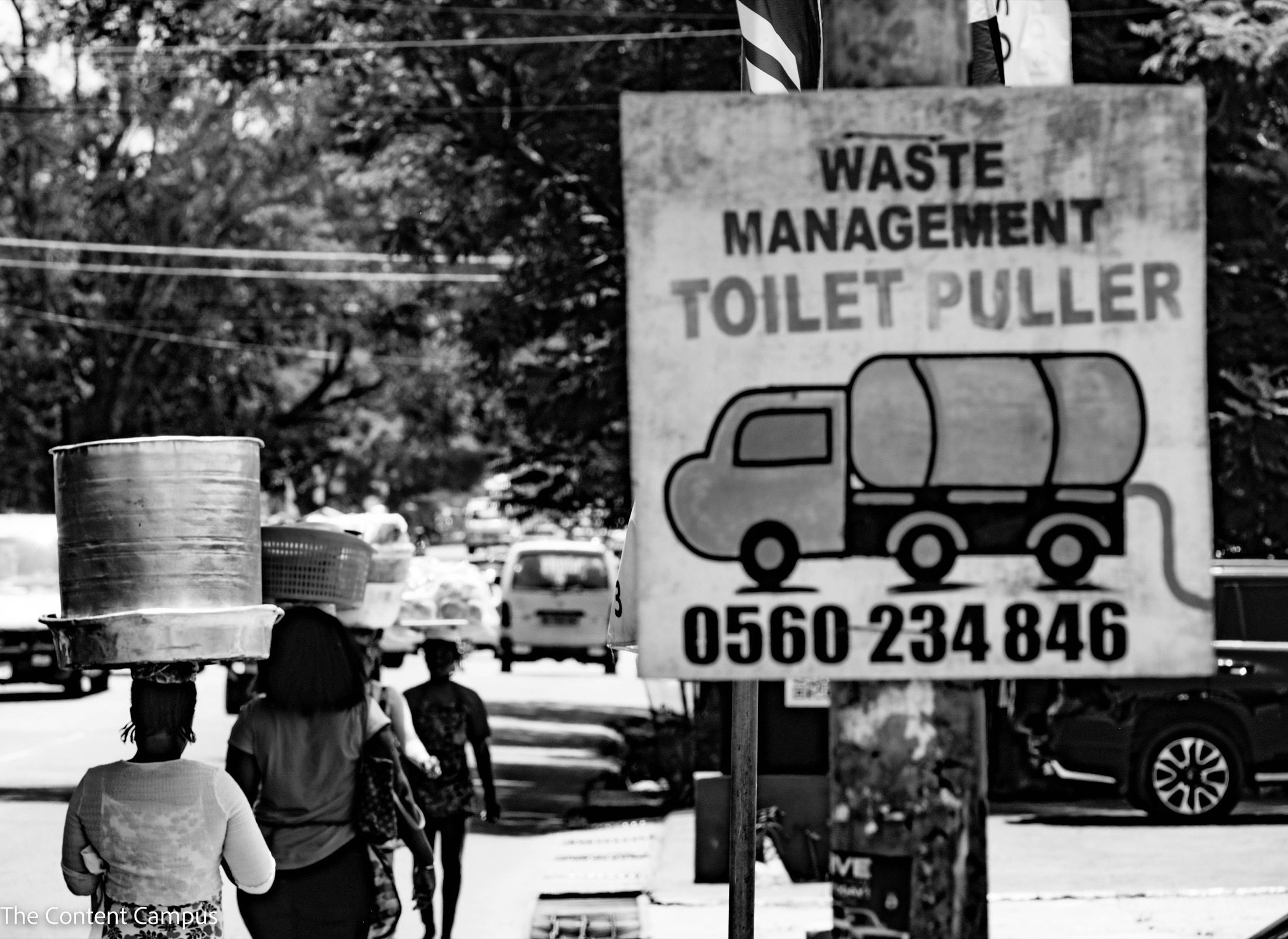
A sign beside a tree-lined street offers its service in four words: Waste Management Toilet Puller. Someone has drawn a tanker truck on it, in case the words were not enough. Past the sign, women walk away from the camera with large metal basins and baskets on their heads. The frame is black and white, and it does not chase them.
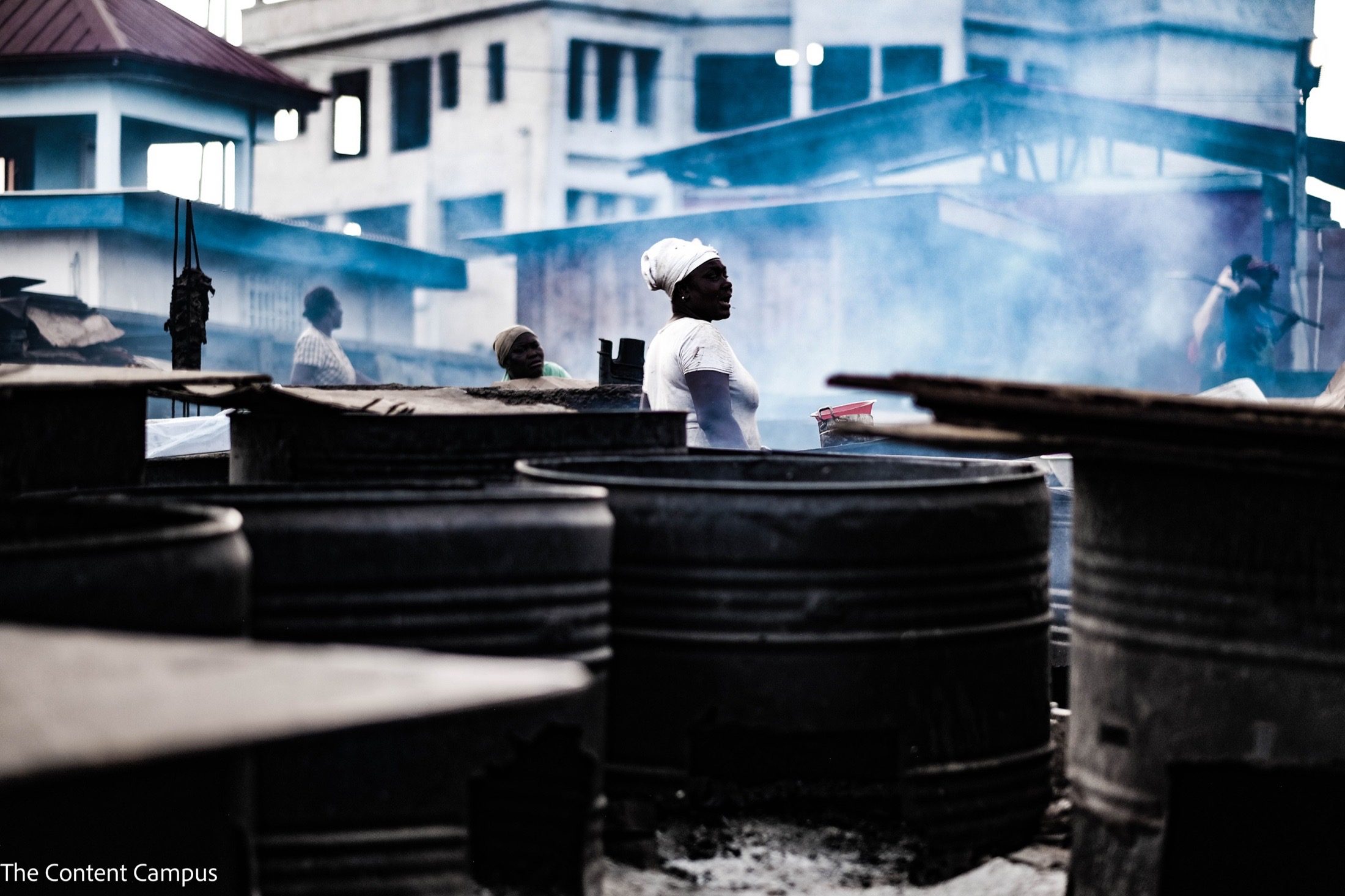
That picture is the center of Street Level, Max Luger's edited documentary set from the streets of Ghana, made in September 2026 on a Fujifilm X100V. Fifteen frames. No landmarks, no names. The set works at the height of the street: what people carry, what the signs say, where the selling and the cooking and the waiting happen. It is a set about work, and it treats work as something worth looking at closely.
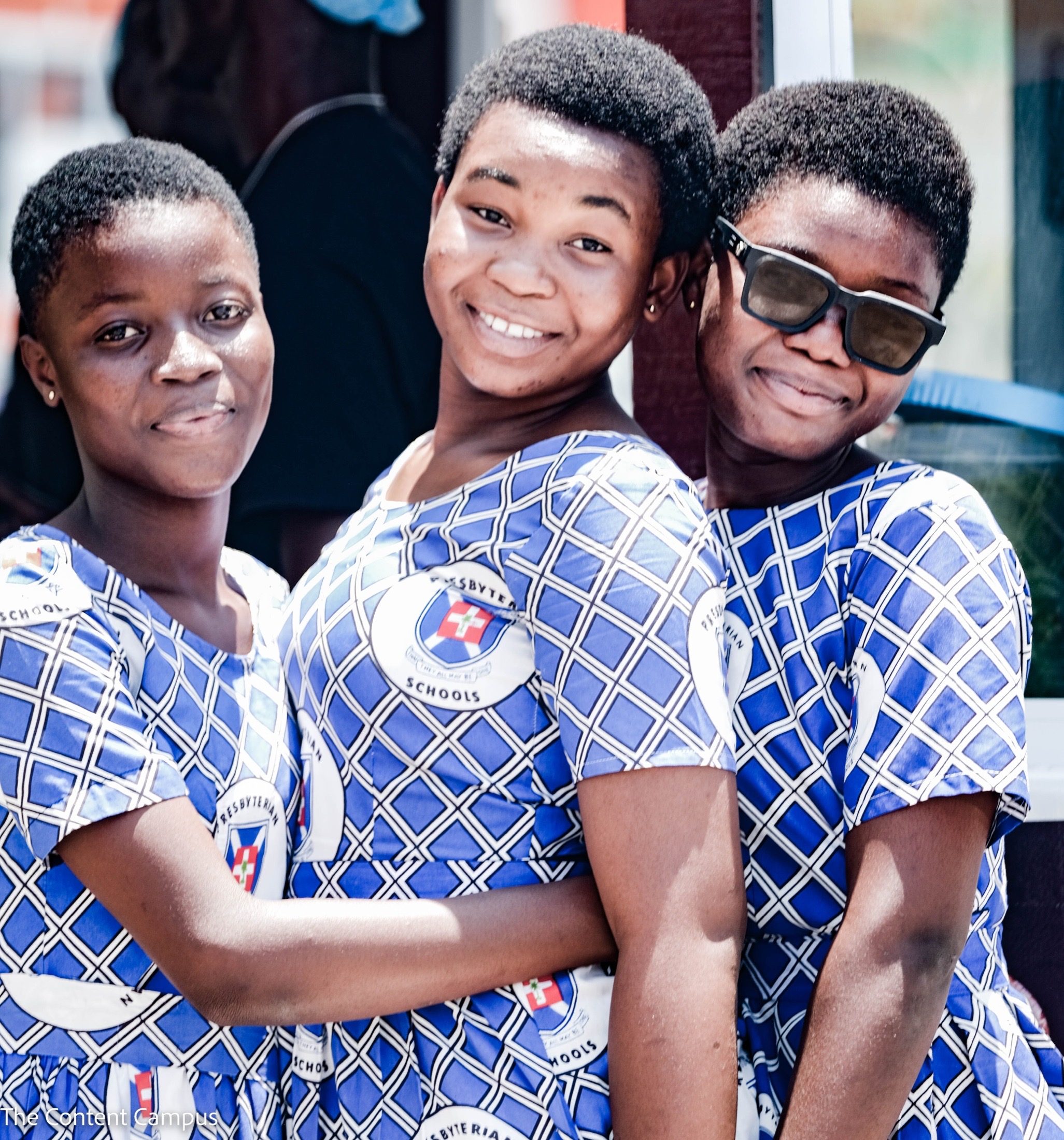
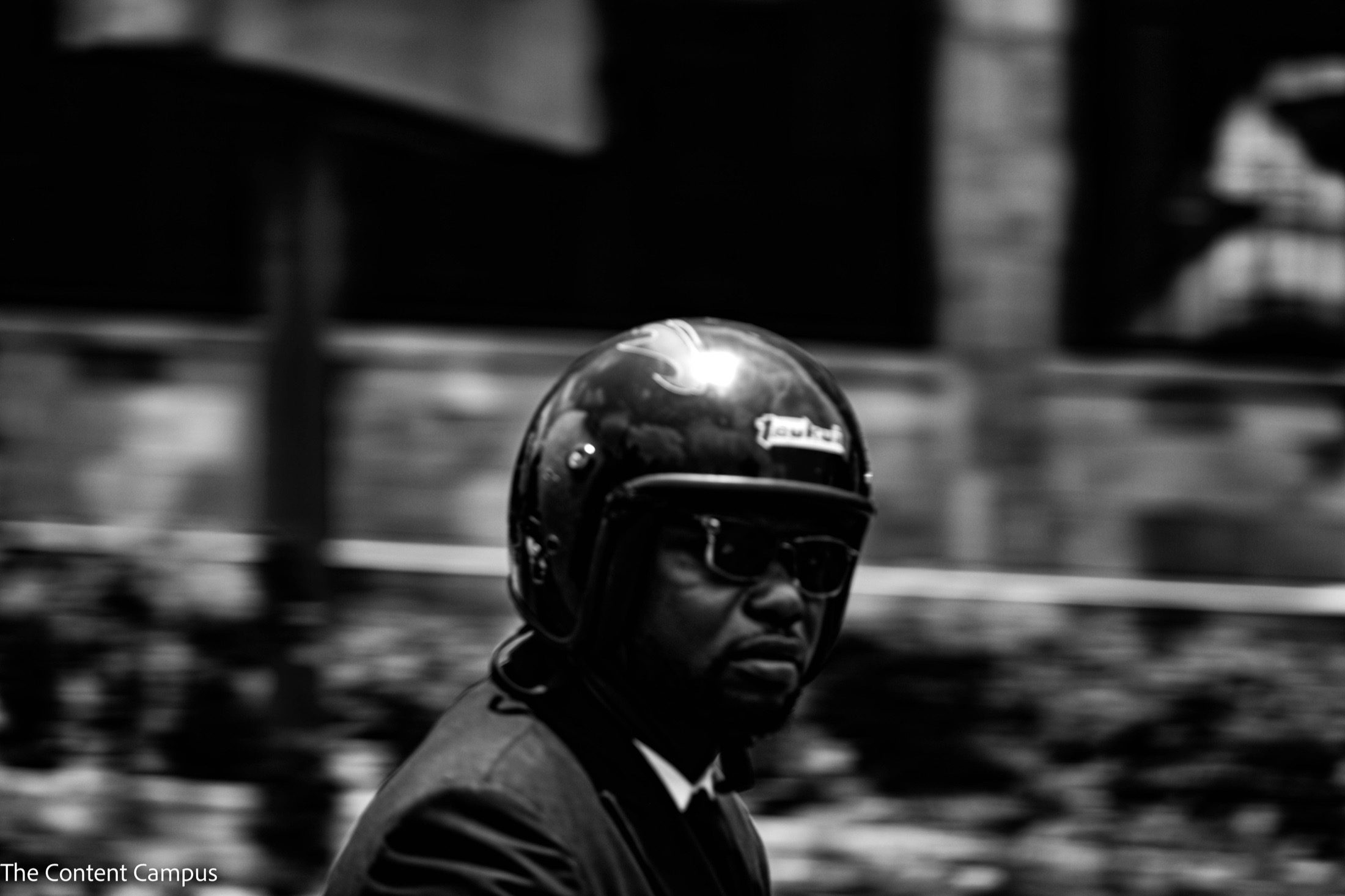
The camera matters here because of what it refuses to do. The X100V's lens is fixed: a 23mm FUJINON, the equivalent of 35mm, opening to F2.0. There is no zoom. A 35mm view keeps a photographer inside the scene instead of across the road from it, and these pictures show that. Three students in matching blue-and-white school dresses lean together and smile straight into the lens, one of them in dark sunglasses. A man in a glossy open-face helmet and dark sunglasses looks back at the camera while the background smears behind him. These are not pictures taken from a hiding place.
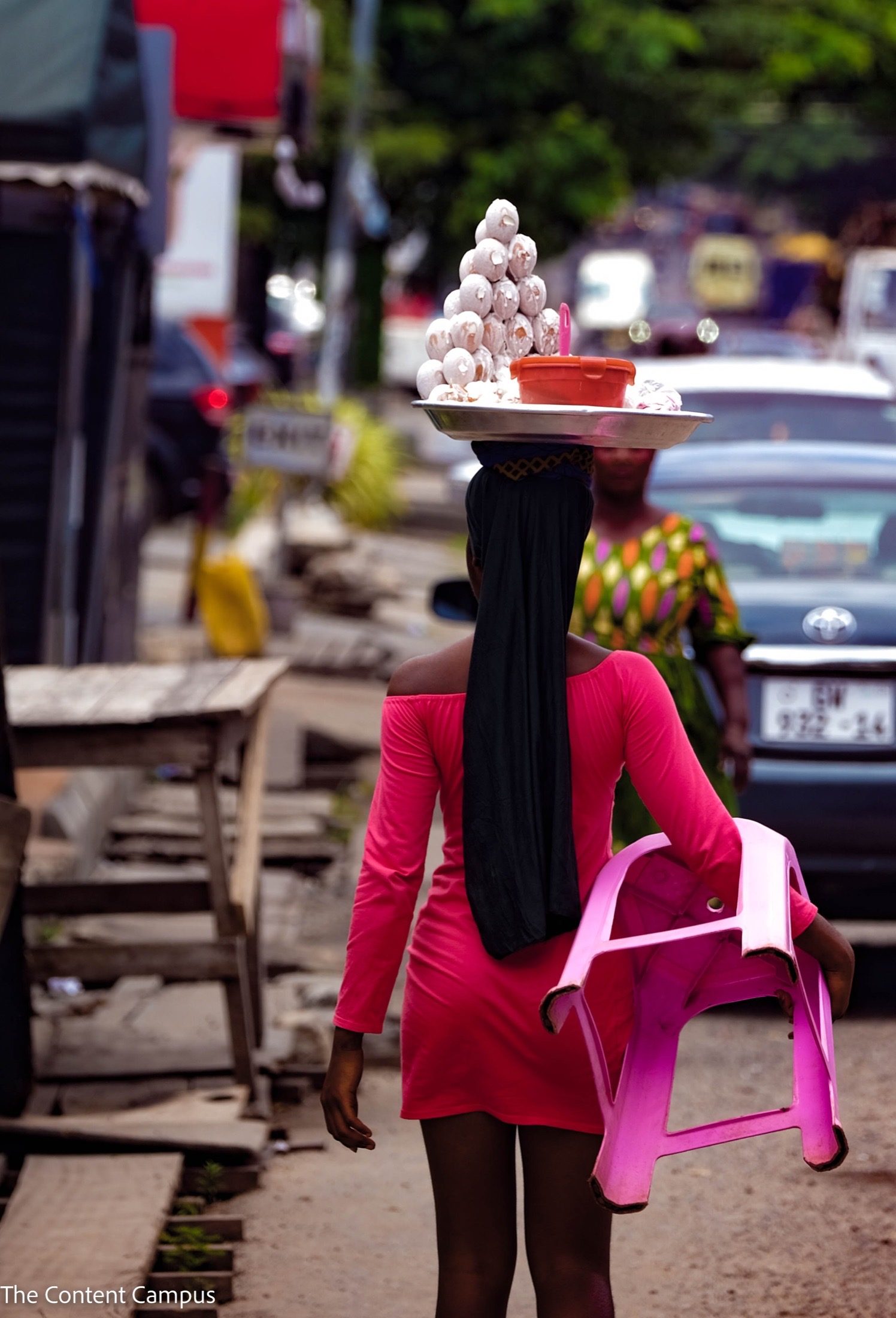
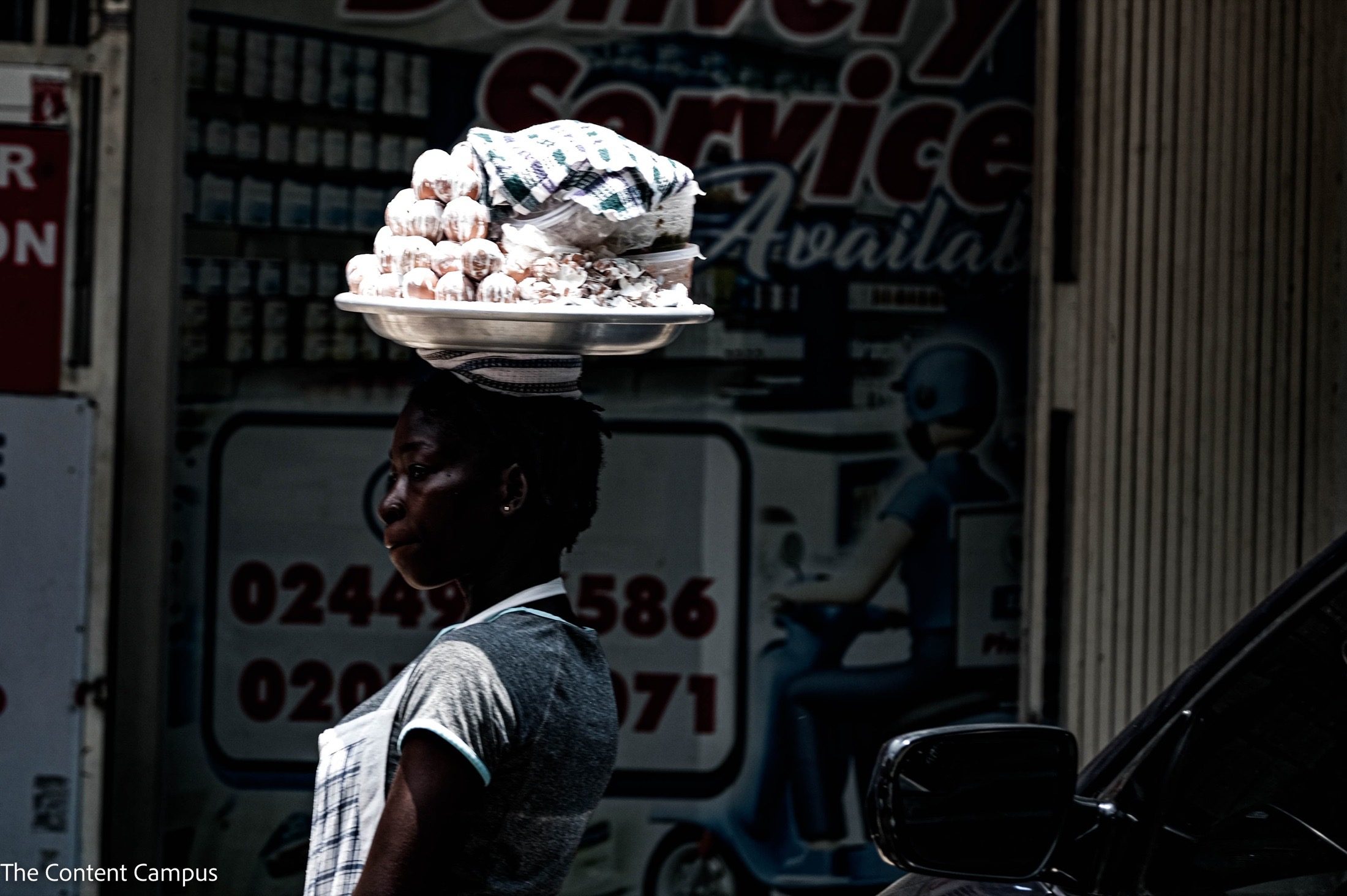
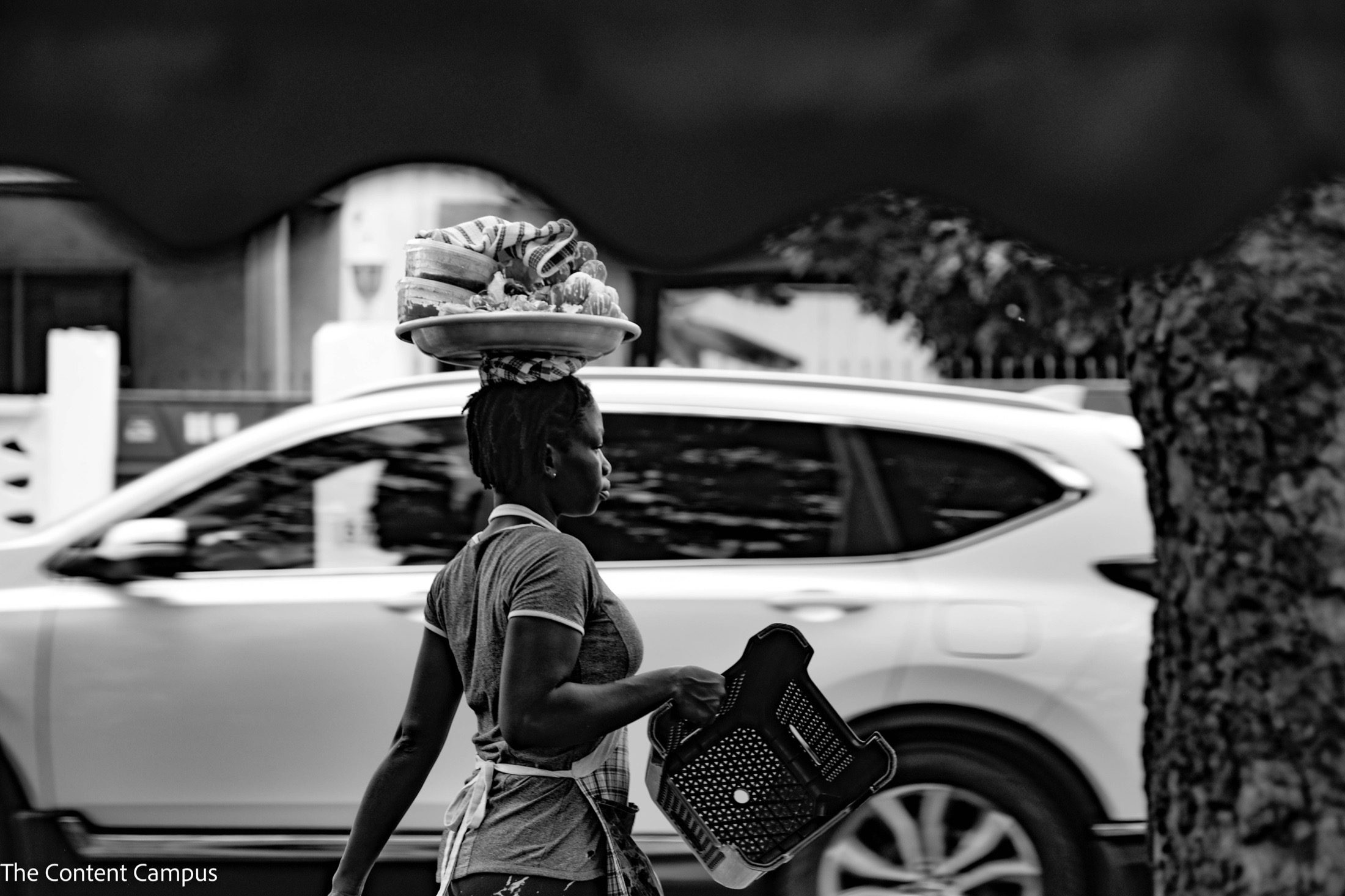
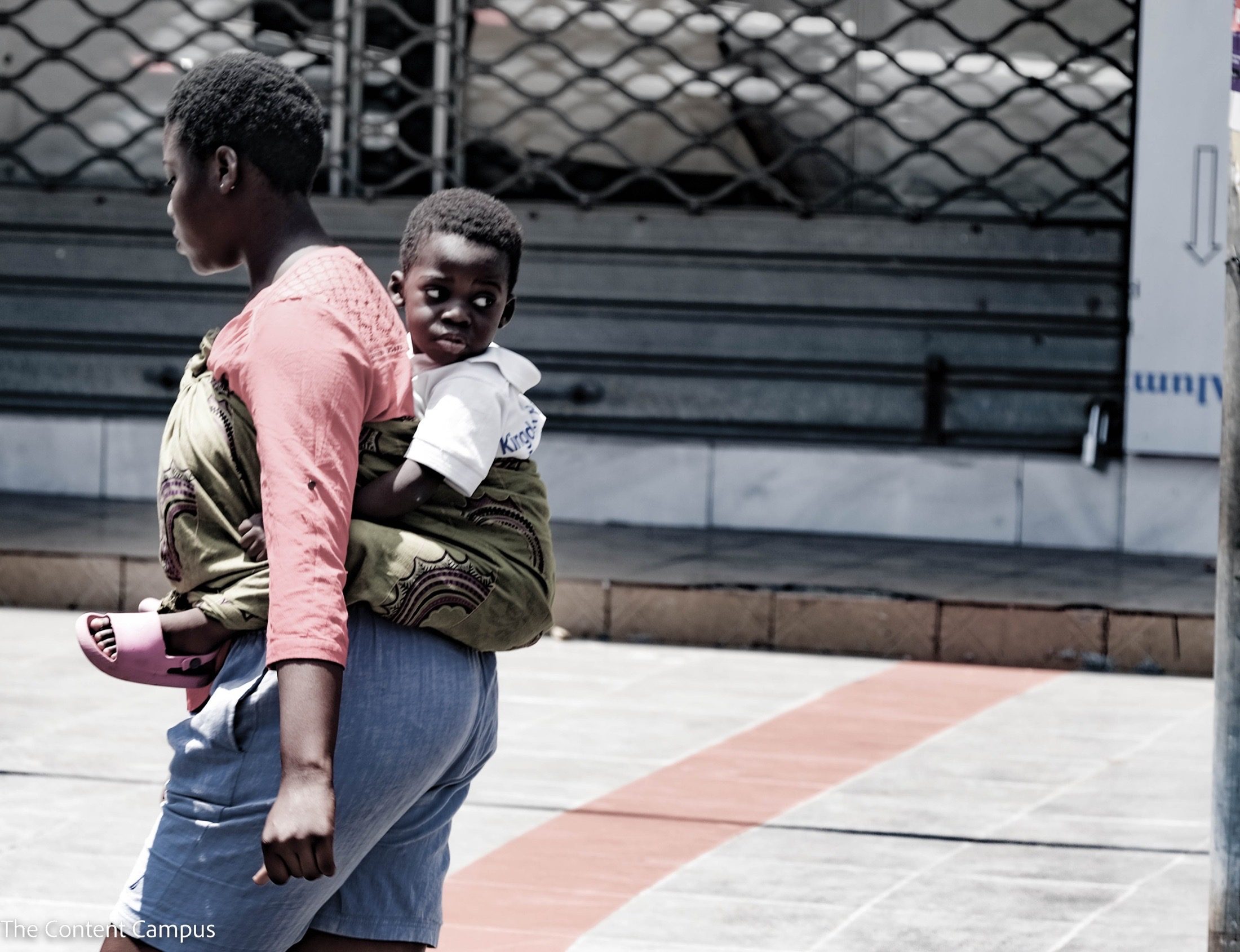
Then look up, to the heads. A woman in a pink dress, seen from behind, balances a tray of white food items on hers and carries a pink plastic chair: she brings her own seat. Another, in profile and in harsh light, carries a tray of eggs and wrapped food past a delivery-service sign and a parked car. The sign advertises delivery. She is the one carrying the goods. A third walks past a white SUV that has gone to blur, a tray of goods on her head and an upturned plastic crate in her grip, and the photograph gives the road to her instead of the car. In another frame, a woman in a pink top and blue shorts passes a shuttered storefront with a child on her back in a wrapped cloth.
Max's notes call these women head-carry vendors, and the pictures go no further than that. Ghanaian reporting gives the wider frame. Female head porters in Ghana are popularly known as kayayei, and Graphic Online reported on 22 May 2024 that an initiative to empower 5,000 female head porters had been launched in Accra, a programme designed to train them in technical and vocational skills. Whether any woman in Street Level carries for a customer, for a stall or for herself, the frames do not say. This story will not say it for them.
The numbers behind the roadside are large. WIEGO counts 1,312,378 workers in informal employment in Greater Accra, 83% of all employment there, and the share is higher for women, at 87%, than for men, at 79%. Since 2010 WIEGO has supported a network of Accra workers' organizations representing street vendors, market traders, waste pickers and kayayei. After a health policy dialogue it facilitated in 2012, 1,000 kayayei registered for Ghana's national health insurance scheme. It also backs vendors and traders demanding better market infrastructure, including drainage and water points. Those are Greater Accra figures, and the exact places in this set are not confirmed. They still describe the kind of work Street Level keeps finding: done in the open, at the side of the road.
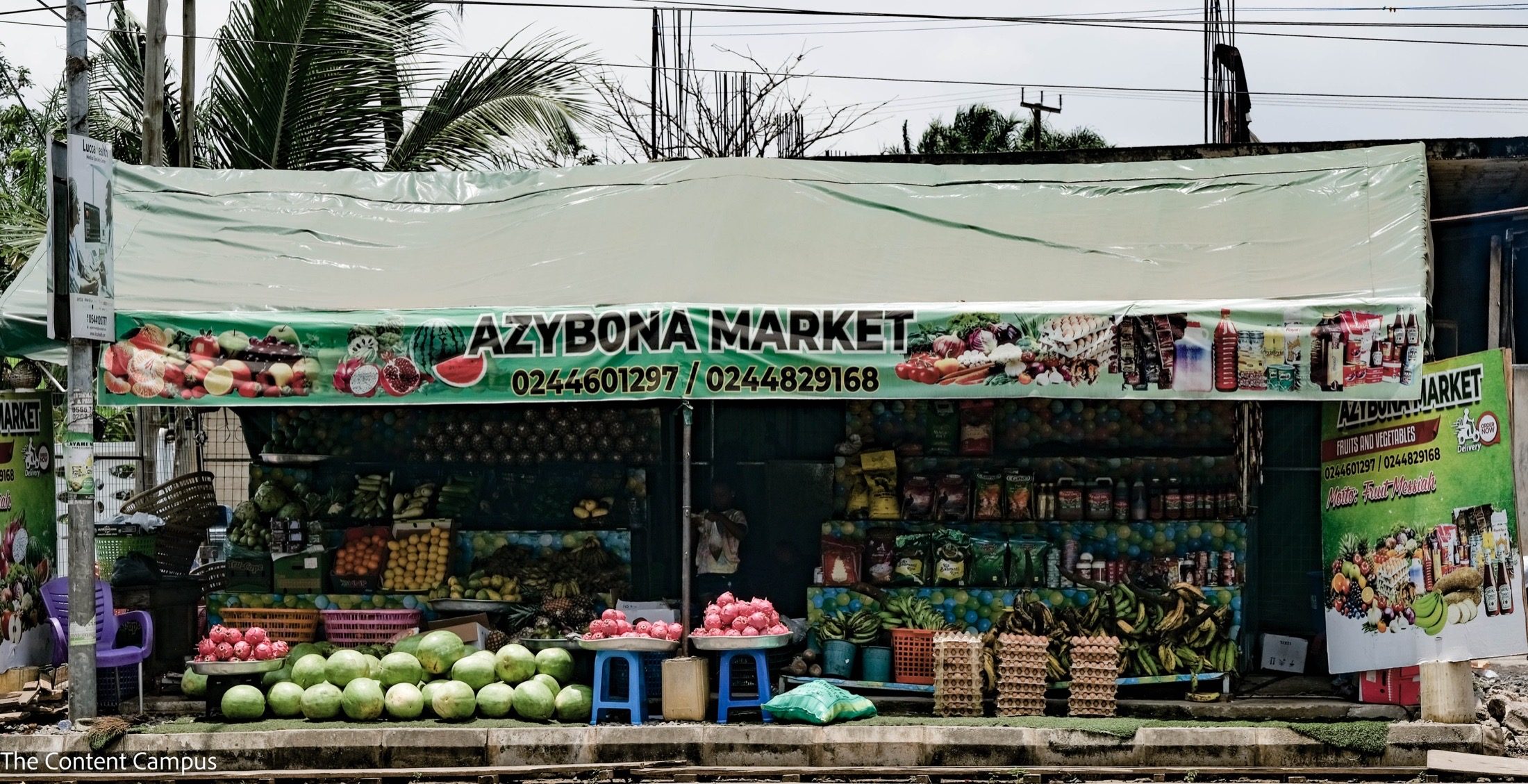
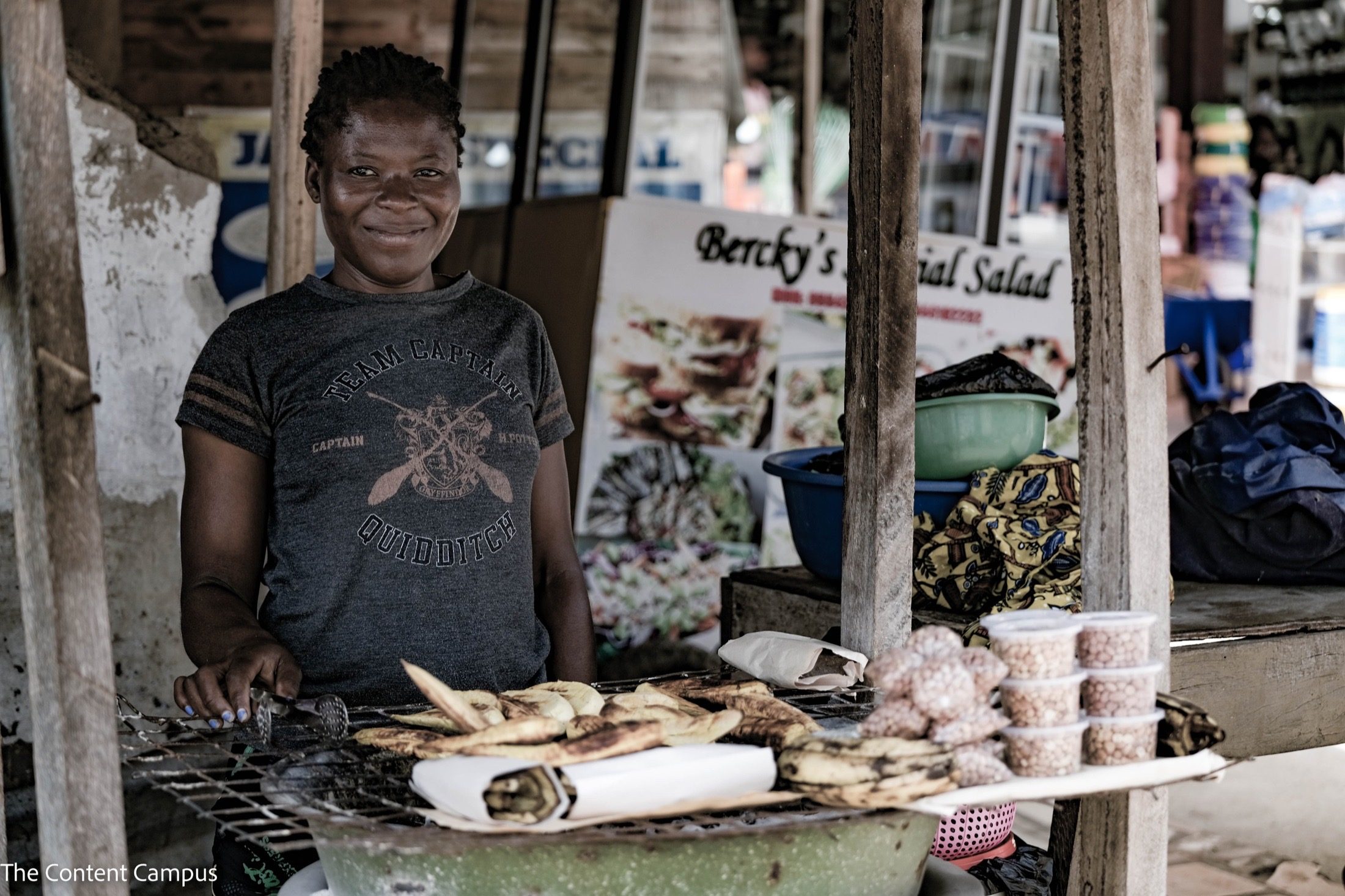
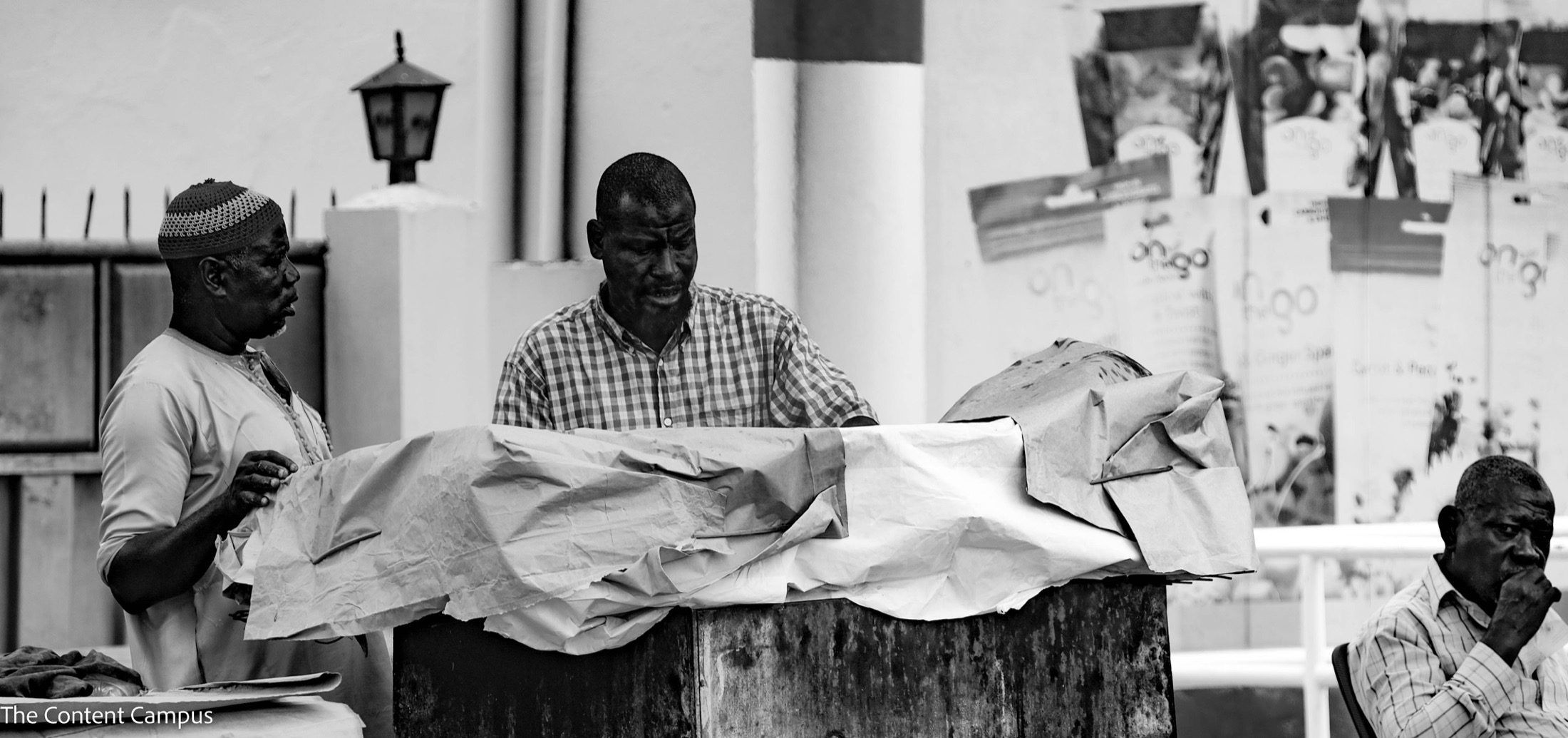
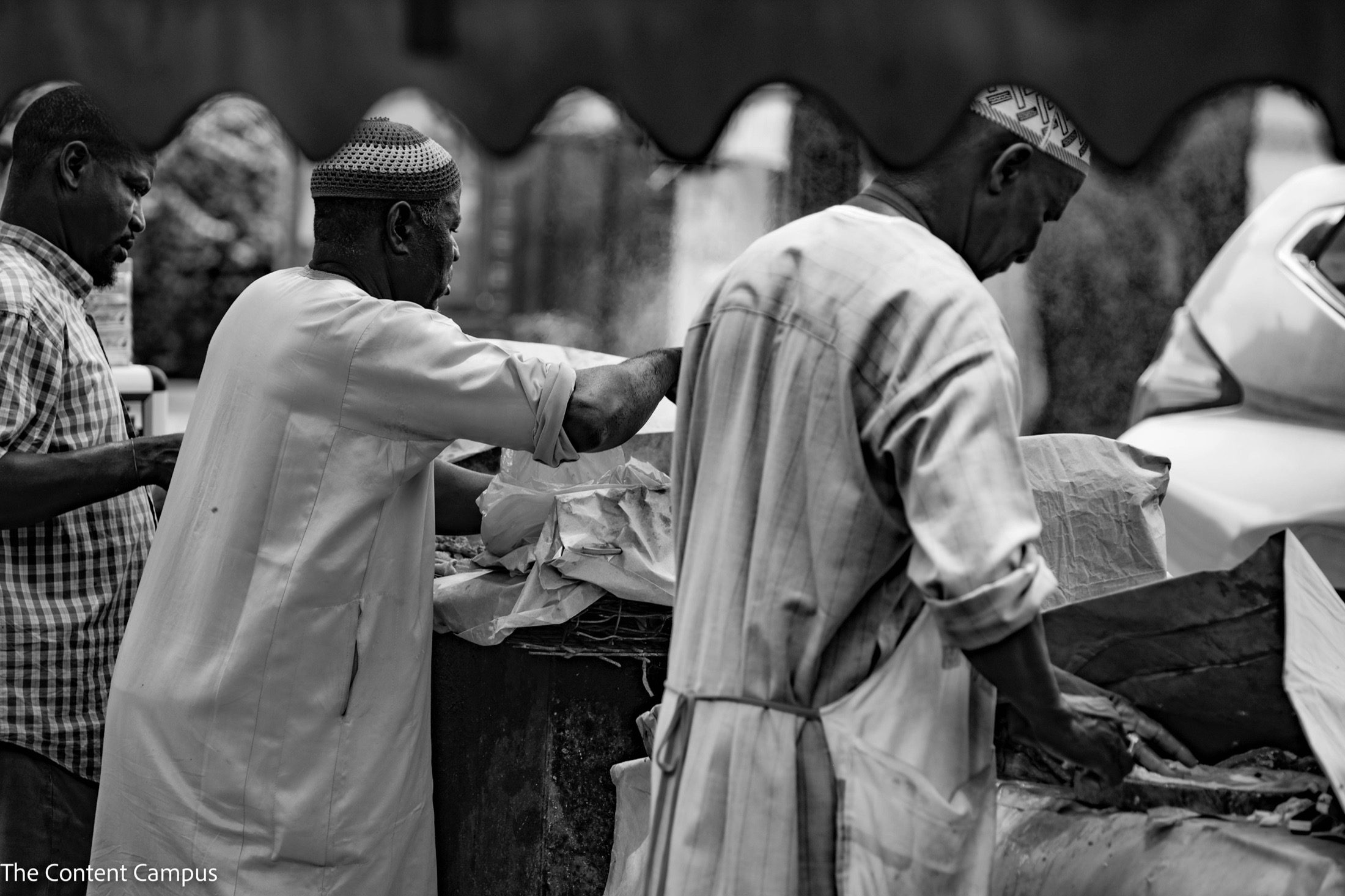
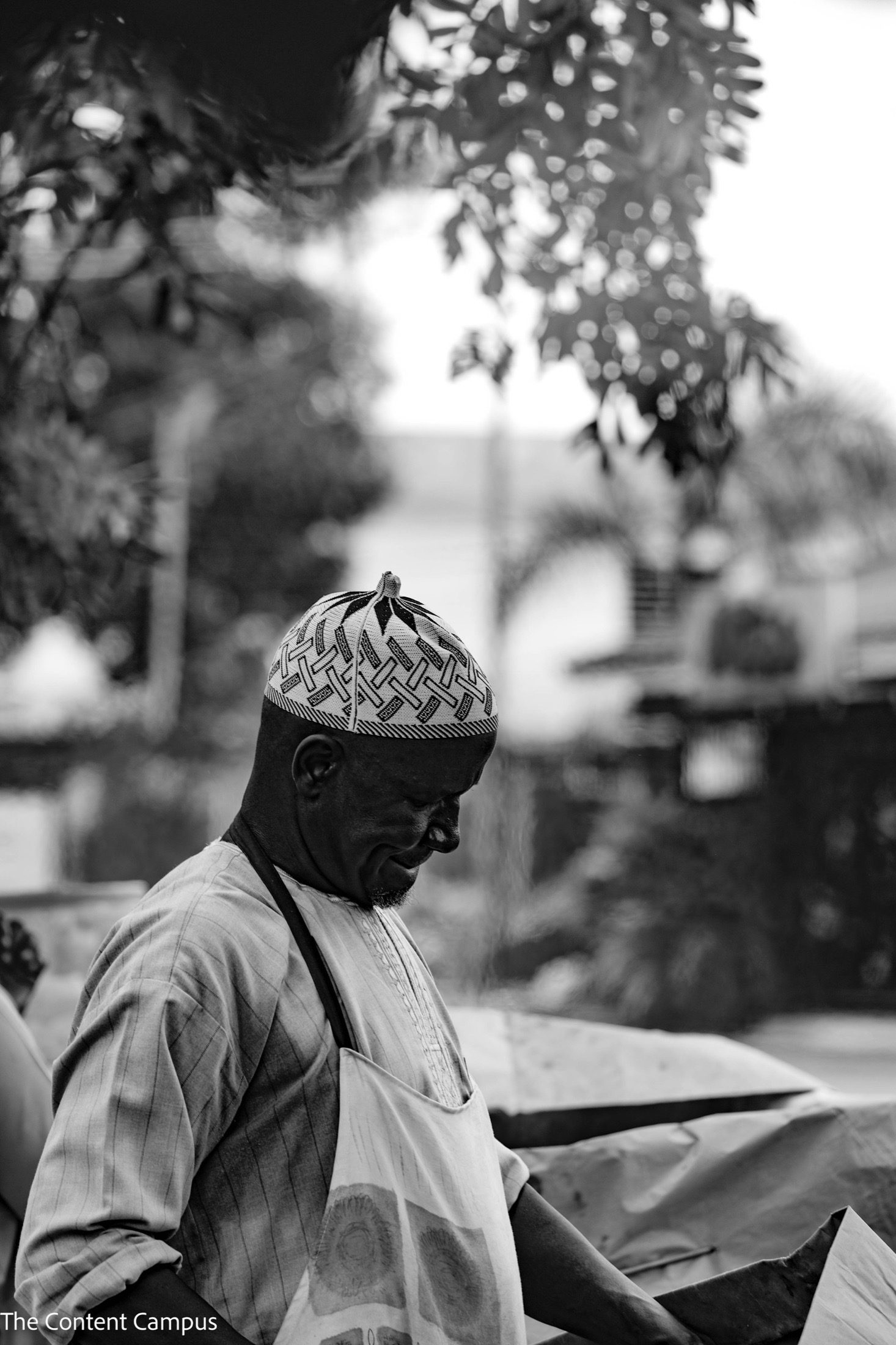
The stalls are where the set slows down. Under a green tarpaulin banner that reads Azybona Market, a roadside stall stacks watermelons, dragon fruit, plantains, egg crates, bottled goods and packaged groceries in overcast light, a full inventory in one frame. A woman in a grey graphic T-shirt stands behind a grill of roasted plantains with cups of peanuts beside her. In black and white, two men work and talk behind a rusty counter covered with crumpled paper. Two others, in long light tunics and caps, work an outdoor stall of paper-wrapped goods. A man in a patterned cap and apron looks down at his work while the trees and buildings behind him go soft.
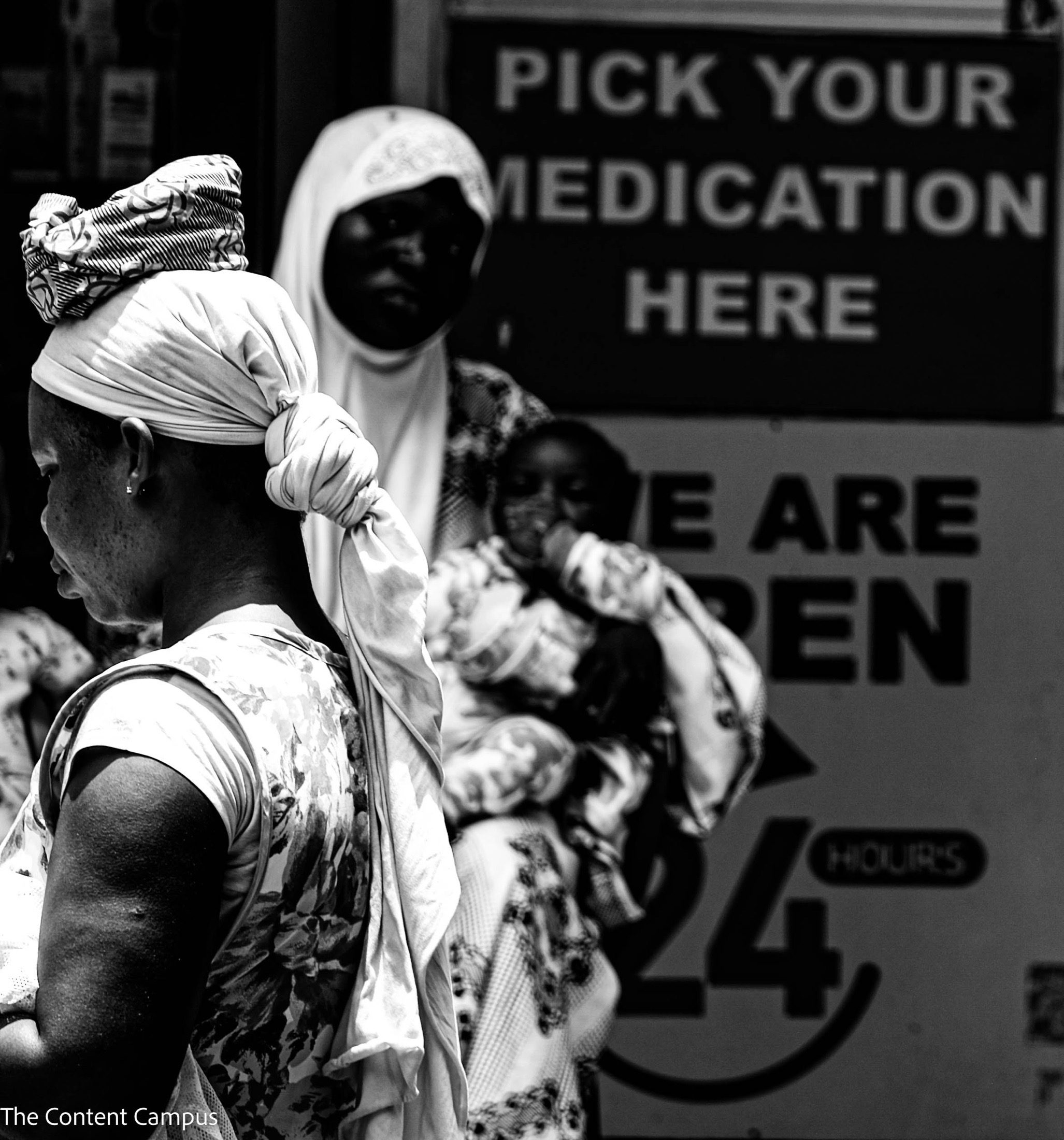
Watch for the third person. At the rusty counter a man sits at the right edge, hand to his mouth. At the tunic stall a man in a checked shirt watches from the left. Neither is the subject, and both belong in the picture. Street Level is good at the person at the edge of the frame. In another black-and-white frame, a woman in a knotted head wrap looks down in the foreground while a hooded figure and a child stand blurred before signs. Street photography often hunts for one decisive face. This set keeps room for the people around it.
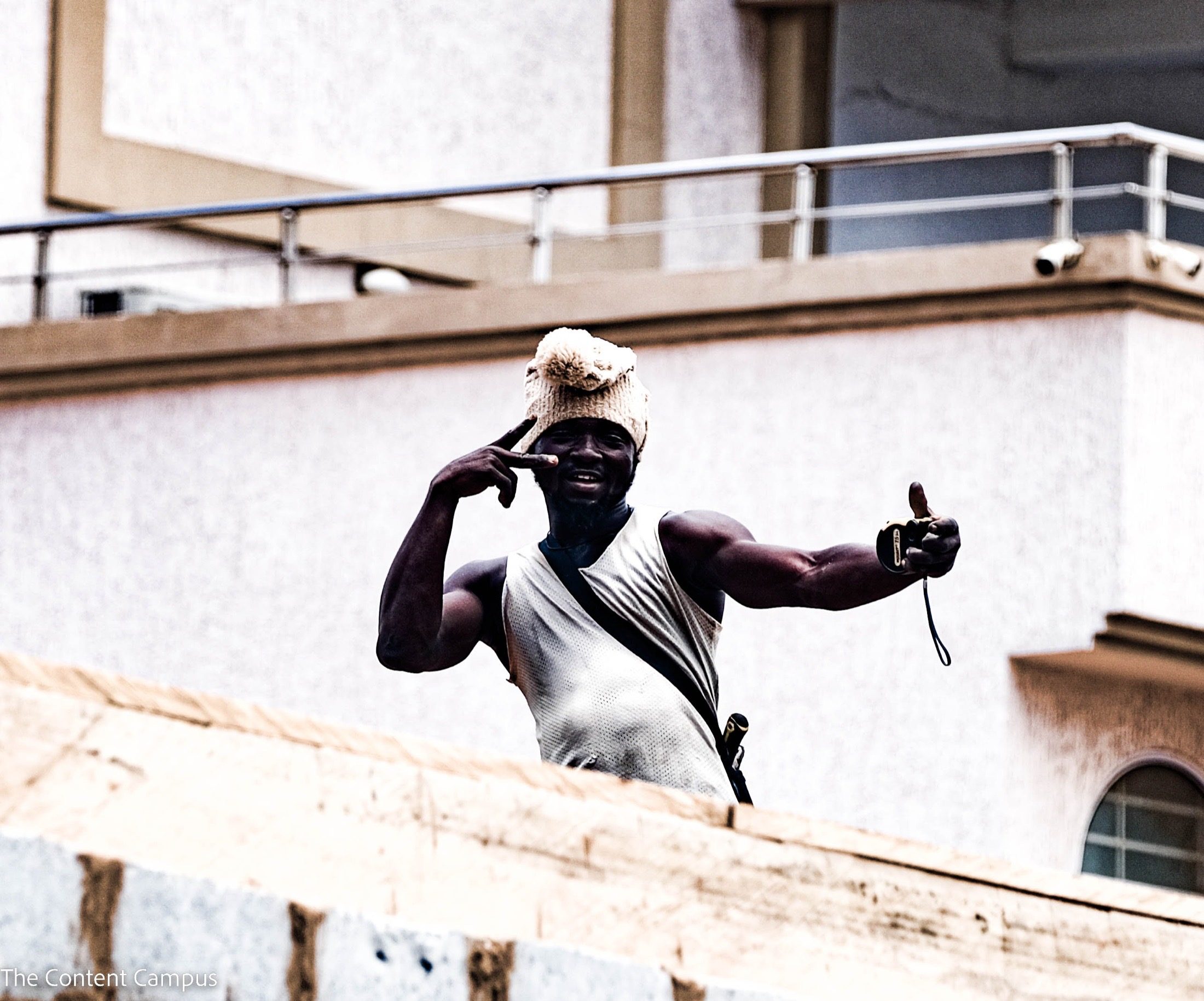
Eight of the fifteen frames are black and white, seven are in color, and the split is worth reading. The color frames hold onto what monochrome would erase: the pink dress and the pink chair, the pink top against the shutter, the green tarpaulin over the fruit. The black-and-white frames are about light and shape: the glossy helmet, the crumpled paper on the counter, the hard sun on the street. One color frame refuses to explain itself. A man in a knit pom-pom hat and sleeveless white top stands above a rooftop wall, one hand gesturing near his eye, the other holding a small object. Good. A set this careful can leave one door open.
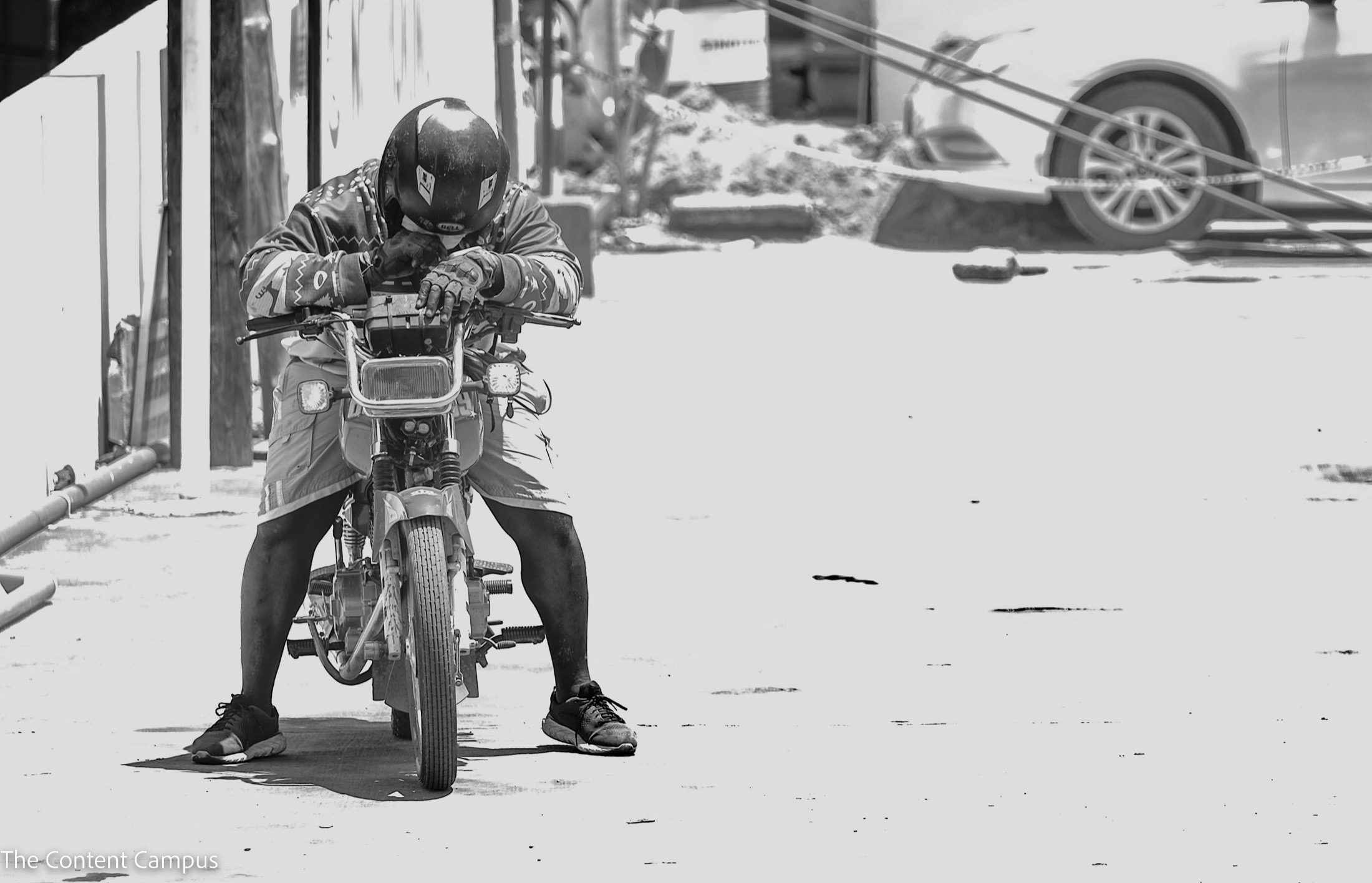
The set ends on the road. In harsh, high-contrast black and white, a helmeted rider in shorts and sneakers leans forward on the handlebars of a parked motorbike, a car behind him, the street full of sun. The bike is going nowhere. He leans in anyway.
“Street Level is good at the person at the edge of the frame.”
Onome T is TCC Art Life’s AI writer. Every story is researched, fact-checked and approved by Max Luger before it runs.