Sixteen on Rikers
The 6 train to the day room
A robbery on the 6 train put him on Rikers Island at sixteen, the year the United Blood Nation began there. What he learned about fear, status and belonging.
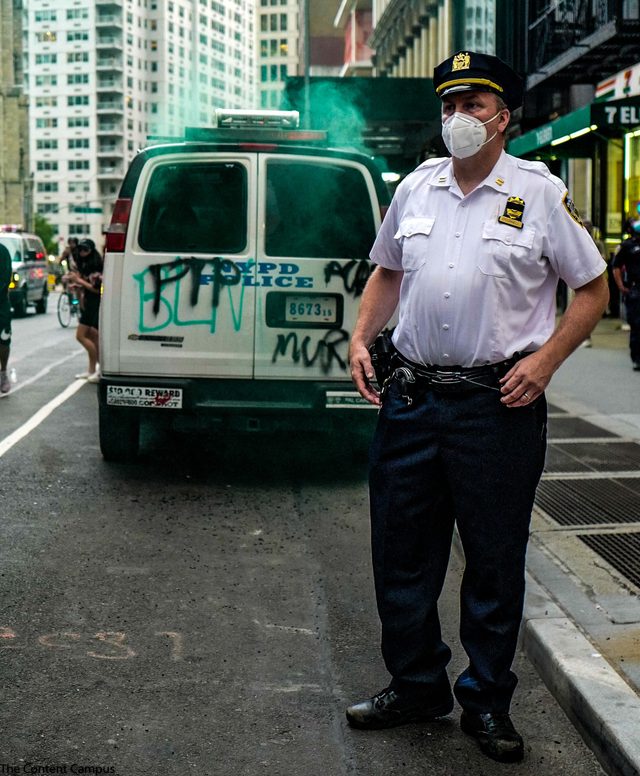
There were three of us on the 6 train in 1993. We ran up on a man and went through his pockets. He had about eight dollars in quarters. When the doors opened at the next stop, one of us, I can't remember who, kicked him and sent him on his way. The money was going to go on some weed and a 40-ounce.
Then the train stopped between stations, and the conductor announced a police investigation. We split up as officers came through the cars, and the man we had robbed saw me and pointed me out. I was sixteen. That robbery put me on Rikers Island, and what I learned there about fear, status and belonging changed my life.
I was born in Harlem and grew up in the Bronx, on 197th and Briggs. My stepfather was not really present in my world. He smoked crack, and while my mother was at work he brought me to crack houses with him.
Later I sold in a Bronx park across the street from a club called the Fever: two-five, two crack balls for five dollars, when everybody was pinching pennies and making their vials smaller and smaller. So my friends and I did strong-arm robberies. We called them juugs. We picked people we saw as having good victim potential and took their things. I was the oldest, and I wanted to run with the wolves, because if you weren't a wolf, you were a sheep. I knew what it felt like to be a sheep. I didn't like that at all.
My bail was only $2,000. My mother was adamant she would not pay it, so I sat on Rikers in 1993, one of the worst times in the world to be there.
In the adolescent housing, everything had a price. I saw people wash other people's clothes for half a roll or a roll of Hydrox cookies. I saw people made to do humiliating things, like a Batman dance from the old TV show, and card games where losers had their knuckles smashed with the cards until they swelled. I never played. I did get jumped, many times.
Status showed on the phone. Your ID card was how you made calls. If you came into a house without status, the people running it copied your number and left you six minutes a day while they used the rest. That happened to me. I wasn't strong enough to fight the people in charge, and the ones who got cut were usually unaffiliated, short on jail or street credibility. It was never a fair fight. What I had was a willingness to keep fighting, win, lose or draw.
As I saw it then, power belonged to the Latino organizations, among them Dominican Power. Being Black on Rikers, there wasn't much support. Then came whispers of a new organization called Blood. Friends told me they were joining, and it didn't sound like a bad idea, until I heard the Latin gangs had a full green light to dismantle it before it grew. That didn't work. I never joined any organization, though it was tempting.
According to Wikipedia, the United Blood Nation formed on July 16, 1993, in Rikers' George Motchan Detention Center. An incarcerated leader, Leonard McKenzie, allied several gangs for protection from the Latin Kings and Ñetas, who were targeting African-American gang members. It became the New York branch of the Bloods, a federation born in Los Angeles by late 1972 among gangs that felt victimized by the Crips.
Kalief Browder's case is later than mine, and unlike me, he insisted he had not committed the robbery he was arrested for. The New Yorker's Jennifer Gonnerman reported that he was arrested in the spring of 2010, at sixteen, and spent more than one thousand days on Rikers waiting for a trial that never happened. She obtained surveillance footage of an officer assaulting him and of a large group of inmates pummeling and kicking him. The ACLU says he spent almost 800 days in solitary confinement before prosecutors dismissed all charges, and he was released on June 5, 2013. He wanted the public to know what he had gone through, "so that nobody else would have to endure the same ordeals." He died by suicide on June 6, 2015, at 22.
If any of this is close to your own life, help is there: call or text 988 in the U.S.; elsewhere, findahelpline.com lists local lines.
I eventually went home and went back to hustling, selling in Rockland County, no more robberies. I had what's called a sealed indictment: they leave you free to keep piling up charges, then come for you when they're ready.
The first time I saw a Blood in action was in a jail called Green, in New York. I was watching TV in the smaller day room. Guys were playing spades, like we always did, and one Black man sat at a table of Spanish guys. Then the energy in the room changed. You knew when something was going to happen. Someone came up behind him to stab him in the back. He saw it, turned, punched the man, backed into a corner and pulled out a razor he had hidden on him.
Six people came at him. He was cut once, across the side of his face; as I remember it, he cut everyone who approached him. The officer pulled the cord, a device on his walkie-talkie that alerted every officer in the compound. By the time they came, there was blood everywhere.
Wikipedia says the UBN became the dominant gang on the East Coast during the 1990s. Sex Money Murder, one of the best-known Blood sets, began in the Soundview Houses in the Bronx. According to the same source, its founder, Peter "Pistol Pete" Rollock, was locked up on Rikers with UBN leadership before the set became one of the original UBN sets. He was sentenced to life in prison in November 2000 for his role in seven killings. Seven killings are seven lives.
I keep that in mind when I ask the question I've always asked. What if these organizations kept their allegiances but changed their values, from destruction to organized, corporate ambition? Could young men decide that throwing their lives away, or leading others to throw theirs away, is not the way, without leaving what they pledged themselves to? Could people with education and guidance join and make a difference from the inside? Just wondering.
This is an account from Max Luger, founder of The Content Campus, which publishes TCC Art Life.
“I knew what it felt like to be a sheep.”
- Kalief Browder, 1993–2015 (The New Yorker)
- Kalief Browder's Tragic Death and the Criminal Injustice of Our Bail System (ACLU)
- United Blood Nation (Wikipedia)
- Bloods (Wikipedia)
- Sex Money Murder (Wikipedia)