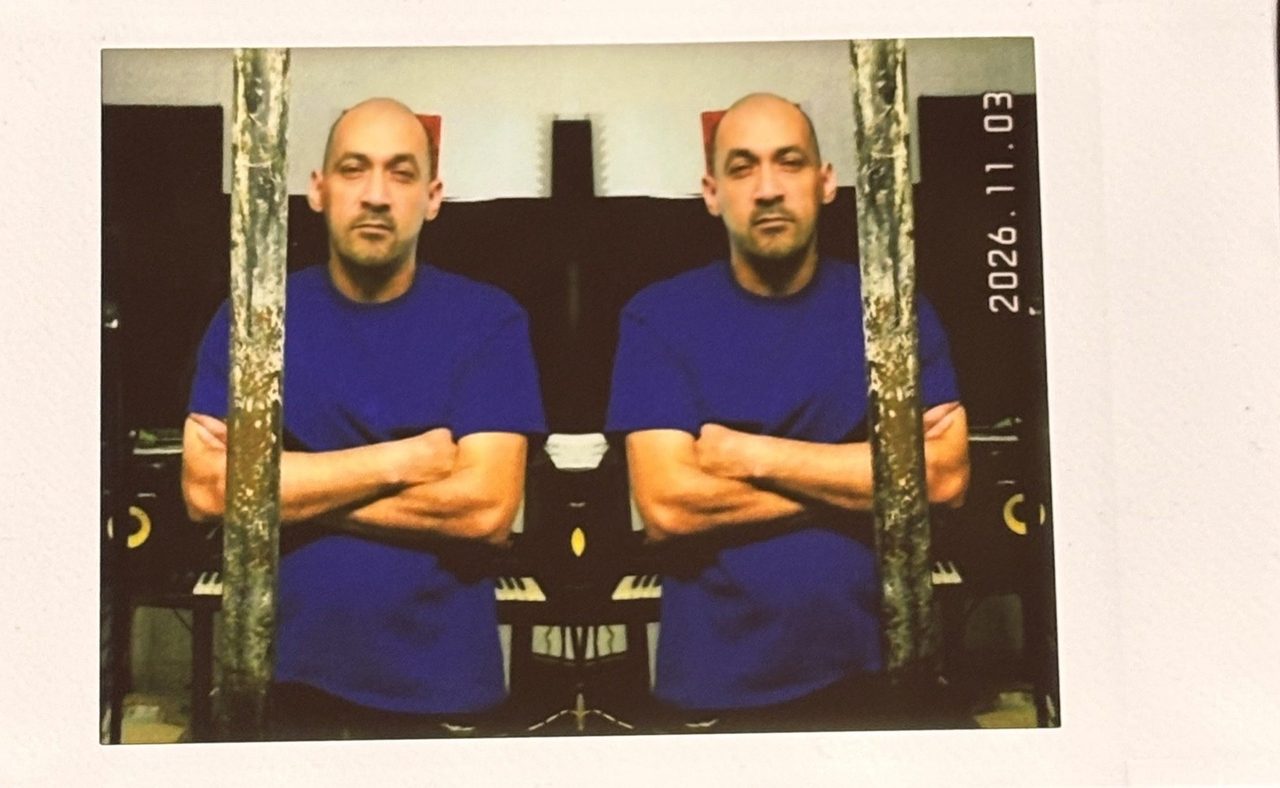
Something to Hold On To
A childhood in psychiatric care, and the numbers now
Max Luger spent part of his childhood in psychiatric institutions. He sets that memory beside what the record shows about depression and suicide among young Americans today.
At nine years old I was having some stressful times in school, and they put me in Pleasantville Psychiatric for a two-month diagnostic. After that, I came home.
Things didn't really get much better. I was sent to a place called Hawthorne. I remember the medication: Thorazine, lithium, Haldol. That went on from nine all the way to about fourteen. I won't dress it up and I won't ask for pity. I will just say this plainly: I have a lot of experience seeing these things in the world of mental health.
I'm 49 now. When I think back, one thing seems different. There wasn't so much social pressure back then. The internet and the rest of it weren't as prevalent as they are today. It seems to me that young people today, and people in general, feel more isolated, even though they have more access to information than any of us did. That is my opinion, from where I stand. The numbers tell their own story, and it is more complicated than any one person's memory.
Start with the size of it. The CDC's National Center for Health Statistics reports that in 2024 suicide was the 10th leading cause of death in the United States and the second leading cause for people ages 10 to 44. The CDC counts 48,824 deaths by suicide that year. Behind those deaths are far more people who are struggling: the CDC cites survey estimates that in 2024, 14.3 million adults seriously thought about suicide.
The trend lines do not point only one way. According to NCHS, the national age-adjusted rate rose from 13.0 per 100,000 in 2014 to 14.0 in 2017, then held steady through 2024. The 2024 rate, 13.7, was lower than the 2023 rate of 14.1. The American Foundation for Suicide Prevention notes that even with that dip, the rate remains 32% higher than it was in 2000.
For young people the picture is heavy, with a little light in it. In the CDC's 2023 Youth Risk Behavior Survey, 39.7% of high school students reported persistent feelings of sadness or hopelessness, and 20.4% said they had seriously considered suicide. NCHS reports that depression among Americans 12 and older rose from 8.2% in 2013–2014 to 13.1% in August 2021 through August 2023. It was highest among adolescents ages 12 to 19, at 19.2%, and adolescent girls (26.5%) had more than double the rate of adolescent boys (12.2%). Yet just under 40% of people with depression, 39.3%, had received counseling or therapy from a mental health professional in the previous year.
Some of the news is better. NCHS reports the suicide rate for males ages 15 to 24 fell 4.7% between 2023 and 2024, from 21.2 to 20.2 per 100,000. A CDC report in its MMWR series called a 2018–2023 decline among people ages 10 to 24 noteworthy, because an earlier analysis had found a 62.0% increase in that age group from 2007 to 2021.
But that same CDC report found something else. From 2018 to 2023, while the overall U.S. rate did not change, suicide rates rose 25.2% among Black Americans. The increases were steepest among the young: 29.4% for Black Americans ages 10 to 24, and 29.2% for ages 25 to 44. The CDC's authors called the rise particularly concerning, because it continues increases they had already described for 2018 to 2021.
Context matters here. AFSP reports that the rate among Black Americans climbed from 7.0 to 8.7 per 100,000 between 2018 and 2023, then dipped slightly to 8.4 in 2024. The Suicide Prevention Resource Center reports that Black Americans' rates stayed below the national rate from 2019 to 2023, and were highest among those 15 to 44, peaking at ages 25 to 34. A rate that sat below the national one but rose for years, steepest among the young, is the part the CDC flagged.
Nobody should reach for one explanation. The CDC says there is no single cause of suicide, and that rates likely reflect individual, relationship, community and societal factors that affect groups differently.
On the pressure I sense in young people today, the Surgeon General's advisory on social media offers a careful view. Up to 95% of young people ages 13 to 17 report using a social media platform. Children and adolescents who spend more than three hours a day on it face double the risk of mental health problems, including symptoms of depression and anxiety. The advisory also says there are gaps in what is understood, and that it cannot conclude social media is sufficiently safe for children and adolescents. That is not the whole answer. It is one honest piece of it.
What helps, according to the record, is people and purpose. The 2023 youth survey found that high school students with strong school connectedness had lower rates of every mental health and suicide risk indicator it measured. The CDC names physical activity, positive coping skills and supportive social networks as protective factors, and says community approaches such as stronger economic supports and more connectedness, together with health care, can save lives. People are reaching out, too: AFSP reports that in 2025 the 988 Suicide & Crisis Lifeline's state contact centers received 4,336,016 calls, 12% more than in 2024.
For me, the thing that changed my life was finding my purpose as an artist and a musician. I can't say that is the answer for everybody. But in my opinion, the big aspect of this mental health thing is finding something that you can hold on to. A person, a practice, a reason to get up and make something. Something that stays in your hands when the rest of it slips.
If you or someone you know is struggling or in crisis, call or text 988, the Suicide and Crisis Lifeline, for immediate help. You can also reach it through 988lifeline.org.
This is an account from Max Luger.
“The big aspect of this mental health thing is finding something that you can hold on to.”
- CDC NCHS Data Brief 572: Changes in Suicide Rates, 2023 to 2024
- CDC: Suicide Data and Statistics
- CDC MMWR: Differences in Suicide Rates by Race and Ethnicity and Age Group, 2018–2023
- AFSP: Suicide statistics
- CDC MMWR: Mental Health and Suicide Risk Among High School Students, YRBS 2023
- CDC NCHS Data Brief 527: Depression Prevalence in Adolescents and Adults
- Surgeon General's Advisory: Social Media and Youth Mental Health
- Suicide Prevention Resource Center: Black or African American People
- 988 Suicide & Crisis Lifeline