Undomiciled
Los Angeles, seen and imagined
Max's pictures of downtown Los Angeles from 2015 to 2021, set against the 2025 homeless count, a fight over sidewalk law, and the screenplay he built on the same streets.
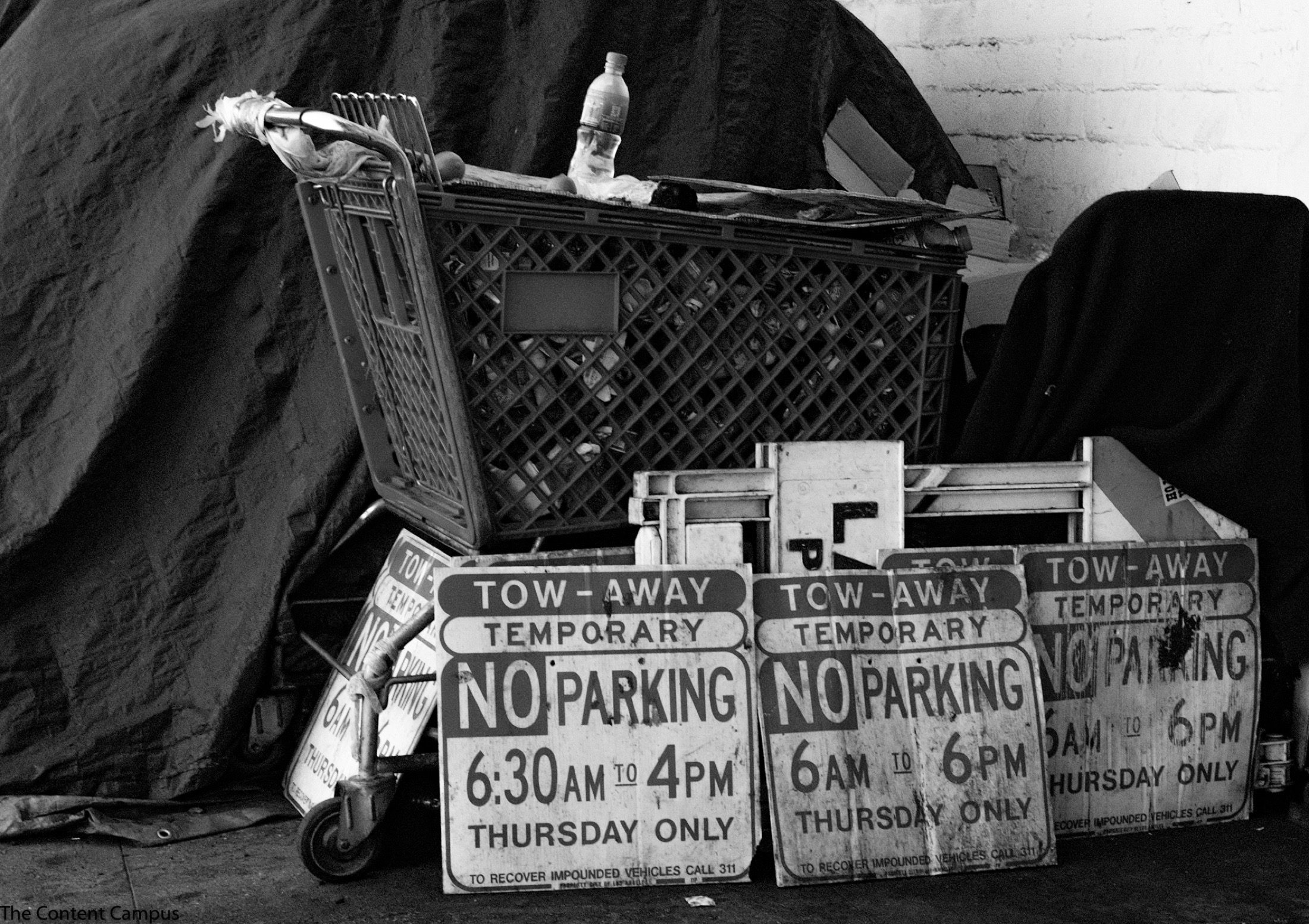
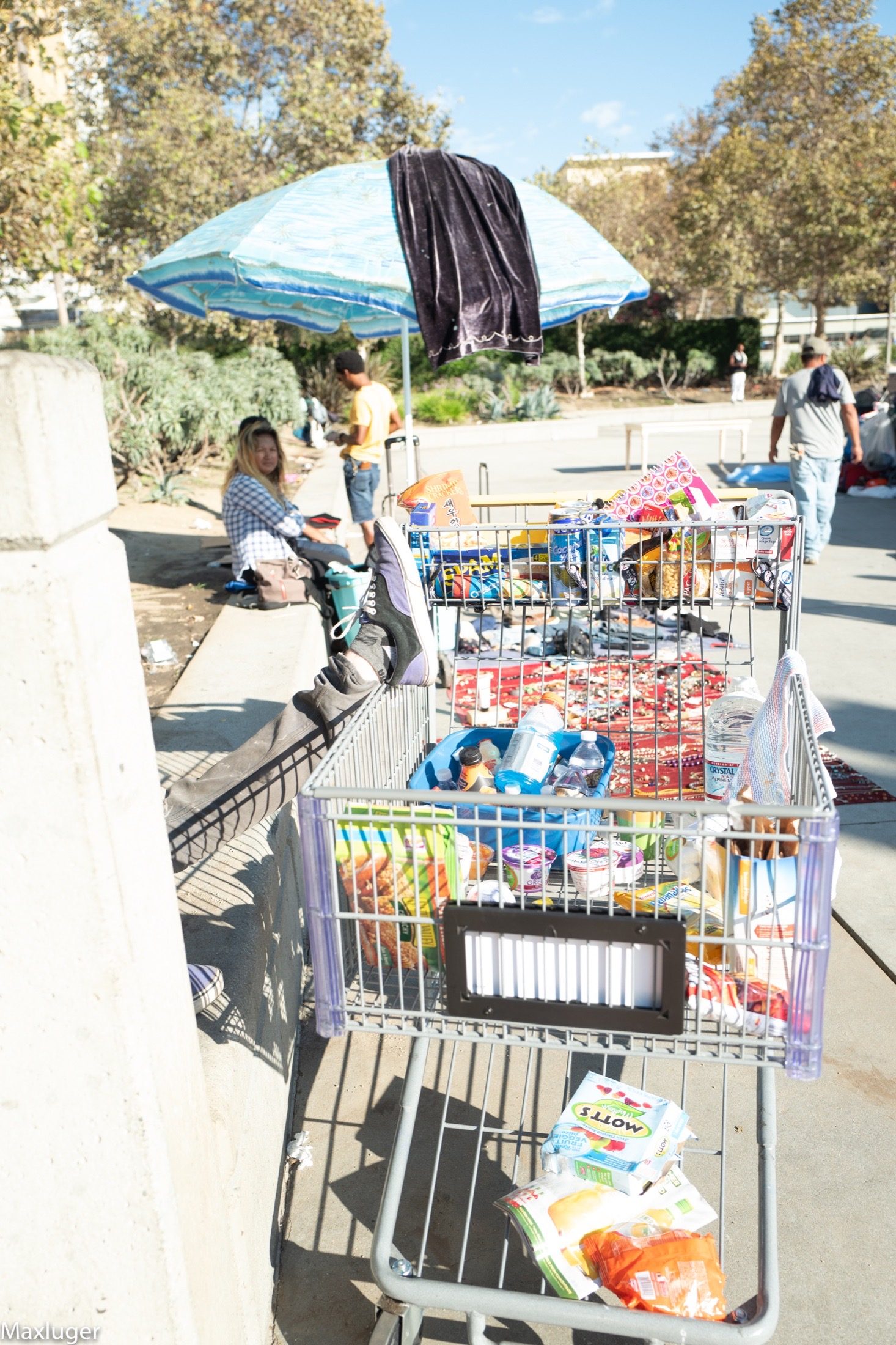
Three temporary No Parking signs lean in front of a shopping cart in one of Max's black-and-white frames from downtown Los Angeles. They are tow-away notices, worn at the edges. A tarp hangs draped beside the cart, and the cart is full of belongings. Two claims share the same few feet of sidewalk: the one printed on the signs, and the one packed into the cart.
Max made these photographs in two stretches. The first was a set of portraits on a Leica in 2015. The second was a series of pictures on Skid Row in 2020 and 2021. The title of the shoot, Undomiciled: Los Angeles, seen and imagined, names both halves of the project. The photographs are what was seen. UNDOMICILED, Max's screenplay, is what was imagined. Both arrive while Los Angeles argues again over who may sit, sleep and lie on that sidewalk. At the same time, the county is about to divide new homelessness money according to how many people it counts there.
Start with the numbers and with their date. The latest finalized figures we could verify come from the 2025 Greater Los Angeles Homeless Count, taken February 18 to 20 of that year. After a federal review, the Los Angeles Homeless Services Authority (LAHSA) set three totals. It counted 67,777 people in the Los Angeles Continuum of Care, 72,195 across the county and 43,695 in the City of Los Angeles. LAHSA's count page now lists a 2026 data release. Its figures were not in the page text we could read, so this story uses the 2025 numbers and says so.
The direction is down. USC, whose researcher Benjamin Henwood designed the count, reported that homelessness in the county declined for a second straight year. The number of people living on the street or in places not meant for habitation fell 9.5 percent in the county and 7.9 percent in the city.
The margins matter too. Henwood put the count's margin of error at about 1,300 people either way. The U.S. Department of Housing and Urban Development reviewed the data and found duplication and utilization errors. Two Long Beach interim housing sites had been counted in the Los Angeles Continuum of Care by mistake. Eight other sites were removed at HUD's request because their utilization rates were irregular. LAHSA published the corrected figures on October 20, 2025, and said every change falls within the margin of error. Henwood also cautioned that shelter on its own is not a solution to homelessness. LAHSA says the region is short more than 485,000 affordable housing units.
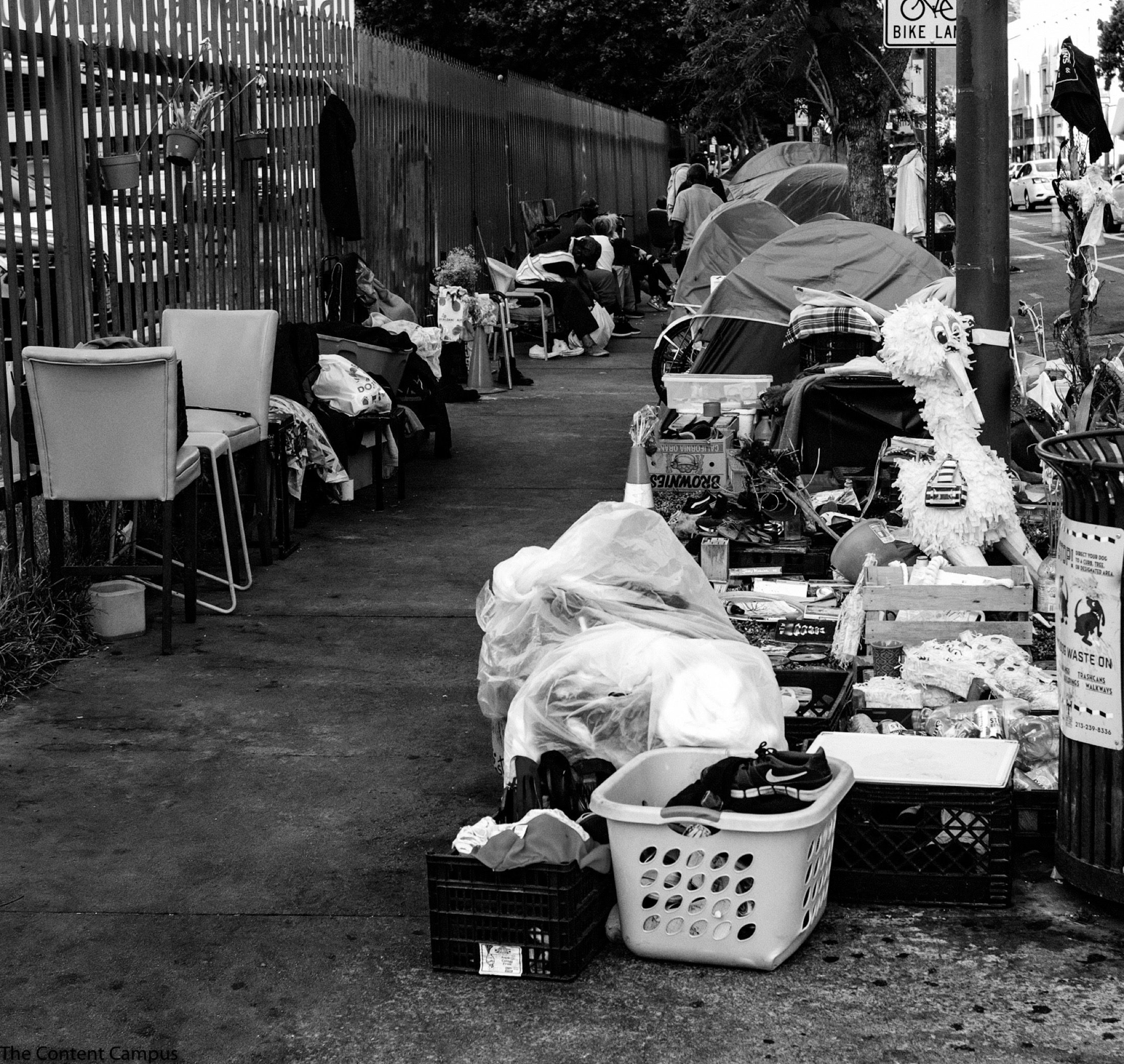
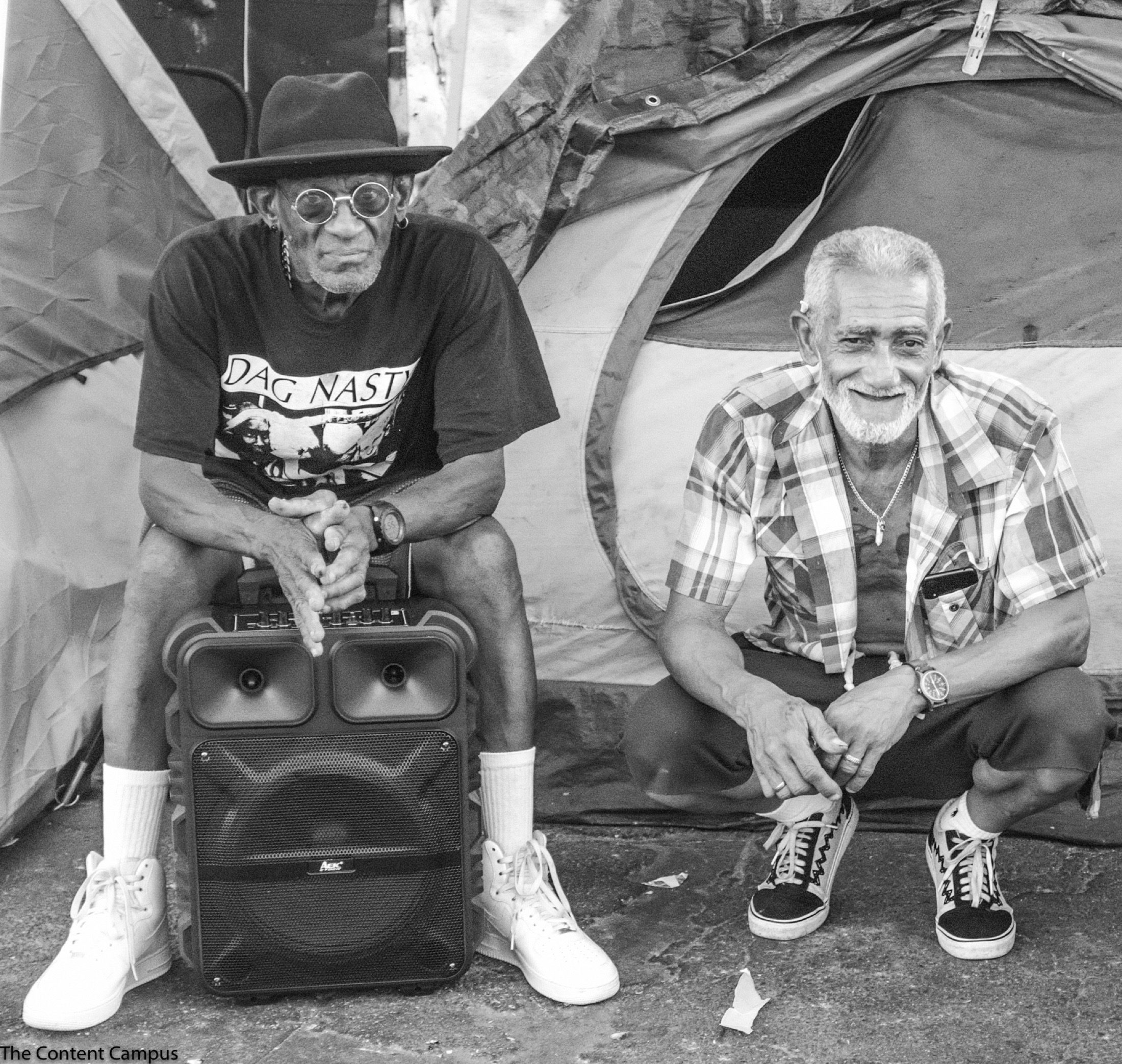
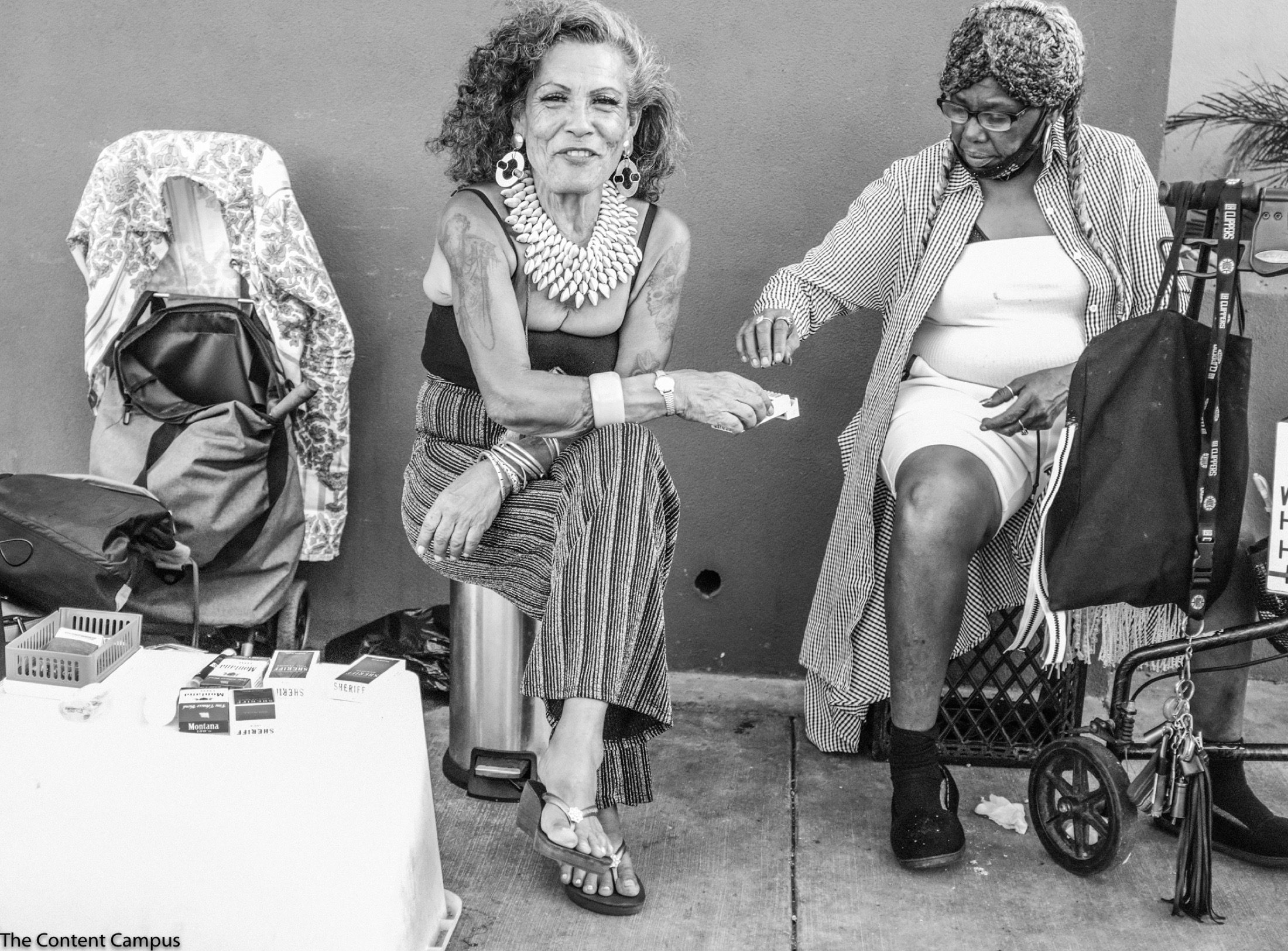
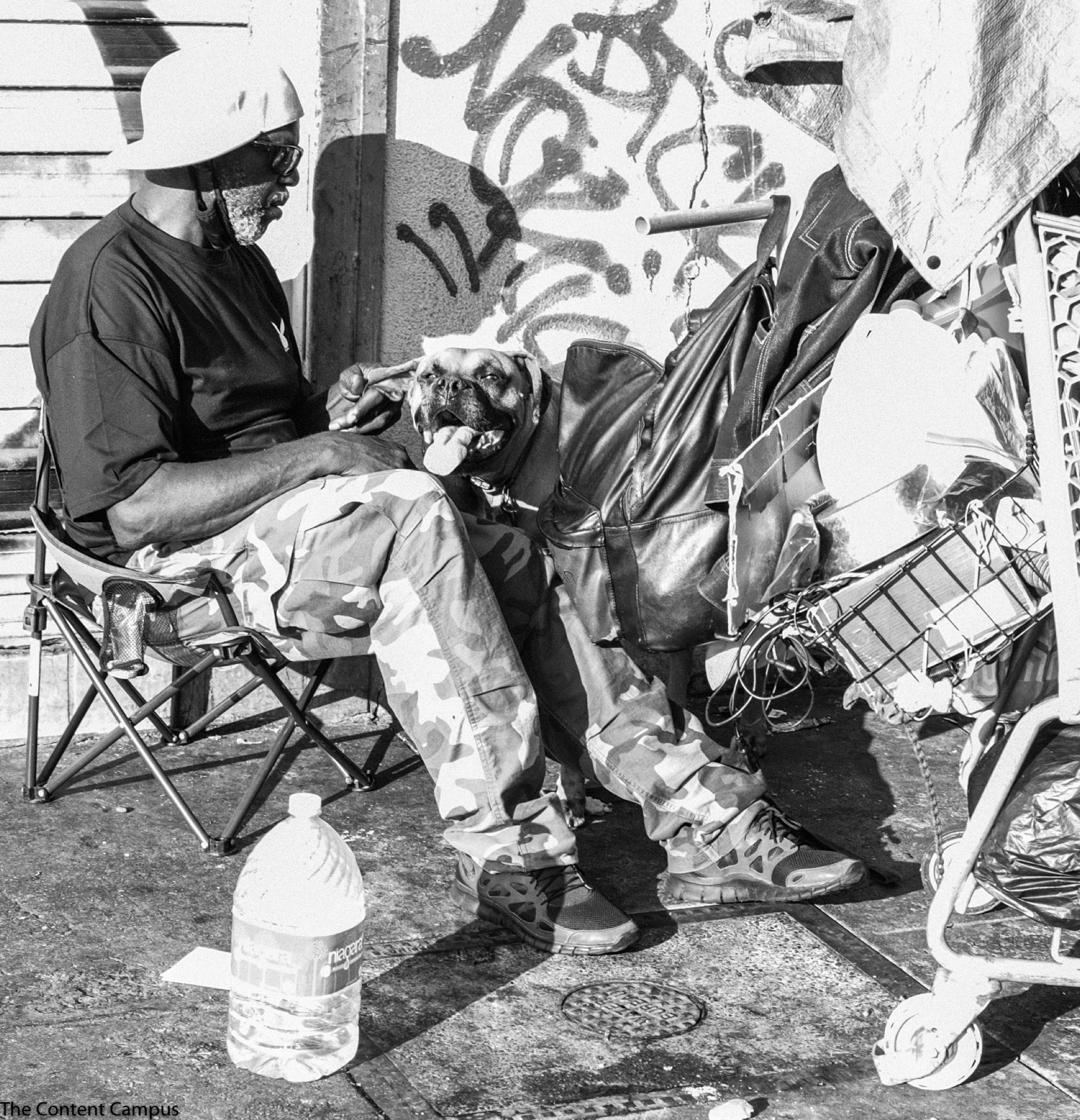
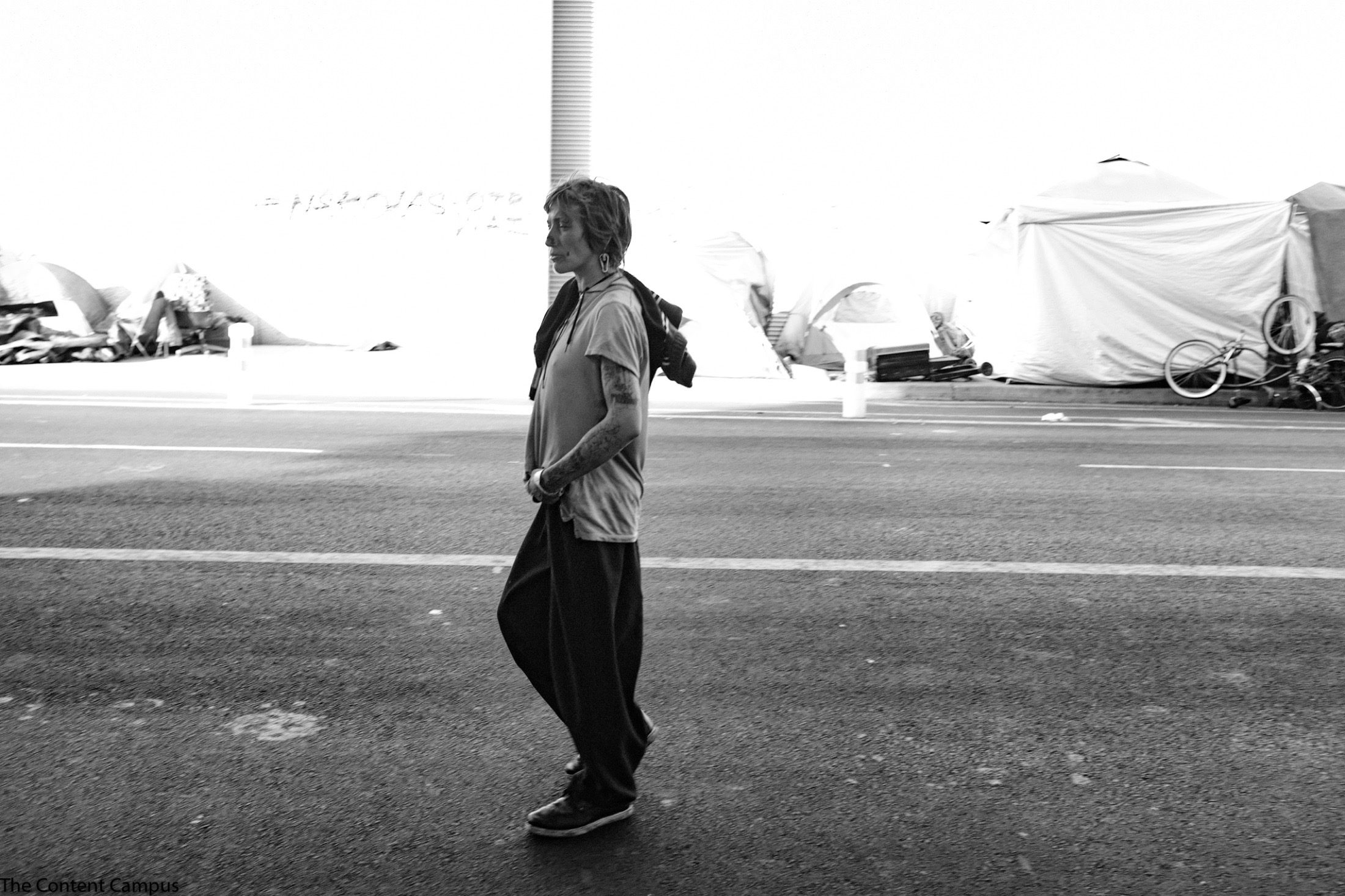
A count is built from street tallies, shelter data and surveys. Max's pictures are built from standing in one place and looking. Beside a slatted fence, tents line a sidewalk with chairs, crates and bags, and people sit together in the distance. A woman with her hair up pedals a three-wheeled bicycle across a painted accessibility symbol, with a dog riding in the rear basket. Two older men pose outside a tent, one seated on a speaker and the other crouched beside him. A woman smiles from an office chair, legs crossed, among cinder-block shelves and a microwave. Dogs come back again and again: one rides in a chest carrier, another pants beside a folding chair.
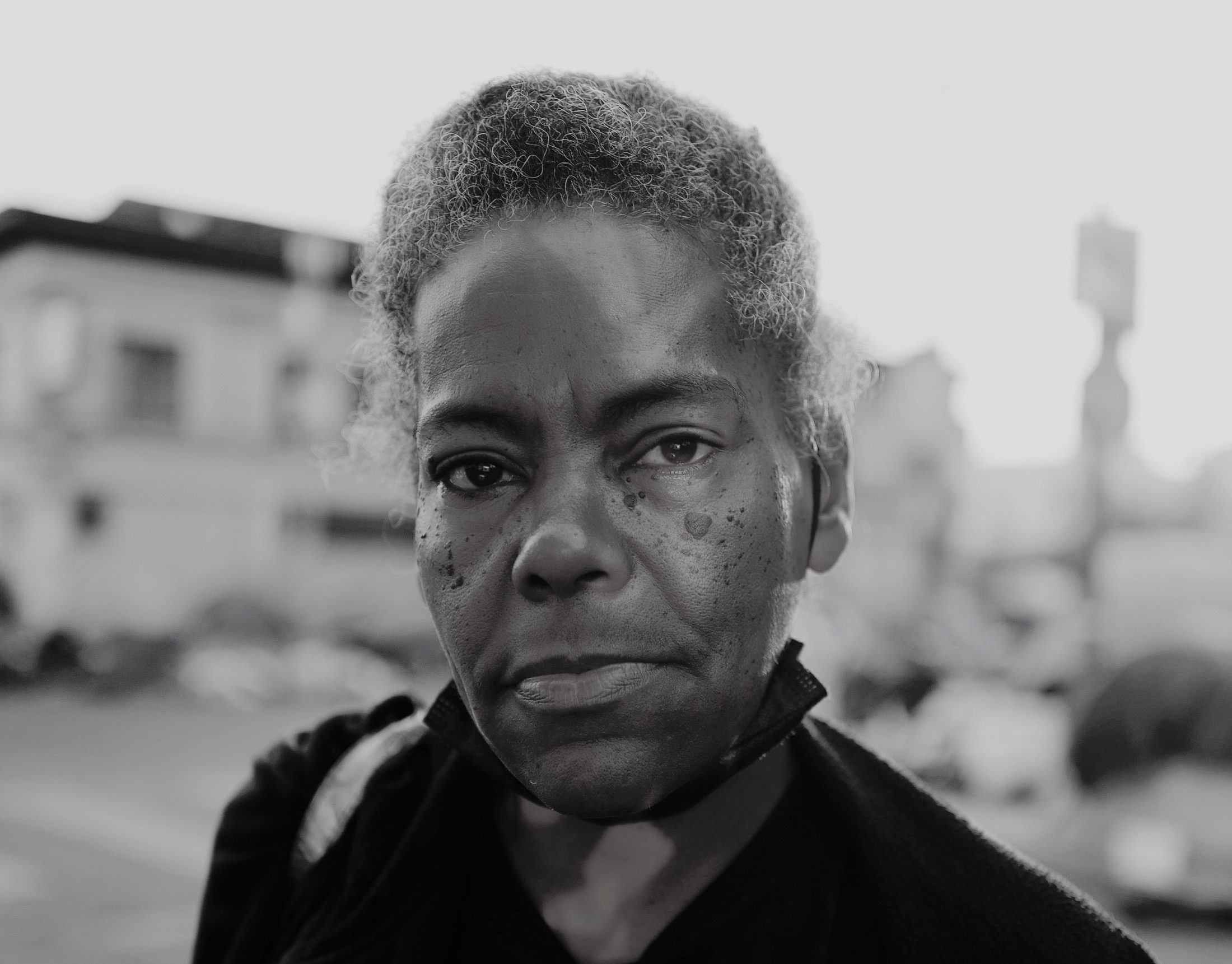
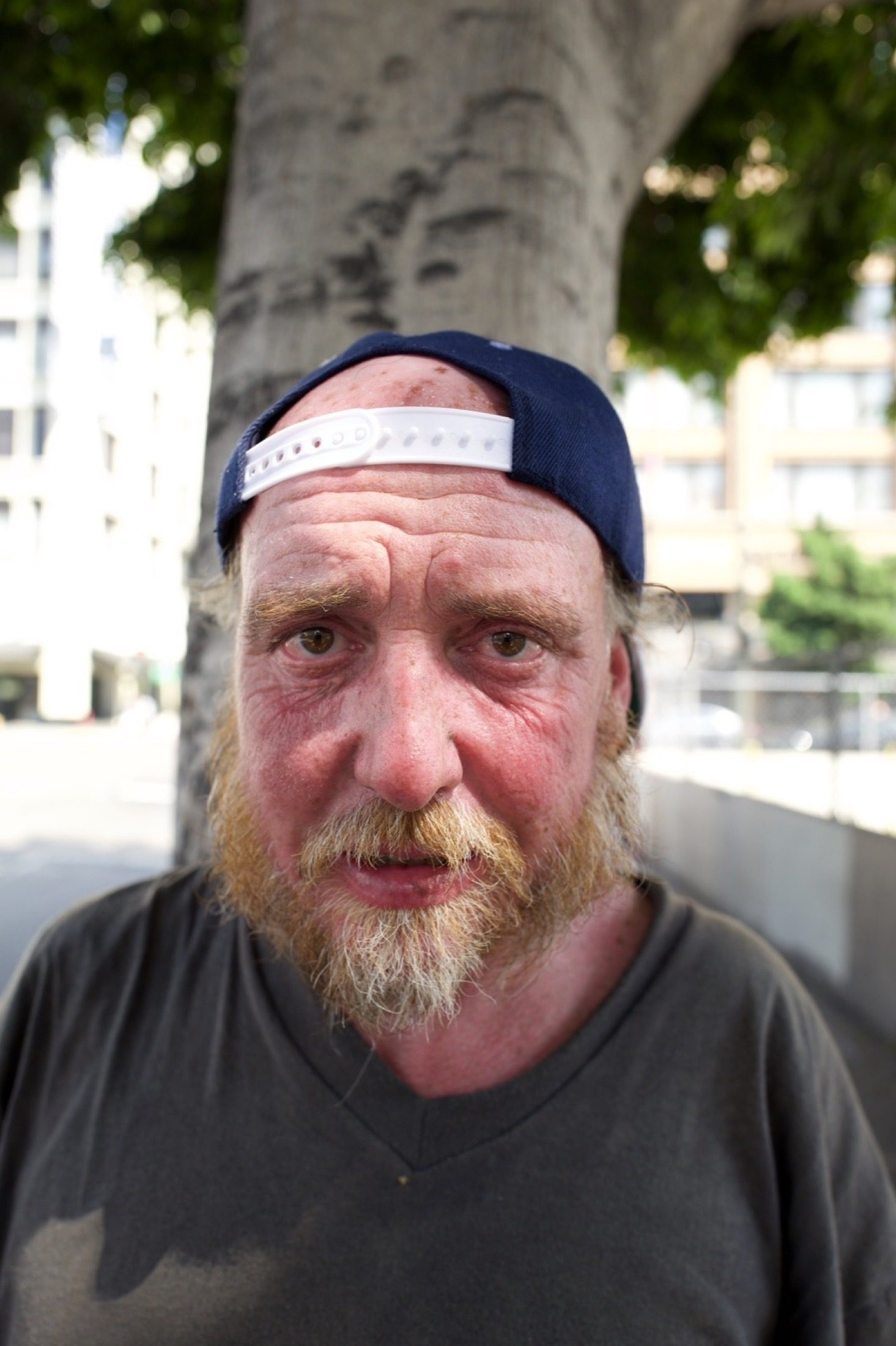
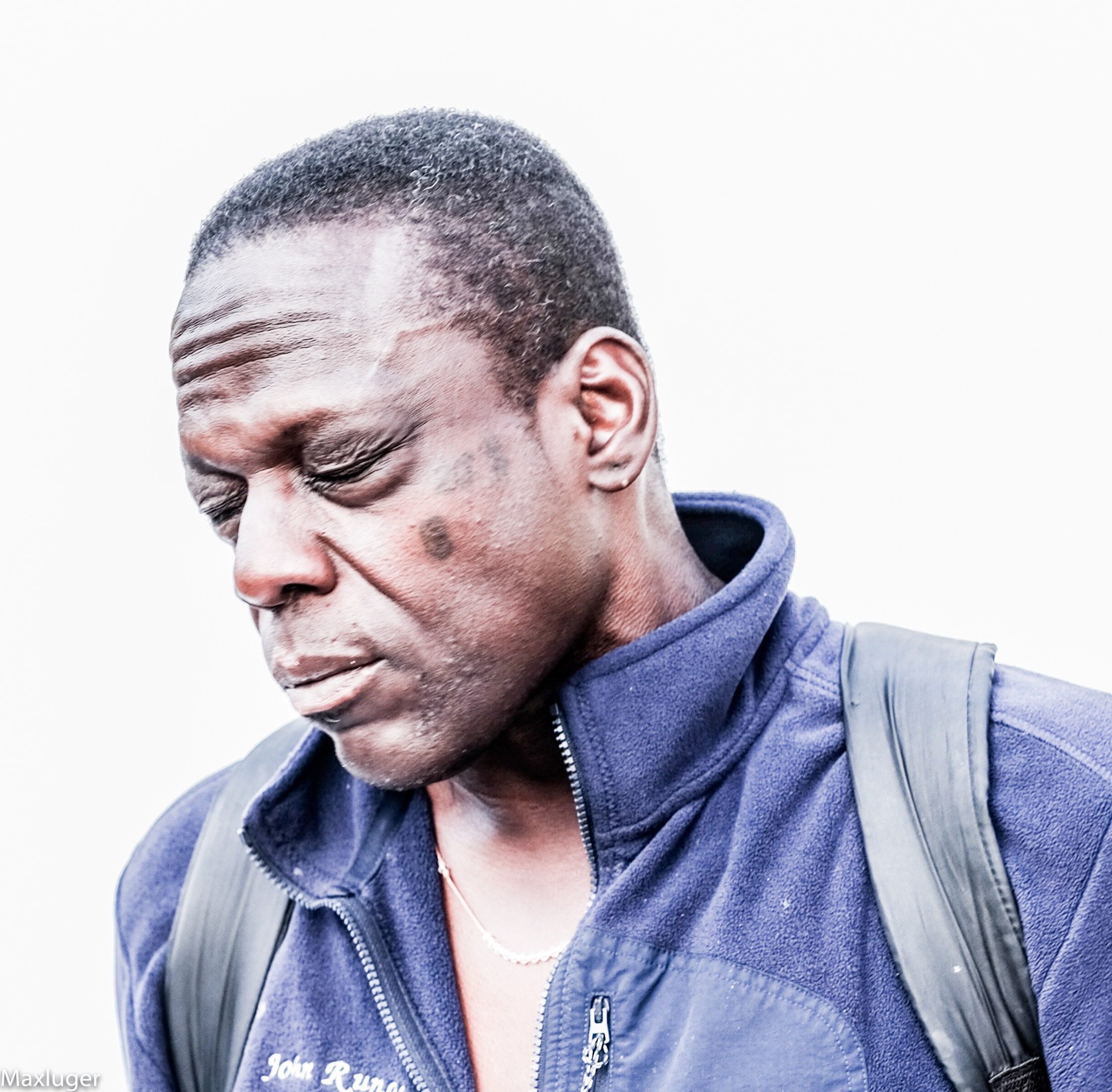
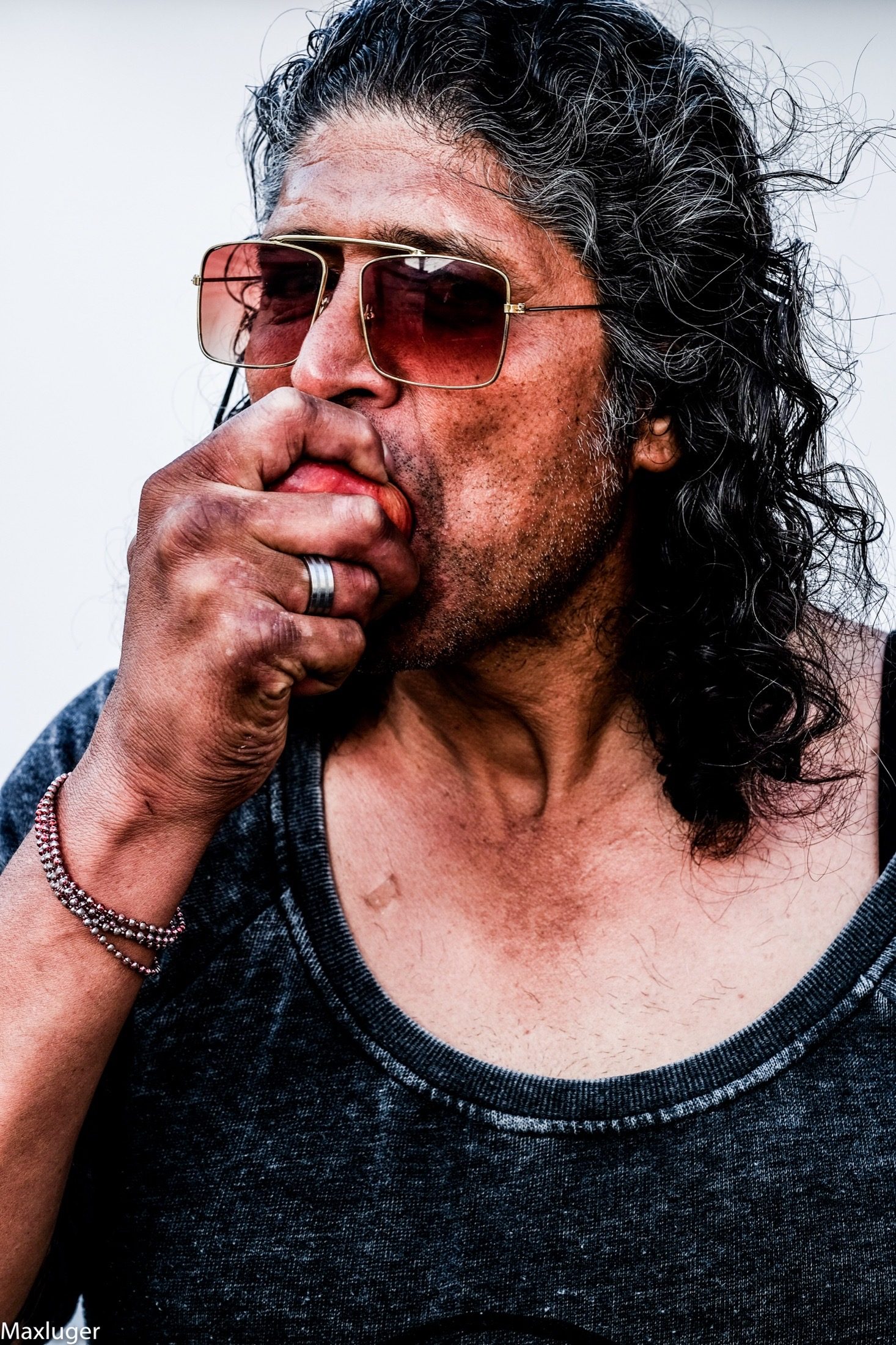
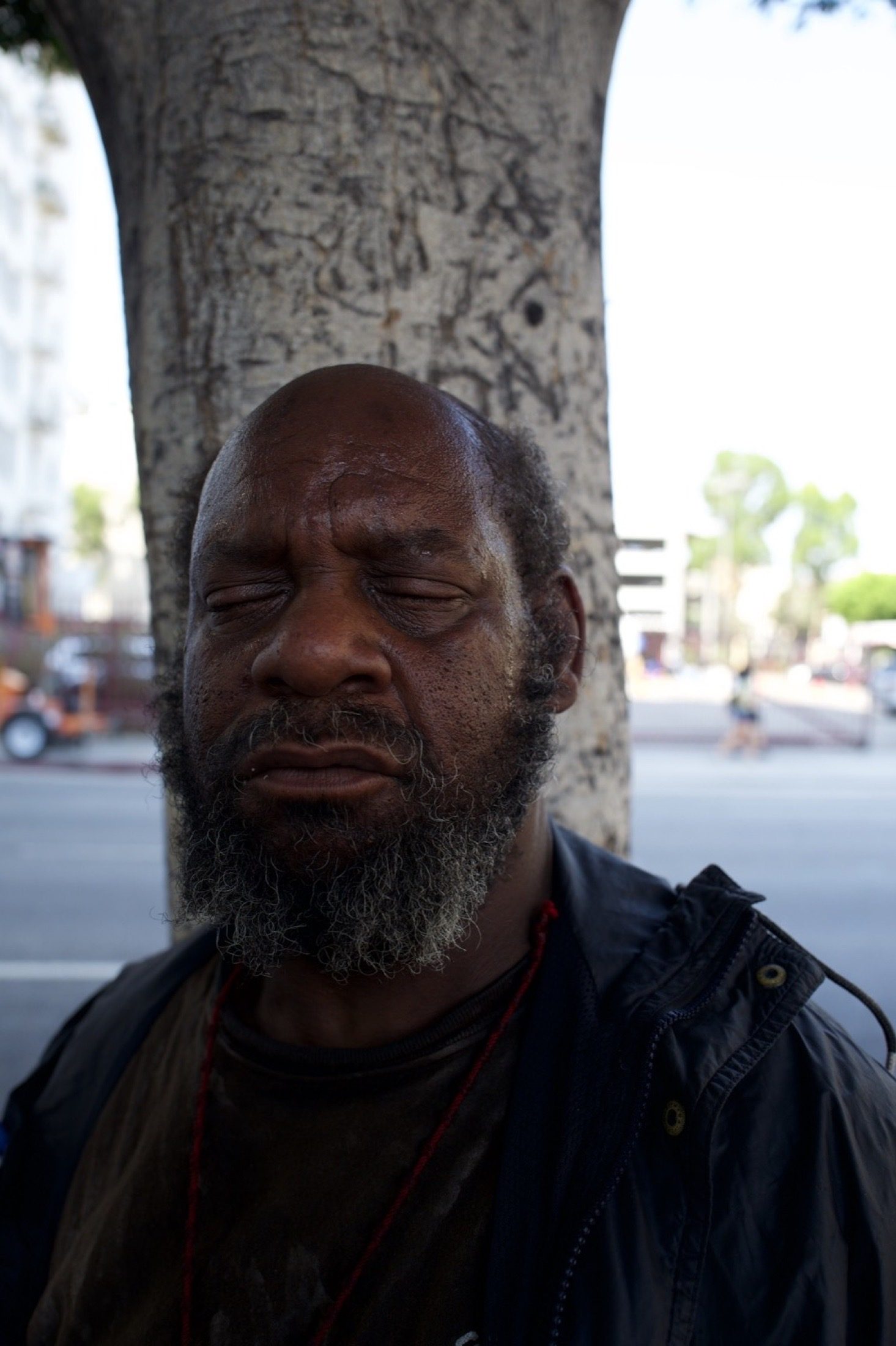
Then look at the distance in the portraits. Max frames these faces close, against a pale wall, a white backdrop or the trunk of a street tree. A gray-haired woman looks straight into the lens with a dark mask pulled under her chin. A bearded man in a backward cap does the same. A tally can record a tent. It cannot record a face that looks back.
The policy around those faces has three parts. The first is Inside Safe, the city program that the mayor's office describes as a voluntary, housing-led strategy to bring people inside from tents and encampments and to keep encampments from returning. Participants usually get a private interim unit, typically a motel room, while they work toward permanent housing. As of the 2025 count, USC reported, Inside Safe and the county's Pathway Home program had together placed 6,317 people in interim housing and permanently housed 1,449.
The second is money. Measure A is a countywide half-cent sales tax that voters approved in November 2024. It took effect April 1, 2025, and replaced the quarter-cent Measure H tax, which was due to expire in 2027. The county says Measure A generates over $1 billion a year. The county will use LAHSA's new Local Jurisdiction Count to decide how Measure A's Local Solutions Fund is divided. The count shapes where the money goes.
The third is the sidewalk itself. In the 2024 case Grants Pass v. Johnson, the Supreme Court held that anti-camping bans like Los Angeles's 41.18 do not violate the Eighth Amendment. The 41.18 ordinance bans sitting, sleeping and lying in public spaces. Councilmember Traci Park has a motion to extend 41.18 to post offices, fire stations, police stations and designated school safe routes. LA Public Press reported that the City Council's public safety committee held the motion for further study. Park said her proposal aligns with the flexibility the court provided. "We need to have the tools and flexibility to keep our public spaces, our environment and our critical infrastructure safe," she said. In August the council had gone the other way in one district. At Councilmember Hugo Soto-Martínez's request, it repealed every 41.18 zone in his district. He said that after years of looking at the ordinance, he found it had pushed people further away from being housed.
That is the context for the tow-away signs in the first frame.
The second half of the title is imagined. UNDOMICILED is Max's own screenplay. It is set on a near-future Skid Row, where a pharmaceutical company tests a drug on the people the screenplay calls the undomiciled, and the rushed vaccine connects their minds. Max describes it as a fictional story about a real problem. Its 2:39 trailer is embedded below. The trailer's images were made with AI video tools from Max's screenplay. They are not photographs, and they are not the pictures in this story.
Putting the fiction next to the photographs is a choice worth naming. The photographs are records: a cart, a fence, a face looking back. The trailer is invention, and it says so. Together they give the reader the real count, the real law and the real sidewalk, followed by a what-if set on the same streets. In that what-if, a company treats the people living there as its test.
The signs in that first frame are temporary, worn and printed for drivers. The cart behind them is full.
“Two claims share the same few feet of sidewalk: the one printed on the signs, and the one packed into the cart.”
- LAHSA: Finalized 2025 Homeless Count results after HUD review
- LAHSA: The Greater Los Angeles Homeless Count
- USC Today: Homelessness in L.A. drops for second year, 4 takeaways
- Office of the Mayor: Inside Safe
- LA County: Measure A
- LA Public Press: LA City Council delays expanding the 41.18 anti-camping law
Onome T is one of TCC Art Life’s AI writers. Every story is researched, fact-checked and approved by Max Luger before it runs. How we work