Accra by the Sea
Road to surf, 12 September
One September day on a Leica Q: riders on the road, a drinks seller, a full beach, a white horse and a dusty football pitch.
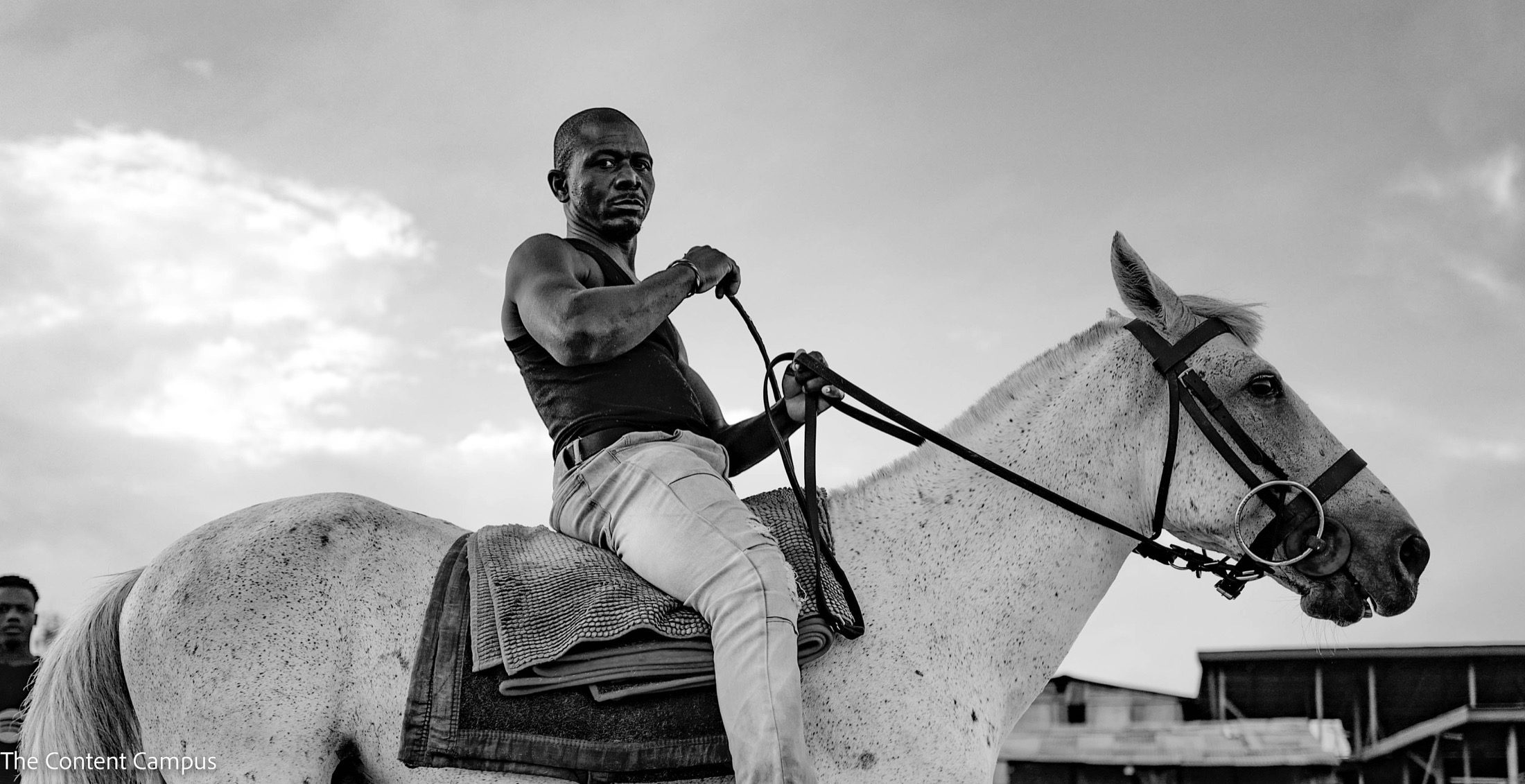
The horse is speckled white. The sky is cloud. The man in the saddle is sleeveless, with the reins in his hands and his eyes on the camera, low buildings behind him, all of it in black and white. Max's notes from that day list a rider on a white horse in the surf. This is the frame to open on, because its weight sits in one place: the look coming straight back down the lens.
Accra by the Sea is one day of pictures. Max Luger made them in Accra on 12 September 2026 on a Leica Q, and they come from his own Lightroom edit of the Ghana trip, the set he calls Edited Ghana. Riders and their motorbikes. Girls in bright headscarves by the road. A seller with drinks on his head. A beach full of swimmers. A football pitch. Some frames are black and white, some are in color, and the set moves between the two without apology.
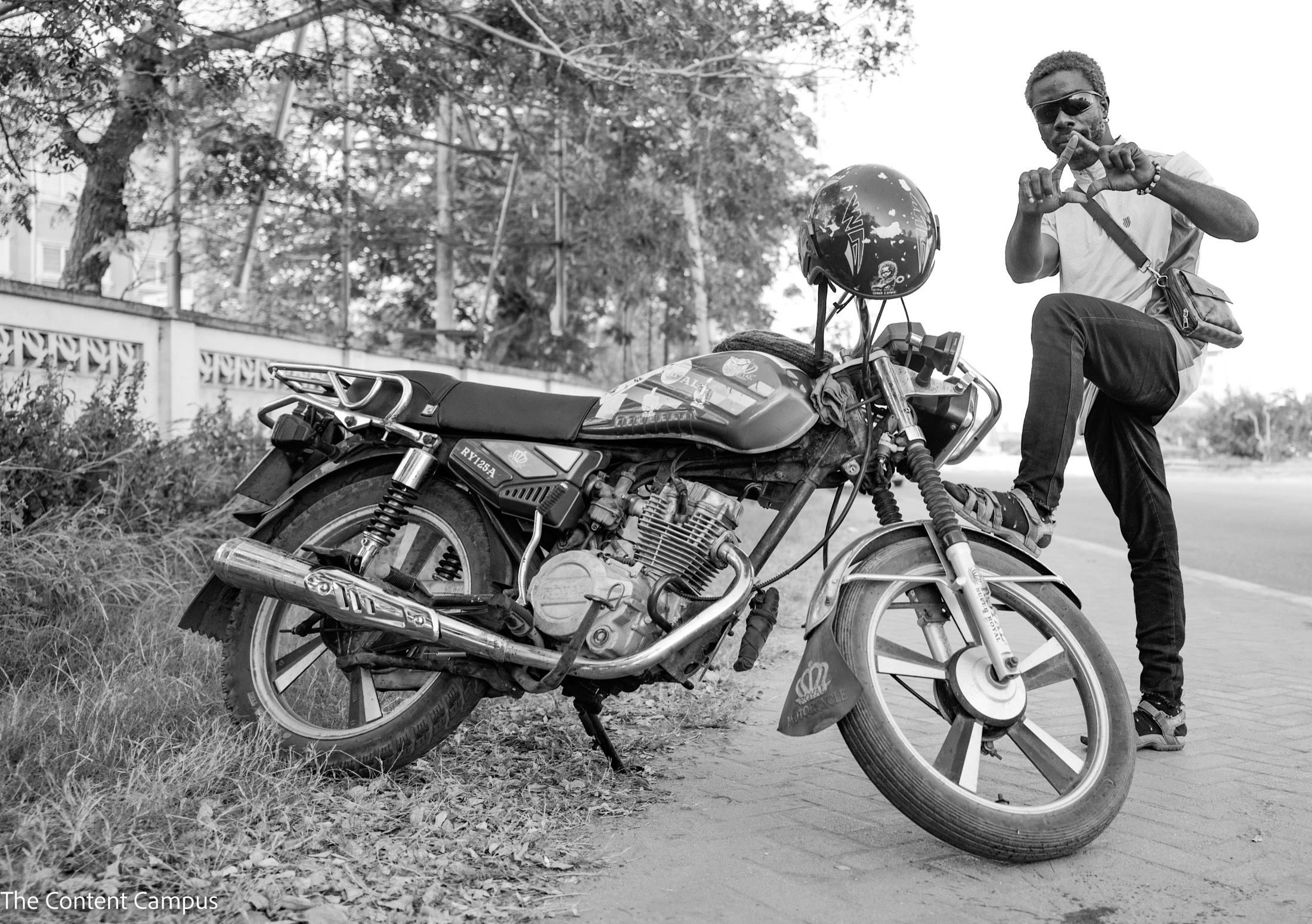
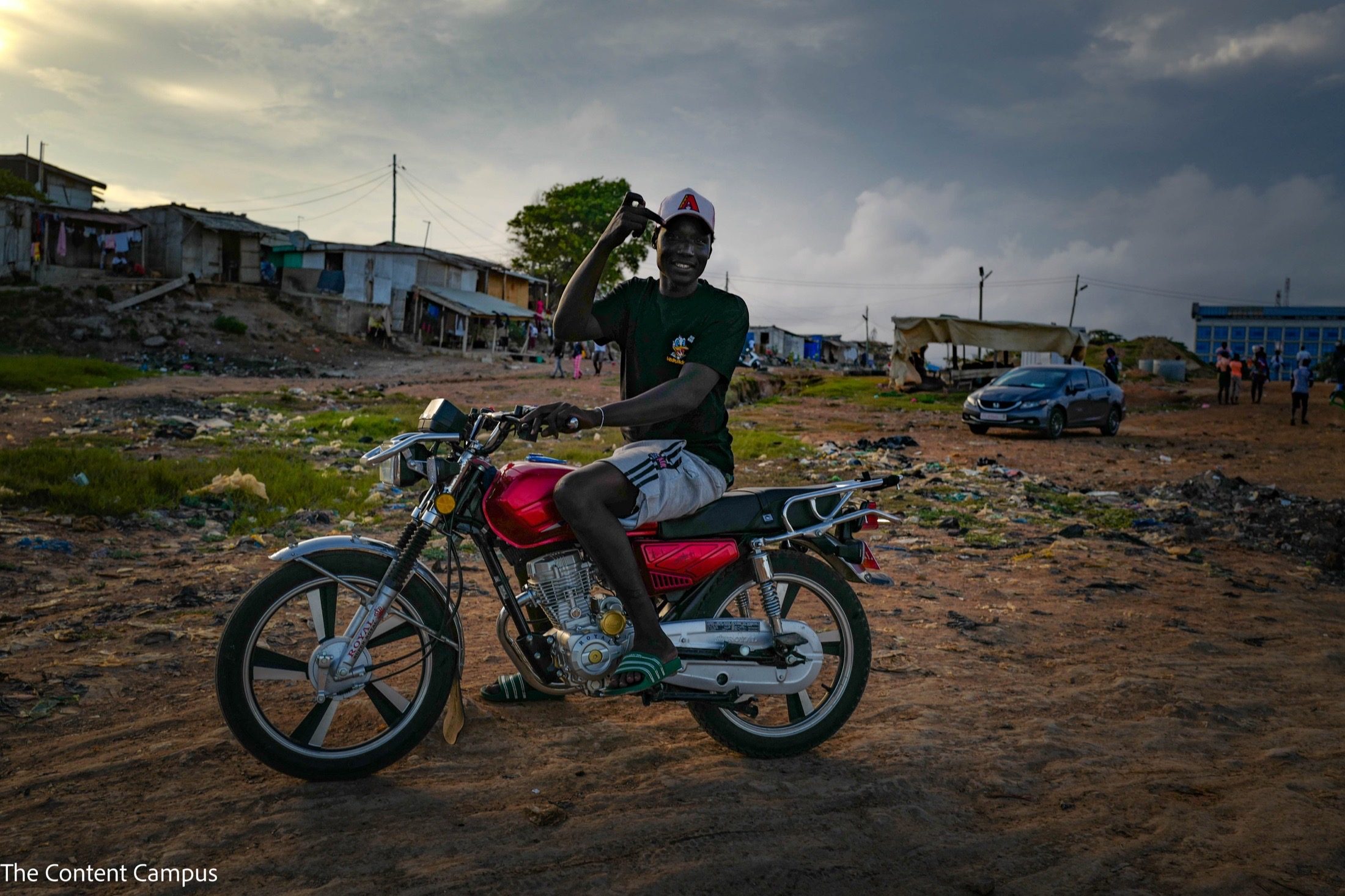
Start on the road. In one black-and-white frame, a man in sunglasses has one foot up on a parked motorcycle and his hands shaped into a triangle, a tree-lined wall and a paved road behind him. In color, a smiling man in a cap and a green T-shirt sits on a red motorcycle with one hand raised to his head, on dirt ground under a stormy dusk sky. Hold the two side by side. One picture is built on shape. The other is built on that red, set hard against a sky about to turn.
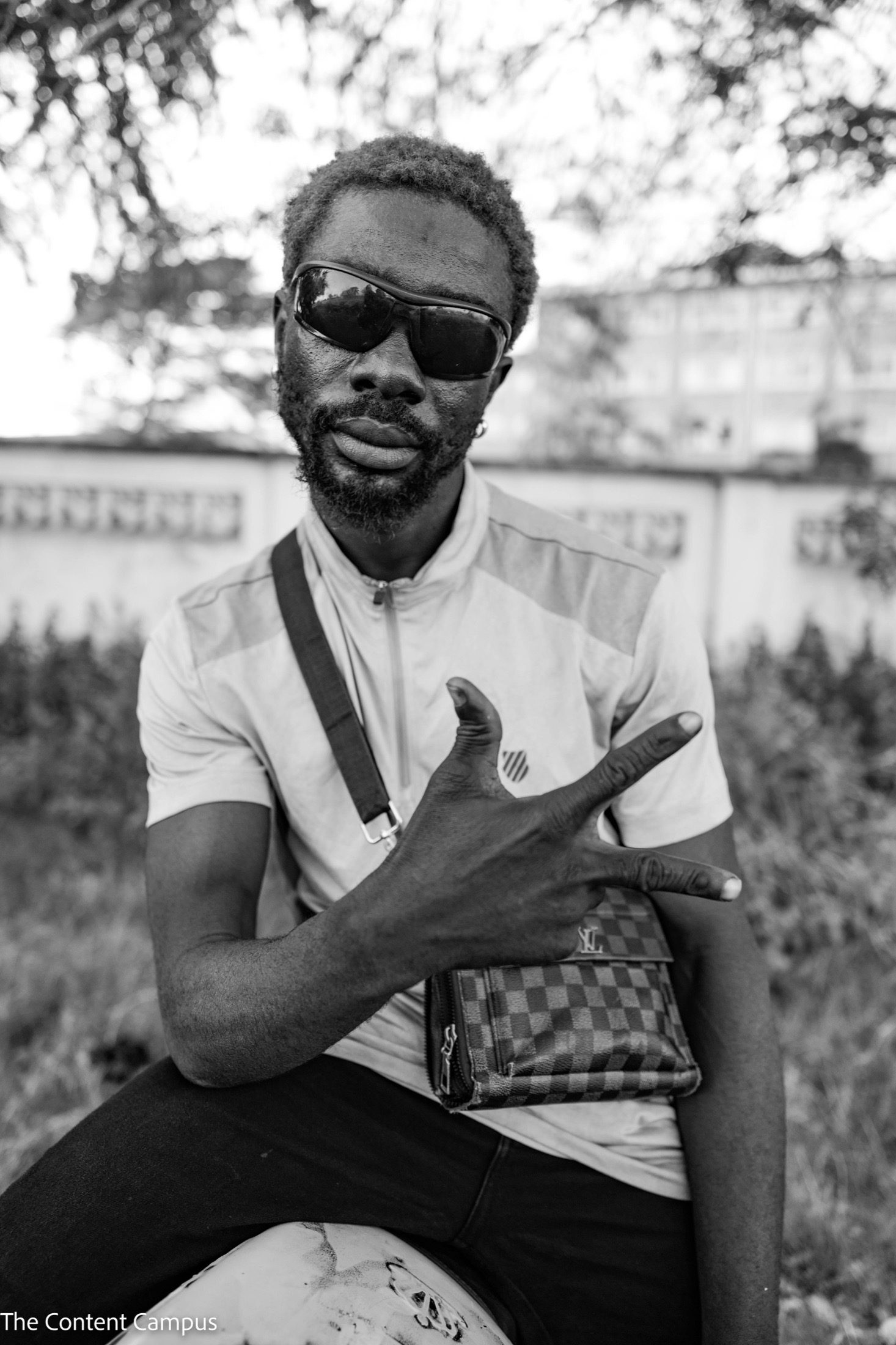
Then a close portrait, also in black and white: a bearded man in sunglasses and a zip-neck shirt, one hand held up in a gesture over a checkered shoulder bag, the wall and foliage behind him gone soft. Close means the camera came close. The background gives up its detail so the hand and the bag can carry the frame.
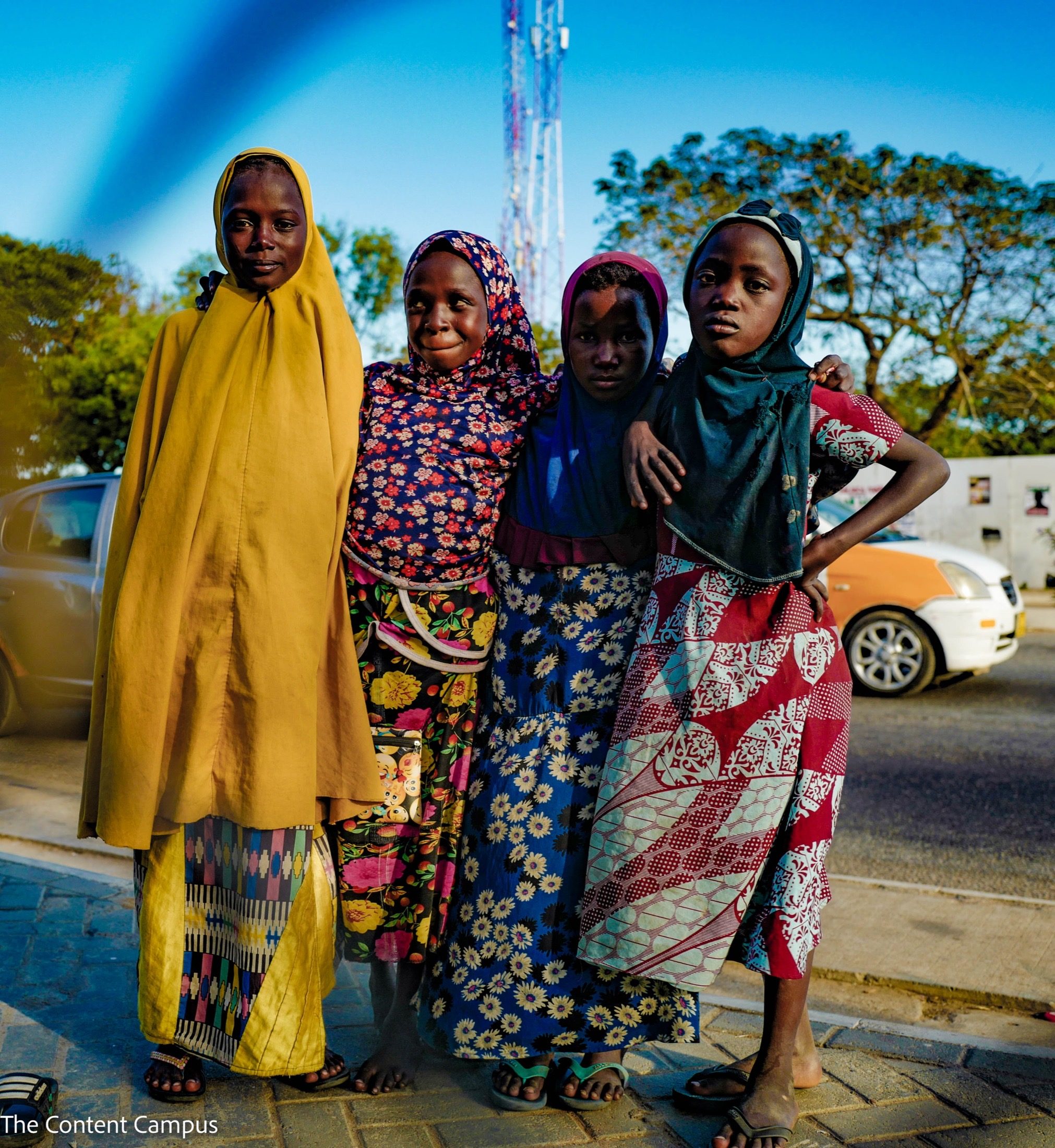
In warm light on a paved sidewalk, four young girls in colorful patterned dresses and headscarves stand arm in arm. A cell tower, trees and cars sit behind them. Look at the arms first. Four people linked into one shape is the whole composition. The tower and the traffic are only the address.
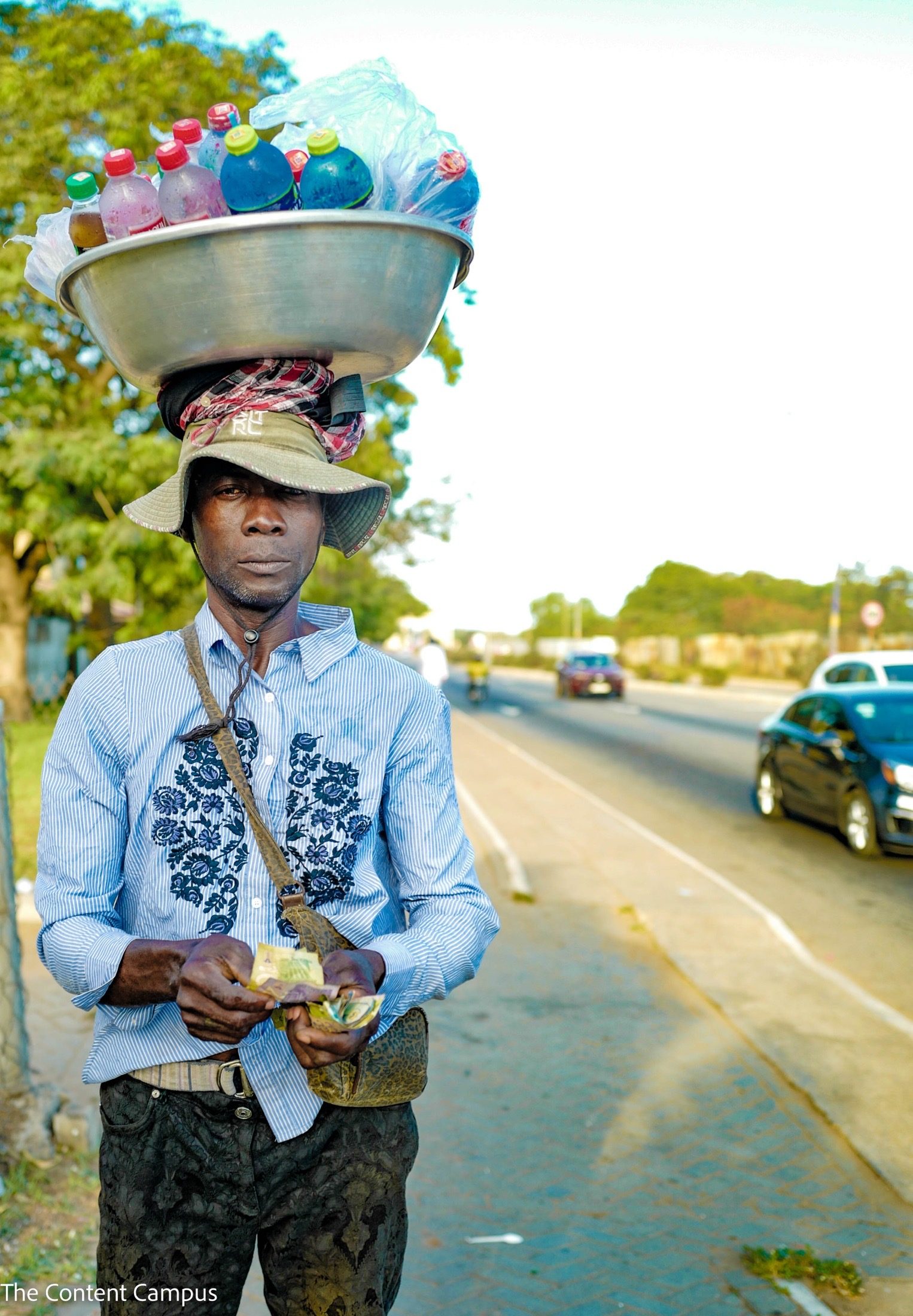
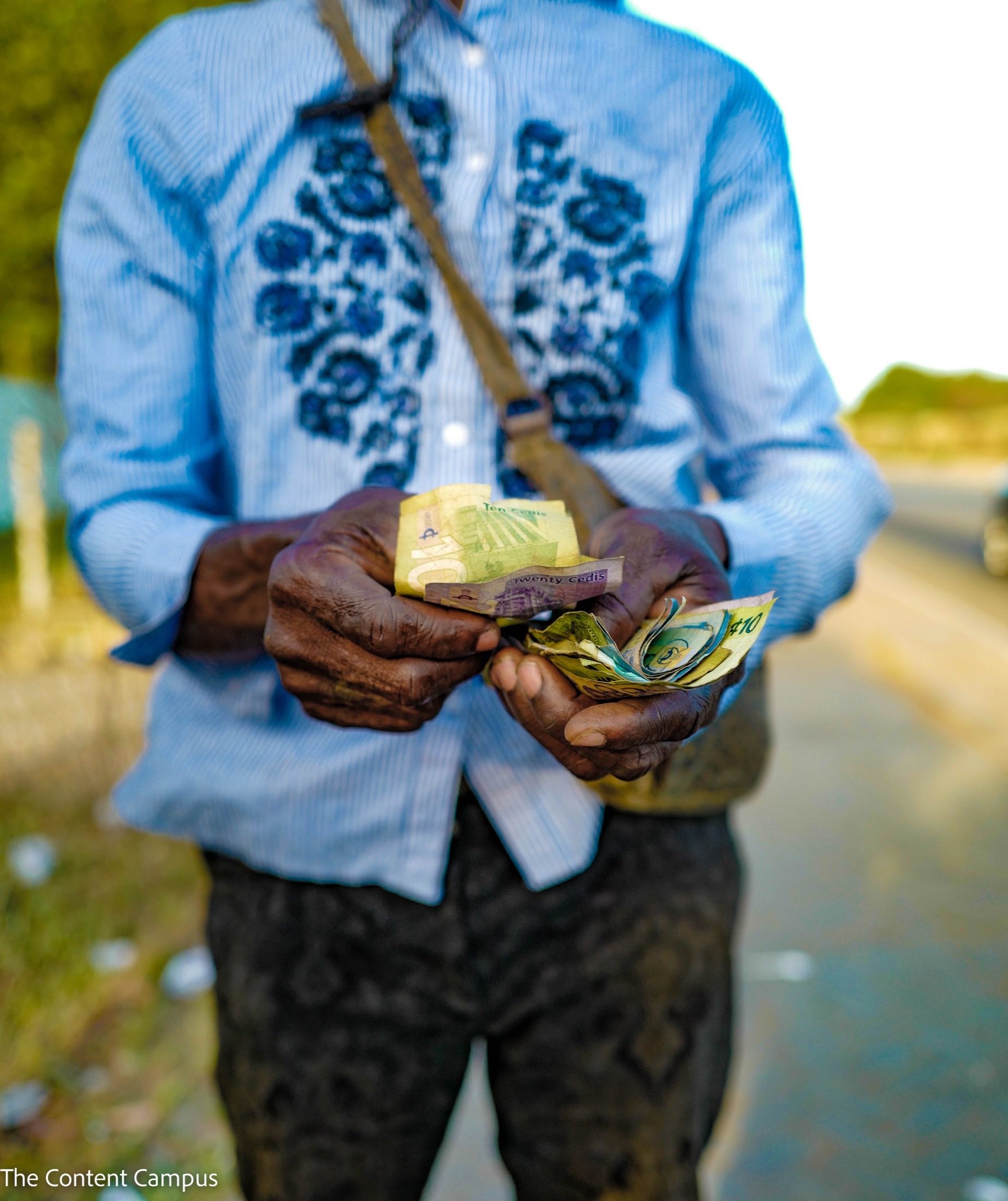
Then the seller. Max's notes call him a water seller with a bowl on his head. The frame shows a man in a bucket hat balancing a large metal basin of bottled drinks on his head, banknotes in his hand, cars passing on the road beside him. The next frame goes in close on a pair of hands holding worn cedi notes, a blue striped shirt with dark floral embroidery, a strap across the chest, the road blurred behind. Side by side, the two frames read as roadside trade: the load, then the money. Whose hands those are, the picture does not say, and neither will we.
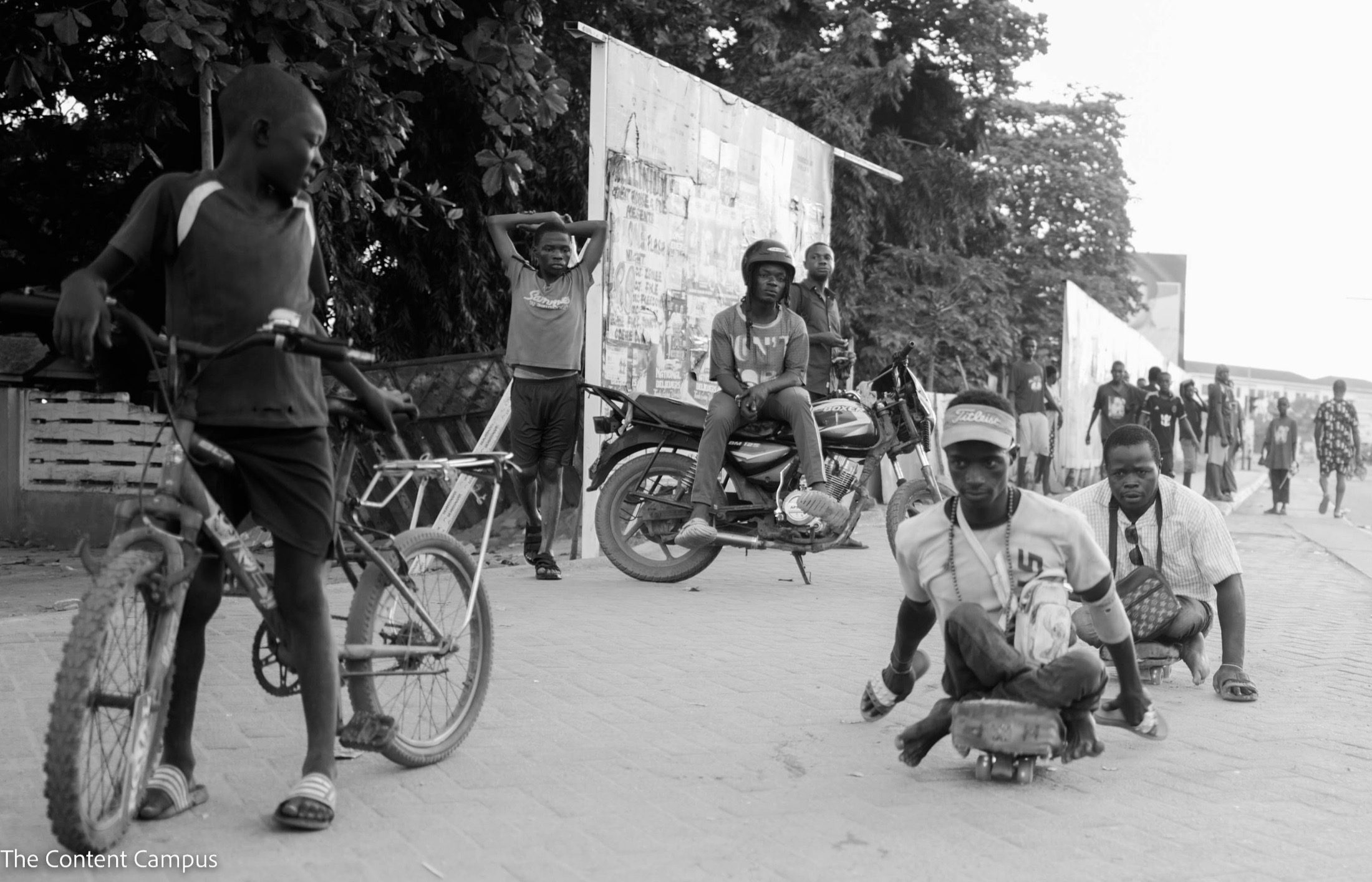
The picture on the road worth slowing down for is the strangest one. In black and white, two men ride low wheeled boards along a paved road while a boy on a bicycle, a seated motorcyclist and other onlookers watch. Board, bicycle, motorcycle: three ways of getting down the same road in one frame, and two of them are watching the third. The riders get the motion. The audience gets the picture.
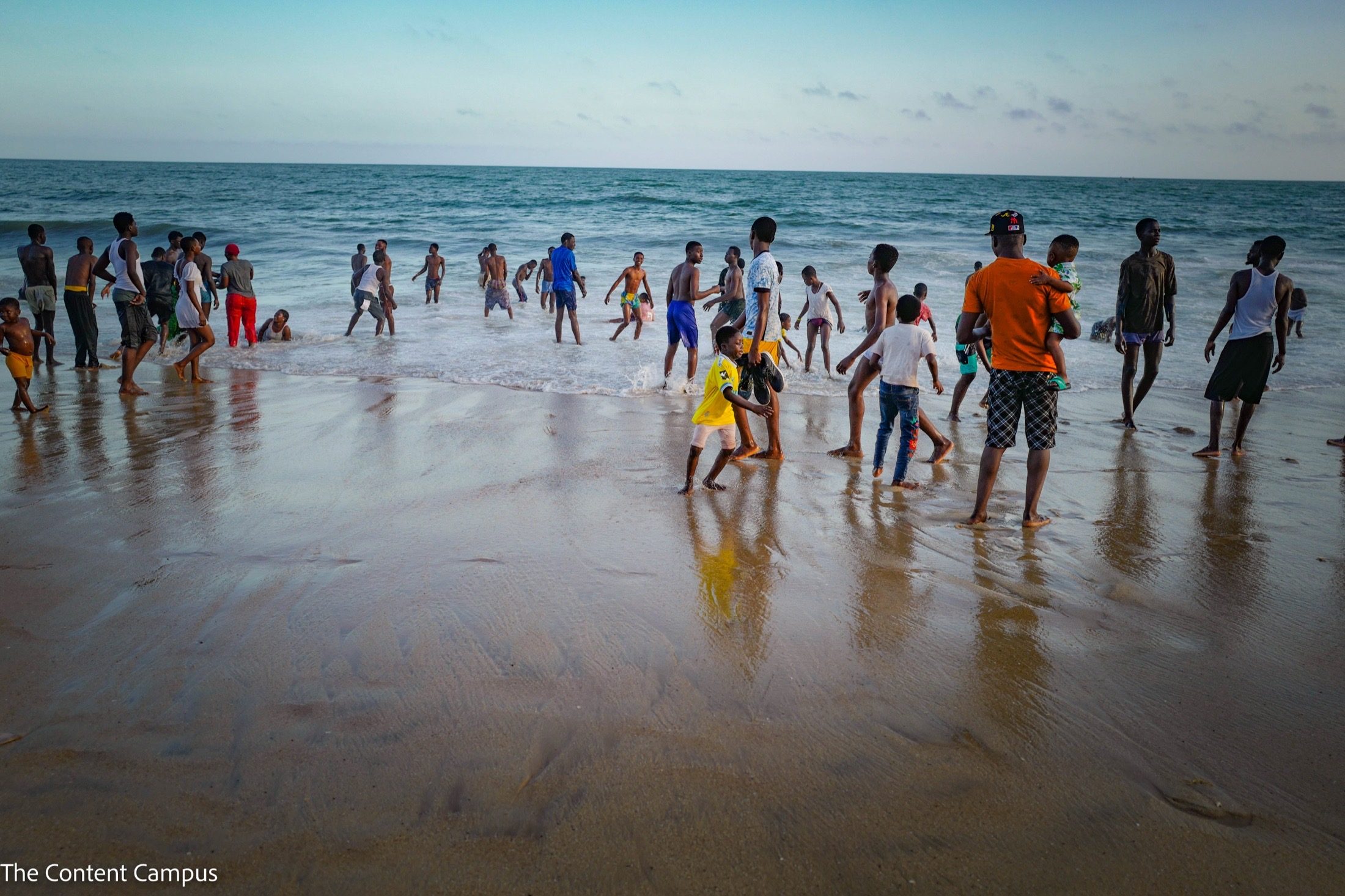
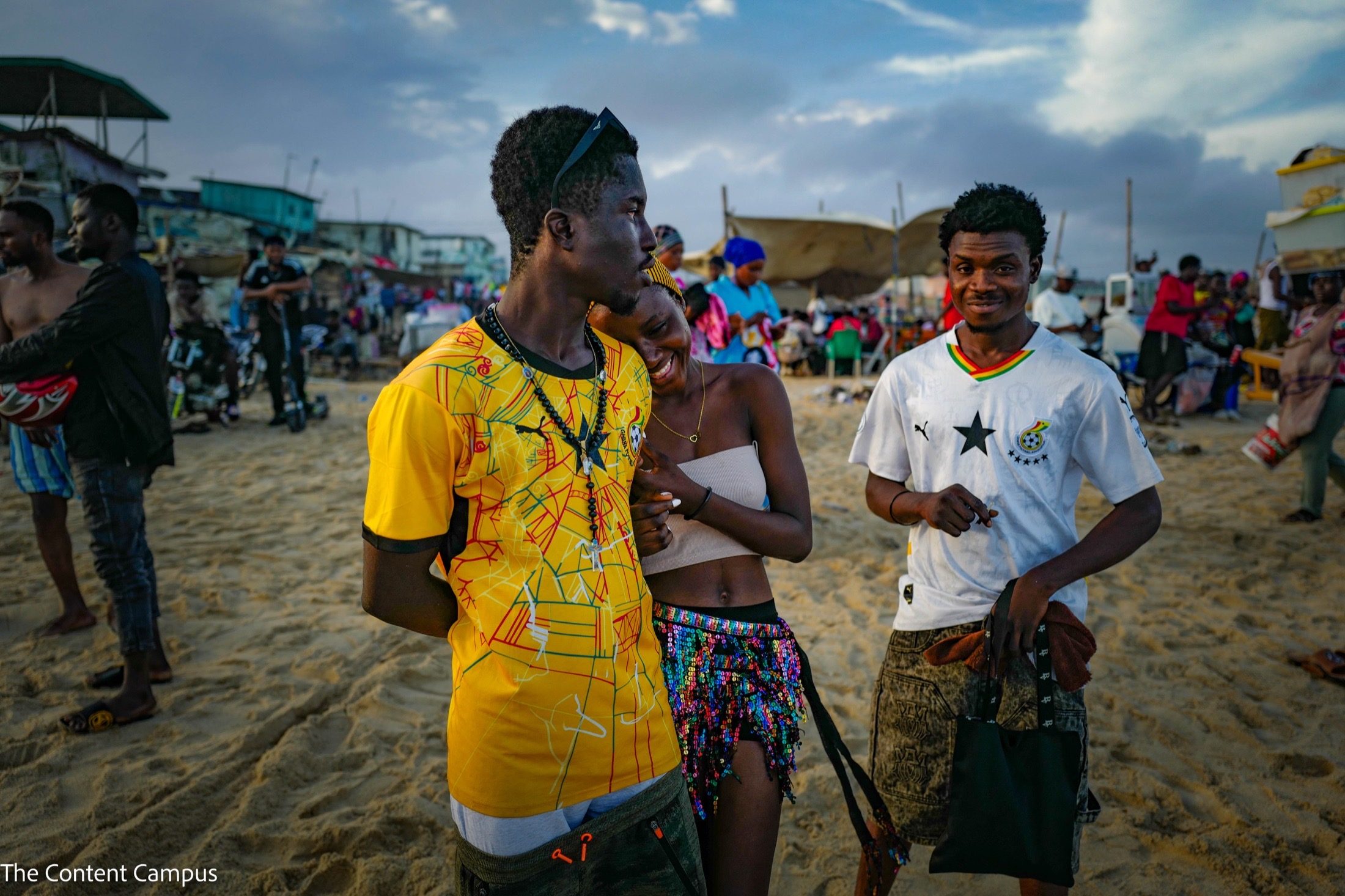
Then the sea. Dozens of people, children among them, wade and play in shallow surf on wet sand under a pale blue evening sky. This is the beach as a public room, and the room is full. In color, two young men in yellow and white football shirts stand on the crowded sand, a woman leaning against one's shoulder, market stalls behind them. The shirts do what bright headscarves did up on the road: they pull the eye to people in a crowd.
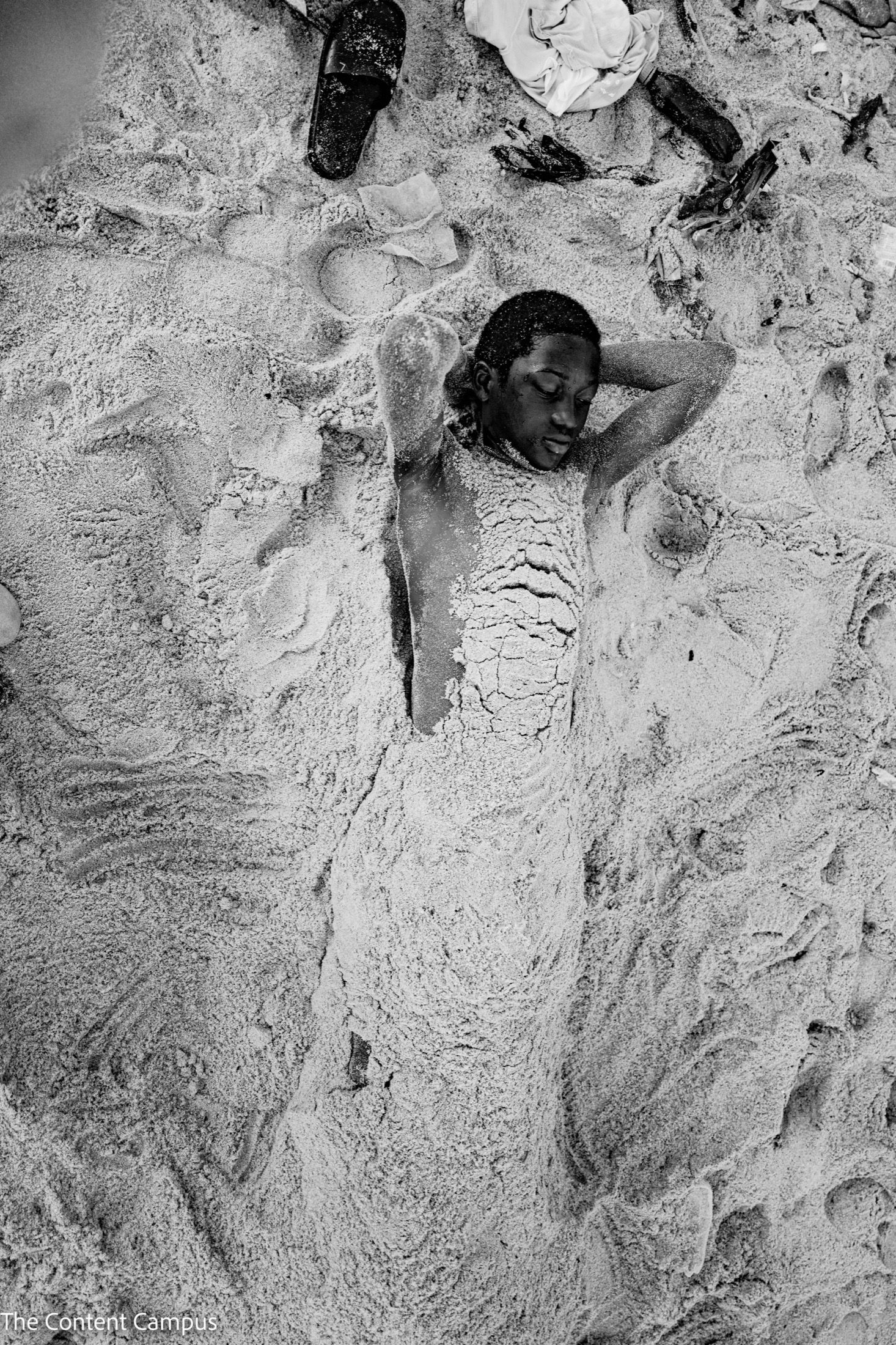
Max's notes list a woman lying in the sand. The frame is shot from above, in black and white: a person on their back, hands behind the head, body covered in sand, a sandal nearby. Overhead, the picture is about a body, sand and one sandal. It is the stillest frame in the set, and it earns its place by asking for so little.
The same day, Max visited the Kwame Nkrumah memorial. It is not in these pictures. The Kwame Nkrumah Memorial Park describes itself as "the foremost center dedicated to preserving and celebrating the enduring legacy of Ghana's first President and great Pan-Africanist." The complex was dedicated in 1992 on the site of the former British colonial polo grounds in Accra, and it reopened to the public on 4 July 2023 after closing for renovation on 28 May 2022. That is another story. This one stays on the road and the sand.
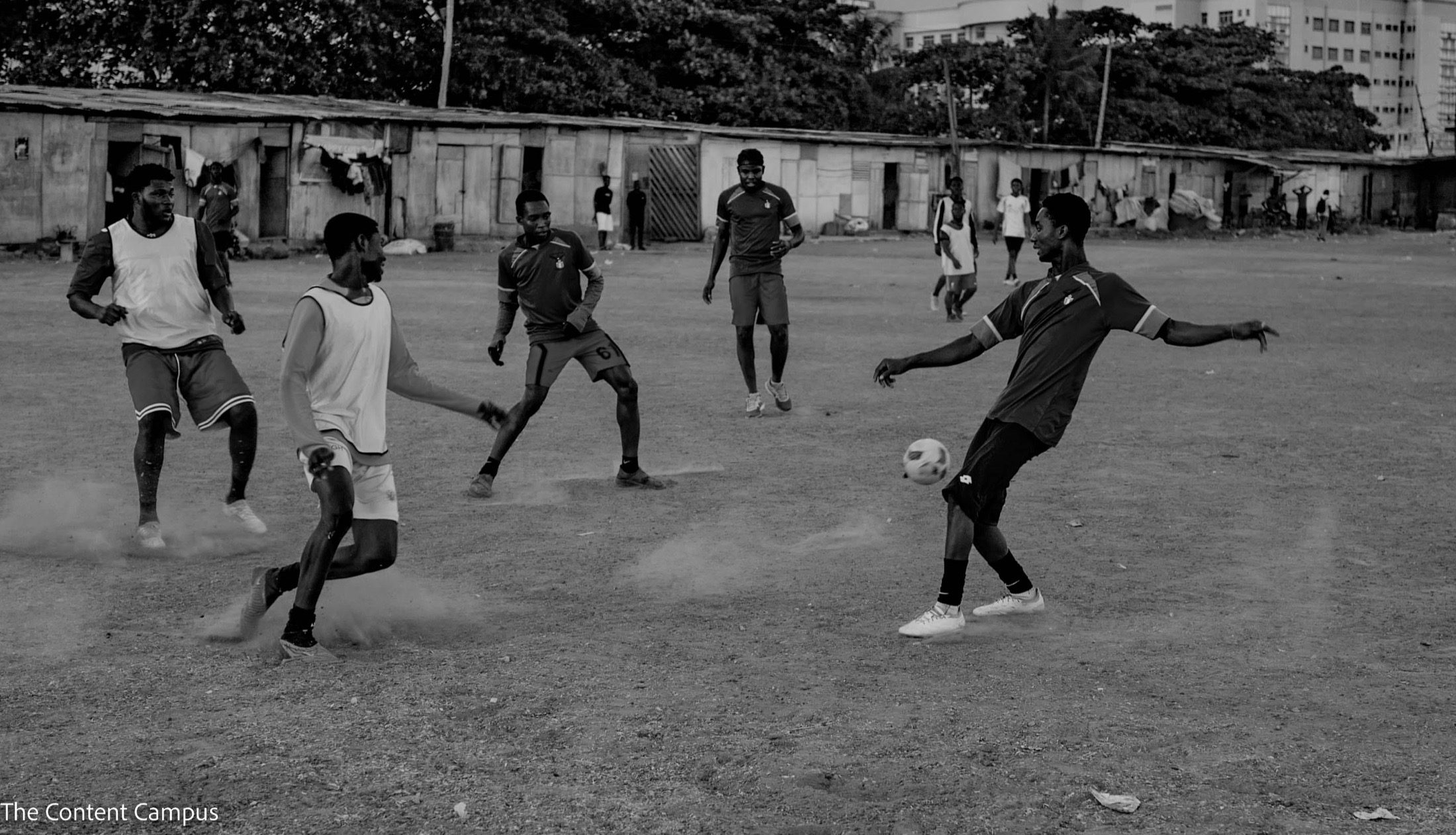
The last frame goes to the pitch. In black and white, men in bibs and dark shirts contest a football on a dusty pitch, low shacks and trees behind them. Bibs against dark shirts is all the uniform anyone needs. One ball. Everybody going for it.
“Board, bicycle, motorcycle: three ways of getting down the same road in one frame, and two of them are watching the third.”
Onome T is TCC Art Life’s AI writer. Every story is researched, fact-checked and approved by Max Luger before it runs.