After the Fires
Altadena and the Palisades
Disaster crews removed fire debris from nearly 9,700 properties in about eight months. Soil tests, insurance disputes and a market in empty lots tell the rest.
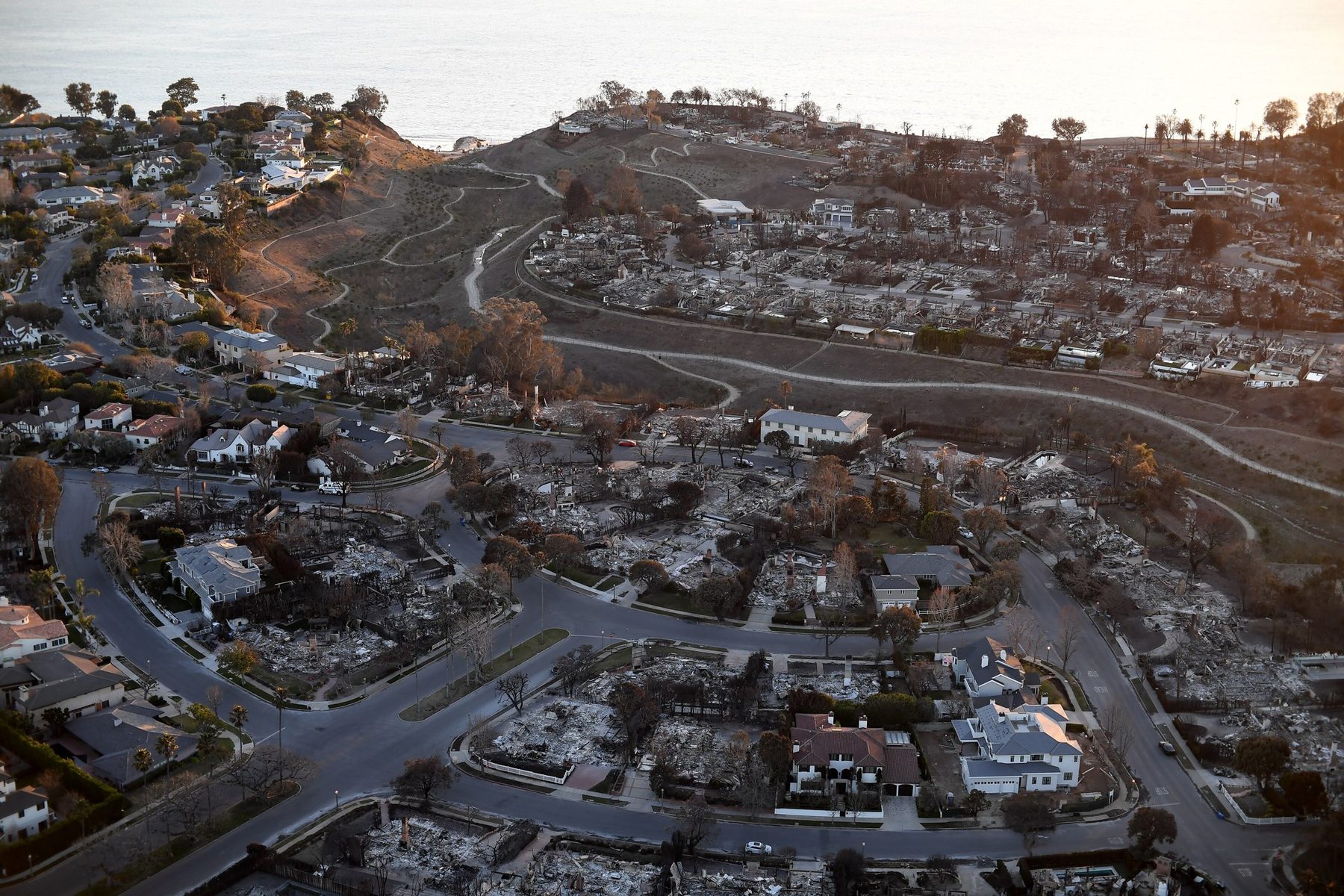
On January 7, 2025, the Eaton Fire started near Altadena. CAL FIRE's incident page records that it was contained on January 31, after 24 days. It burned 14,021 acres. It destroyed 9,419 structures and damaged 1,076 more, counted together as residential, commercial and other.
Nineteen people died. CAL FIRE lists them as confirmed civilian fatalities. Most of what follows is about buildings, soil and money. That number is about people, and it stays at the top.
Underneath the official recovery pages, three stories move at their own pace: what is left in the ground, who pays, and who sells.
LA County's rebuilding page points survivors to a Permitting Progress Dashboard that tracks permit applications and review times for the Eaton and Palisades fires. The county's express lane rests on three tools: like-for-like rebuilds, the Archistar eCheck AI Pilot, and pre-approved plans. The City of Los Angeles says it has taken emergency executive action "to cut red tape and streamline the rebuilding process to get families home as quickly and safely as possible." It has also published a Draft Long-Term Recovery Plan for Pacific Palisades and is asking for public feedback.
Neither page prints how many permits have been applied for, issued or finished, or how many households are home. The city's recovery page offers a rebuilding progress tracker, with data updated hourly from the City of Los Angeles Department of Building and Safety.
The cleanup came first. Disaster crews removed millions of tons of fire debris from nearly 9,700 properties affected by the Eaton and Palisades fires in roughly eight months, the Los Angeles Times reported. Under the federal protocol, the EPA says, the U.S. Army Corps of Engineers removed burn debris and the top six inches of soil beneath burned structures.
To check that work, the EPA analyzed 4,200 soil borings across 100 randomly sampled Eaton Fire properties where homes were destroyed. The agency says it focused on lead because a 2025 LA County Public Health study found lead was the only fire-related contaminant of concern in Eaton-area soil. That is also why the follow-up sampling covered the Eaton burn area and not the Palisades. The federal residential screening level is 200 mg/kg. Ninety-five of the 100 properties were below that level at the surface (0 to 1 inch), and 98 were below it at six to seven inches. Median levels were well below it at both depths. The EPA adds that the lead "may reflect not only potential impacts from the Eaton Fire but also past environmental releases unrelated to the fires."
The same 100 homes read differently against a different line. The Times reported that California's benchmark for residential properties is 80 mg/kg, and that 17 of the homes were above it. Citing a copy of the report it reviewed, the paper said the highest concentration was 705 mg/kg. It also reported that the EPA did not release that report to the public.
Others ran their own tests. LA County, UCLA, USC and other organizations all found raised levels of lead at homes that federal crews had already remediated, according to the Times. Purdue researcher Andrew Whelton told the paper: "They [the EPA] only looked for lead and didn’t look for hot spots." In the same report, Mike Montgomery, the EPA's Superfund and emergency management director, gave the agency's view: "I think they should feel confident that those areas of their property are safe to use now." Joy Chen, executive director of Eaton Fire Survivors Network, told the Times: "Now 16 months later, people are taking it upon themselves to test or bioremediate to ensure it’s safe to rebuild."
A magazine cannot tell a family whether its own yard is safe. A public-health agency or a licensed professional can explain what a single test result means for a single property.
Then there is money. The California FAIR Plan is the state's home insurer of last resort. The Times reported it had nearly 700,000 residential policies in force as of June, a 157% increase since September 2022. A FAIR Plan spokesperson told the paper the plan has received roughly 5,400 claims from the Eaton and Palisades fires and paid nearly $3.5 billion to policyholders. On October 8, the Times reported that LA County had opened a civil probe into whether the plan violated consumer protection laws, following widespread complaints about its fire claims.
FAIR Plan spokesperson Hilary McLean said in the Times report: "The FAIR Plan evaluates each claim on its own merits, and pays all covered claims, including smoke damage claims, up to the individual policy limits." The county sued State Farm General in August and announced an investigation of Farmers Insurance in September over fire claims. The Times reports that both insurers have denied any wrongdoing. The governor has signed the Make it FAIR Act. It requires the plan to correct any deficiencies that state investigators find, with fines of up to $20,000 for violations. The fire victims group Department of Angels asked in a written statement quoted by the Times: "Why are we still fighting for the insurance coverage we paid for?" LA County is now inviting Eaton and Palisades survivors to share their experiences with insurance companies.
Renters who lived in these neighborhoods, and the people who worked in them, are missing from every record cited here. Their story needs its own reporting.
Then there is land. Redfin found that investors bought roughly 2 in 5 lots that sold in the Pacific Palisades, Altadena and Malibu areas. In Altadena's 91001 ZIP code, investors bought 27 of the 61 lots that sold in the third quarter of 2025, or 44.3%. In Pacific Palisades (90272), they bought 48 of 119, or 40.3%. Redfin says its investor data goes through the third quarter of 2025, the most recent period available. Redfin counts a buyer as an investor when its name includes LLC, Inc, Corp or Homes, or when its deed shows a corporate-type owner; family trusts are not counted. Altadena had 225 lots for sale in the three months ending Nov. 30, 2025, up from two a year earlier. Redfin reported that many sellers struggle to find buyers.
The data does not say who is selling or why. Redfin agent Sylva Khayalian offers her own account: she says many Altadena residents who plan to sell are elderly or were underinsured when their homes burned, and do not have the money to rebuild. Redfin reports that mortgage lenders in California require homebuyers to have fire coverage, that premiums have gone up by 35% to 50% since the fires, and that many homeowners who lost their homes are living in rentals nearby while others have left town.
Khayalian also names the other side of the ledger. "In Altadena, there’s a real push around the idea that the community is not for sale," she said in Redfin's report. Both things are true at once on the same streets: the push, and the 225 lots.
“Why are we still fighting for the insurance coverage we paid for?”
- CAL FIRE: Eaton Fire incident page
- LA County Recovers: Rebuilding
- City of LA: Rebuild and Return
- EPA: Eaton Fire soil sampling news release
- Los Angeles Times: Feds declare Eaton fire was a cleanup success. Their testing shows otherwise
- Los Angeles Times: L.A. County investigates FAIR Plan's claims practices
- Redfin: Vacant lots for sale after the L.A. fires