Who Is the Author?
Photographers, retouching tools and the Supreme Court
The Supreme Court turned away an AI-authorship case without explanation, while Capture One pitches new retouching tools around the photographer as author. Here is what each text says.

Theis Karger Philipsen still has the wigs. The Capture One engineer kept them after his team used them to build a new retouching tool. "This is our first version, and the wigs are still sitting on my desk as I am waiting for feedback from our users as they start working with it," he said, in remarks published by Digital Camera World.
The tool is Stray Hair Removal. It is one of three new retouching tools in Capture One 16.9 for desktop and 4.2 for mobile, released alongside Skin Tone Retouching and Body Skin Retouching. PetaPixel reports that the team trained the model first on mannequins and wigs, then moved to real hair and photos of actual people. The tool was almost ready earlier in the year. Philipsen said the team had planned a spring launch, "then pulled it a few weeks before launch because the model wasn't where we wanted it."
Capture One's chief executive, Rafael Orta, introduced the release this way. "We are building toward a future where the photographer is the author, not an algorithm. Our tools fade into the background so photographers can lead," he said, as quoted by PetaPixel.
In a press quote, "author" is a selling point. In a court filing it is a legal term. A portrait or fashion photographer now hands stray hair to a trained model, and that photographer has a practical question: which parts of the finished picture are still their own work? The Supreme Court was asked a starker version of that question in a case about AI output, and it declined to take the case. The connection between that case and this software is ours. Neither the Court nor Capture One drew it.
The case is Thaler v. Perlmutter, No. 25-449. The petitioner is Stephen Thaler. The respondents include Shira Perlmutter, the Register of Copyrights, who also directs the U.S. Copyright Office. SCOTUSblog states the question the petition raised: "Whether works outputted by an artificial intelligence (AI) system without a direct, traditional authorial contribution by a natural person can be copyrighted."
Before it reached the Supreme Court, the case had been through a federal appeals court. The U.S. Court of Appeals for the D.C. Circuit decided it on March 18, 2025, and denied rehearing that May. Thaler filed his petition on October 9, 2025. The government first waived its right to respond. The Court then asked for a response anyway, and the federal respondents filed a brief in opposition on January 23, 2026. The Solicitor General was counsel of record.
The Court's answer was two words long. The docket entry for March 2, 2026, reads "Petition DENIED." SCOTUSblog lists the case the same way: certiorari denied. Six days later, the docket logged one more filing, an amicus brief from Lea Bishop.
So here is plainly what the denial does. The Supreme Court will not hear this case. This account rests on the docket and on SCOTUSblog's statement of the question; the D.C. Circuit's reasoning has to be read in that court's own decision, and neither Thaler's arguments nor the government's are quoted here. The entry does not tell a photographer whether a retouched portrait can be protected, and it does not say where assisted editing ends and machine output begins. Beyond refusing the case, the Court said nothing in its own words.
The software, by contrast, comes with a detailed description of how it works. Capture One says Stray Hair Removal has a slider and a protection brush. The slider sets how much stray hair the tool removes. The brush is painted over the hair the photographer wants kept. Philipsen explained the choice: "So instead of trying to automate every judgment call, we built in sliders and a protection brush to keep the creative decisions with the photographer."
There are two ways to read that design. One is that the company built for control, and the decision to pull an unfinished feature fits that reading. The other is that "author" may be positioning, aimed at any professional worried about what software does to their name on the work. Both readings can be partly true. What would separate them is how the tool behaves once it is in real hands, and Philipsen says that is what his team is waiting to learn.
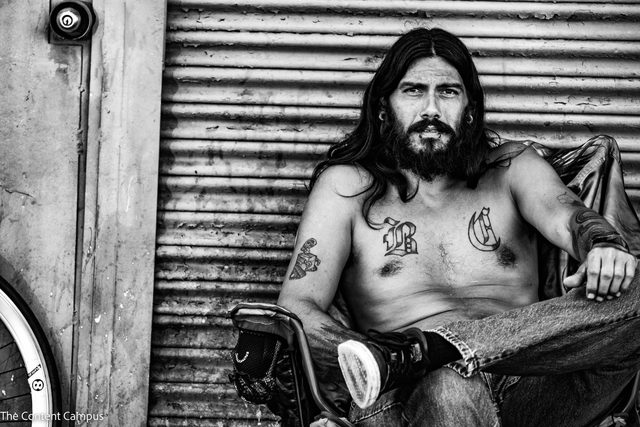
For a working photographer, the stakes are ordinary and specific: an agency test, a portfolio book, a designer's marketing images. The Content Campus fashion portfolio, shown on this page, includes shoots for the model agencies IMG, Click, Red and MC2, and a marketing shoot for designer Stella Nolasco. These pictures appear as examples of the kind of work this question touches, not as examples of these tools. Nothing in this story says they were edited with them.
The cost is stated. PetaPixel says the update is available to existing users now, new users get a free 7-day trial, and subscriptions start at $18 per month when paid annually. Digital Camera World says portrait, editorial and fashion photographers gain more control and calls the tools time-savers.
What that saved time means for freelance retouchers who bill by the hour, this story cannot yet say. It also does not offer legal advice: the Copyright Office, whose director is named in this case, is the official place to check what it will register.
The Court has closed this case. Capture One calls its tool a first version. The wigs are still there.
“The Court's answer was two words long.”